From ₹1 candies to quick commerce: How Parle is reshaping India’s ₹16,000-crore confectionery market
/ 3 min read
After Melody’s viral revival, Parle’s confectionery playbook is moving beyond nostalgia—betting on flavour innovation, new formats, deep distribution and quick commerce to drive the next phase of growth in India’s impulse-led candy market.
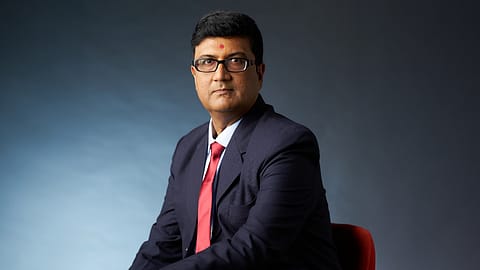
Mayank Shah, CMO, Parle Products Pvt. Ltd
India’s confectionery market may be worth nearly ₹16,000 crore today, but its biggest growth engine still comes in the smallest format: the ₹1 candy.
Even as premiumisation reshapes categories across consumer goods, confectionery continues to remain an affordability-led business where scale, distribution and constant innovation matter more than premium pricing.
That changing playbook is becoming increasingly visible at Parle Products, one of India’s oldest and largest packaged food companies, which sees the next phase of growth being driven by flavour innovation, quick commerce and new formats—without abandoning the low-unit-price model that built the category.
“India is still largely a mono-pack market,” says Mayank Shah, CMO, Parle Products Pvt. Ltd., during a freewheeling chat with Fortune India. “Nearly 80% of confectionery sales happen through packs priced at ₹1–₹2.”
That consumption pattern has shaped how confectionery companies build brands, manage costs and expand distribution.
According to Shah, India’s confectionery market today stands at approximately ₹15,000–16,000 crore in value and around 5 lakh tonnes in annual volumes. Within categories where it operates, Parle holds roughly 20% market share, excluding segments such as gums.
But unlike categories where premium products dominate growth, confectionery remains deeply dependent on availability.
Nearly 90 lakh retail outlets across India stock confectionery, making distribution one of the strongest competitive moats.
“It is easy to sell premium products profitably. Building a profitable business around small-ticket products requires a completely different level of discipline,” says Shah.
Ambika Chauhan Aibara, executive director, Parle Products Pvt. Ltd., says confectionery may look simple because of its low price point, but building a profitable ₹1 product at scale across 90 lakh outlets requires deep operational capability developed over decades. She adds that Melody’s revival reinforced the strength of enduring brand equity, while future growth will come from new formats, flavour innovation and channels such as quick commerce that are creating fresh consumption occasions.
Why does the ₹1 confectionery model still matter?
Few examples illustrate this better than Melody.
{{#most-powerful-women-snapshot-individual.slug}} {{/most-powerful-women-snapshot-individual.slug}} {{^most-powerful-women-snapshot-individual.slug}} {{/most-powerful-women-snapshot-individual.slug}} {{#showRanking}} {{current-rank}} {{/showRanking}} {{#photo.0.url}}
{{name}}
The iconic chocolate candy recently returned to public conversation after Prime Minister Narendra Modi gifted it to Italy’s Prime Minister—triggering nostalgia and a wave of consumer attention.
According to Shah, the moment translated into meaningful business impact. Melody trended organically online for more than a day and saw 2.5–3x offtake growth across e-commerce platforms, while quick commerce and general trade also recorded stronger demand.
Yet for Parle, Melody’s significance goes beyond a temporary spike.
The brand remains a case study in sustaining affordability. Despite inflation and commodity volatility, Melody has retained its ₹1 price point for decades.
Parle achieved this through reverse engineering, production efficiencies, manufacturing across multiple locations to reduce freight costs and disciplined supply-chain management.
Melody’s staying power has also come from communication. Campaigns built around the iconic question, “Melody itni chocolaty kyun hai?” and its memorable sign-off, “Melody khao, khud jaan jao”, helped make the brand part of everyday cultural language.
But Shah believes lasting brands are built not only through advertising, but by protecting their core identity.
“Some brands stay relevant by changing constantly. We have stayed relevant by knowing exactly what not to change.”
Why is Parle moving beyond nostalgia through new flavours and formats?
While legacy brands continue to anchor volumes, Parle believes future growth will come from expanding how Indians consume confectionery.
The company points to a history of category innovation—introducing deposit-format confectionery in India as early as 2001, launching unconventional flavours such as kaccha aam and golgappa candy, and pioneering single-twist packaging at a time when pillow packs and double-twist formats dominated the market.
Its portfolio strategy now spans geographies and income segments.
Brands such as Mango Bite and Poppins continue to perform strongly across rural and semi-urban markets, while newer offerings are aimed at urban consumers looking for experimentation and premium experiences.
Over the past decade, brands such as Londonderry and Mazzello have helped expand the category, while recent launches including Fusion, Smoothies and Duet are introducing formats such as centre-fill, layered and side-by-side confectionery.
The company expects this evolution to accelerate.
According to Shah, two trends will define India’s confectionery market over the next few years: flavour innovation and quick commerce.
Quick commerce is changing consumer discovery and making experimentation easier, while flavour-led innovation is creating new occasions beyond impulse purchases. Even broader macroeconomic and geopolitical disruptions, Shah argues, have had limited impact on the category. Because confectionery remains low-ticket and highly impulse-driven, consumption has stayed resilient despite uncertainty.
For India’s confectionery companies, the next growth story may not come from moving away from the ₹1 pack—it may come from finding newer ways to sell it.
NEXT STORY