From kitchens to cloud kitchens, ready meals gain ground as India eases LPG dependence
/ 3 min read
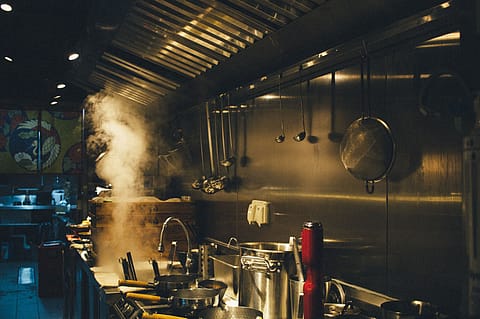
Representational Image | Credits: Urban Piper
From kitchens to cloud kitchens, ready meals gain ground as India eases LPG dependence
India is witnessing a surge in ready-to-eat and ready-to-cook foods as LPG supply disruptions, policy incentives and changing lifestyles reshape eating habits. E-commerce and quick commerce platforms report double-digit growth in instant noodles, frozen snacks and packaged meals, with demand from metros, smaller cities, cloud kitchens and households, signalling a lasting shift towards convenience-led consumption and processed foods.
This summary is AI-generated, and Fortune India is not responsible for its content or any associated copyright issues.
From LPG shocks to ready meals: India’s kitchen is going convenience‑first
Representational Image | Credits: Urban Piper
A sharp rise in demand for ready-to-eat and ready-to-cook food is sweeping across India, driven by a mix of supply-side disruptions, changing consumption habits and a steady policy push to scale up food processing.
Online platforms and food companies are reporting sharp growth. “Over the past few weeks, we have seen consistent growth in demand for convenient, ready-to-consume meal solutions that require minimal cooking time,” an Amazon India spokesperson said. Categories such as instant noodles, packaged meals, snacks and beverages are clocking over 15% growth on Amazon.in, with demand spread across metros like Hyderabad, Kolkata and Chennai as well as smaller cities such as Sonipat and Panaji.
The surge is even more pronounced in quick commerce. On Amazon Now, ready-to-eat and packaged food demand has risen around 20% month-on-month, particularly in parts of Delhi-NCR, Mumbai and Bengaluru, as consumers turn to ultra-fast delivery for immediate consumption.
Policy push and supply shocks converge
The recent surge comes against the backdrop of LPG supply disruptions. India’s LPG consumption fell 12.8% year-on-year to 2.38 million tonnes, according to data from the Petroleum Planning and Analysis Cell, as geopolitical tensions in West Asia disrupted supplies. The government had also moved to increase supplies of commercial LPG to states that fast-track piped gas rollout.
India imports about 60% of its LPG, much of it routed through the Strait of Hormuz, making it vulnerable to such shocks.
At the same time, policymakers have been actively nudging the ecosystem towards processed and ready formats. The ₹10,900 crore Production Linked Incentive scheme for the food processing industry, running from FY22 to FY27, explicitly prioritises ready-to-cook and ready-to-eat categories among its key segments. The scheme aims to boost value addition, expand processing capacity and create jobs, particularly in rural areas.
One of the core components of the scheme are to incentivise “manufacturing of four major food product segments viz. Ready to Cook/ Ready to Eat (RTC/RTE) foods, Processed Fruits & Vegetables, Marine Products and Mozzarella Cheese,” according to PIB.
So far, 128 companies covering 274 units have been approved under the scheme, which also supports branding of Indian food products globally. It has additionally pushed innovation, including incentivising millet-based ready meals following the International Year of Millets.
A structural shift, not just a short-term spike
While recent LPG supply disruptions have acted as a trigger, companies say the underlying demand has been building steadily. “We have seen a clear uptick in demand for ready-to-eat and ready-to-cook products over the past few weeks, with HORECA enquiries up by 10-15% and order volumes increasing by 20-30% in key markets,” said Deepanshu Manchanda, founder and managing director of Zappfresh.
Even as these constraints ease, the demand shift may persist. “The broader demand trend is being driven by a structural shift towards convenience-led consumption. Commercial kitchens and households alike are looking for formats that reduce preparation time, optimise manpower dependency, and deliver consistent taste and quality,” Manchanda said.
The demand is coming from both businesses and consumers. Cloud kitchens, quick service restaurants and mid-sized eateries are increasingly adopting ready formats to streamline operations and improve turnaround times. At the same time, working professionals and nuclear families are driving at-home consumption.
RANK
COMPANY NAME
REVENUE
(INR CR)
(INR CR)
{{#current-rank}} {{current-rank}} {{/current-rank}} {{^current-rank}} {{rank}} {{/current-rank}} {{name}} {{#revenue}} {{revenue}} {{/revenue}} {{^revenue}} {{noi}} {{/revenue}}
Product categories seeing traction include snackable and meal components such as momos, samosas, kebabs, tikkis and frozen gravies. These formats offer flexibility across menus while ensuring consistency, making them relevant across both retail and institutional buyers.
Frozen food is scaling fast
Another notable shift is the growing acceptance of frozen food. Improvements in cold-chain infrastructure and food processing standards have helped reposition frozen products as reliable, hygienic and high-quality options. Consumers are also gravitating towards organised, branded players that offer traceability and consistency in high-frequency categories like food.
India’s ready-to-eat food market, currently valued at around $800–900 million in 2024, is expected to expand by $2.97 billion at a compound annual growth rate of 28.8% between 2025 and 2030. The frozen food segment alone accounts for over $500 million, with bakery products also contributing significantly.
E-commerce platforms are adapting quickly. Amazon India has launched a dedicated Ready to Eat Store to aggregate meal solutions, while its AI-powered assistant is being used to help customers discover relevant products more easily.
For now, the supply disruption seems to be reinforcing a longer-term behavioural change. As Manchanda put it, “The current spike is accelerating an already existing shift towards convenience, consistency, and reliability,” suggesting that ready-to-eat may remain firmly on India’s plate well beyond the current trigger.
NEXT STORY