HUL denies food business exit talks amid Unilever portfolio reset buzz
/ 2 min read
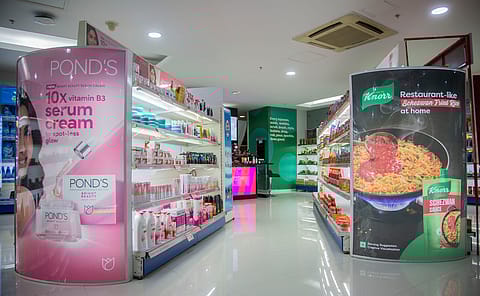
Hindustan Unilever Ltd (HUL) Store | Credits: Sanjay Rawat
HUL denies food business exit talks amid Unilever portfolio reset buzz
Hindustan Unilever Limited (HUL) has refuted rumors of exiting its food business, emphasizing its importance within their portfolio. This statement comes amid reports of Unilever's potential restructuring, focusing on faster-growing segments. Despite speculation, HUL remains committed to its food division, aligning with consumer trends towards health and wellness products.
This summary is AI-generated, and Fortune India is not responsible for its content or any associated copyright issues.
The foods and refreshments business is now more tightly organised around three core segments—nutrition, culinary and beverages—dominated by brands such as Horlicks, Boost, Knorr, Kissan, Brooke Bond and Bru.
THIS STORY FEATURES
Hindustan Unilever Ltd (HUL) Store | Credits: Sanjay Rawat
Hindustan Unilever Limited (HUL) has dismissed speculation around a potential exit from its foods business, stating that the segment remains “an important and attractive” part of its portfolio and that it is not engaged in any discussions on divestment.
The clarification, issued in a stock exchange filing, follows reports that parent Unilever is evaluating a possible separation of its foods division as part of its broader reset plan. The report suggested options such as a spin-off or partial divestment, though any move is expected to be long-term, with timelines extending beyond 2027.

Global reset fuels speculation
The buzz stems from Unilever’s ongoing efforts to rebalance its portfolio towards faster-growing, higher-margin segments such as beauty, personal care and wellbeing, while streamlining relatively slower-growing food categories.
Over the past decade, the company has already pruned parts of its foods portfolio, including the sale of its spreads business, and has been consolidating around fewer, larger brands.
According to industry observers, the latest speculation indicates a wider shift across the consumer goods sector, where growth in packaged foods has moderated, even as demand for health, wellness and premium personal care products accelerates.
The emergence of anti-obesity drugs such as Ozempic and Wegovy is also seen as a potential long-term headwind for calorie-dense food categories, particularly in developed markets.
India business already recalibrating
Even as HUL distances itself from any divestment plans, its India portfolio has undergone a measured restructuring over the past year.
The demerger and subsequent listing of its ice cream business as Kwality Wall’s (India) Ltd earlier this year marked an exit from premium frozen desserts such as Magnum and Cornetto.
The foods and refreshments business is now more tightly organised around three core segments—nutrition, culinary and beverages—dominated by brands such as Horlicks, Boost, Knorr, Kissan, Brooke Bond and Bru.
The rejig hints at a gradual pivot away from discretionary indulgence towards everyday-use and functional nutrition categories.
HUL has been sharpening its focus on health food drinks and fortified offerings, aligning with rising consumer demand for energy, protein and wellness-led products, while maintaining scale in mass categories like tea and packaged staples.
{{#most-powerful-women-snapshot-individual.slug}} {{/most-powerful-women-snapshot-individual.slug}} {{^most-powerful-women-snapshot-individual.slug}} {{/most-powerful-women-snapshot-individual.slug}} {{#showRanking}} {{current-rank}} {{/showRanking}} {{#photo.0.url}}
{{name}}
The shares of HUL ended 2.45% higher at ₹2,136 apiece on the national stock exchange on Wednesday. The company's stock has slipped over 5% in the past year, underperforming the broader Nifty 50 index that has slipped nearly 2% during the same period.
Follow Fortune India
NEXT STORY