India looks to accelerate ethanol push as oil price shock creates fresh urgency to cut import dependence
/ 3 min read
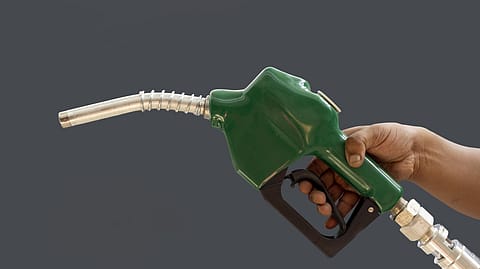
Credits: Narendra Bisht
India looks to accelerate ethanol push as oil price shock creates fresh urgency to cut import dependence
India is intensifying its ethanol blending program to reduce oil import dependence amid rising global crude prices. With a significant increase in ethanol production capacity, the government is exploring options to boost demand, including higher blending levels and promoting flex-fuel vehicles. Efforts are also underway to stabilize supply by diversifying feedstock and optimizing rice allocation.
This summary is AI-generated, and Fortune India is not responsible for its content or any associated copyright issues.
Ethanol blending in India has risen from just 1.5% in 2013 to 20% now.
Credits: Narendra Bisht
India is looking to accelerate its ethanol blending programme and rework its long-term strategy as a sharp rise in global crude prices, triggered by geopolitical tensions, renews urgency to cut import dependence and shield the economy from external shocks.
Policymakers are now weighing options that go beyond the 20% blending target even as supply-side capacity has largely been built out.
“There is no better moment than this to push for further reforms in our ethanol blending programme,” Sanjeev Chopra, secretary, Department of Food & Public Distribution, said, pointing to a nearly 40% spike in Brent crude prices in recent weeks - from about $60–70 per barrel to significantly higher levels.
“This is an opportune moment... to recalibrate and review our ethanol blending programme,” he said at All India Distillers' Association (AIDA) Conclave.
The government’s confidence stems from the scale already achieved. Ethanol blending in India has risen from just 1.5% in 2013 to 20% now - an expansion that Chopra described as once “improbable”. Between 2014 and December 2025, the programme has helped substitute about 277 lakh metric tonnes of crude oil imports, translating into foreign exchange savings of over ₹1.63 lakh crore.
Production capacity has also ramped up sharply, from around 420 crore litres in 2013-14 to nearly 2,000 crore litres now, with an increase of about 650 crore litres in just the past three years.
From supply gains to demand push
With capacity now exceeding earlier targets - against an estimated 1,700 crore litres requirement by 2024-25, the government is now turning its focus to boosting demand. “It is the demand side that we need to now look at,” Chopra said, adding that multiple options are under consideration, including raising blending levels beyond 20%, exploring ethanol use in diesel, and accelerating the adoption of flex-fuel vehicles through incentives and tax measures.
At the same time, policymakers are trying to insulate the sector from disruptions caused by agricultural cycles and climate variability. Past decisions to restrict sugar and rice diversion for ethanol — amid concerns over sugar output and El Niño-linked risks to rice production — highlighted the sector’s vulnerability.
{{#most-powerful-women-snapshot-individual.slug}} {{/most-powerful-women-snapshot-individual.slug}} {{^most-powerful-women-snapshot-individual.slug}} {{/most-powerful-women-snapshot-individual.slug}} {{#showRanking}} {{current-rank}} {{/showRanking}} {{#photo.0.url}}
{{name}}
To address this, the government is diversifying feedstock. Nearly 40% of ethanol supplied this year has come from grain-based sources, particularly maize, which is being actively promoted. In parallel, the Centre plans to ensure a more stable supply pipeline by shifting from direct foodgrain allocation to alternative channels.
Chopra said that while 52 lakh tonnes of FCI rice has already been allocated this year - against which about 21 lakh tonnes has been lifted - future supply will increasingly rely on broken rice. A proposal to reduce the permissible broken rice content in the public distribution system from 25% to 10% could generate an additional 90 lakh tonnes of broken rice annually for industrial use, including ethanol.
“This will ensure that the industry would get a stable supply,” he said, adding that a detailed roadmap is being worked out. “With the support of all stakeholders, we would be able to draw up a strategy in the next few months.”
NEXT STORY