Iran peace deal eases cost pressures, but consumers shouldn’t expect FMCG price cuts yet
/ 3 min read
The easing of tensions is expected to lower pressure on raw materials, packaging and freight costs across sectors. Yet analysts believe companies will retain recent price increases as protection against future uncertainties.
THIS STORY FEATURES
Credits: Sanjay Rawat
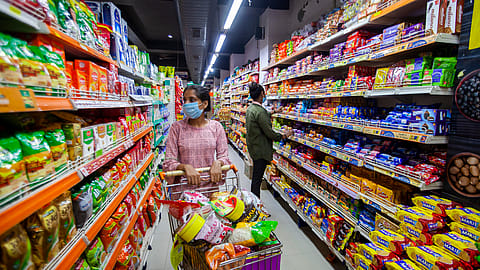
India's FMCG giants including Britannia, Nestlé India, Hindustan Unilever, Dabur and Marico raised prices by 4-11% over the past few months as higher crude oil prices, elevated freight rates and commodity inflation squeezed margins triggered due to the West Asia conflict. But even as the US-Iran peace deal has brought relief to global oil markets, Indian consumers hoping for cheaper packaged foods, soaps and paints may have to wait much longer.
Even as Brent crude slipped about 4% to $83 a barrel and WTI (primary benchmark for crude oil in North America) fell 4.8% to $80.8 after news of a memorandum of understanding between the US and Iran, analysts say companies are more likely to use the softer cost environment to rebuild margins than reduce prices.
The agreement, which is expected to be formally signed on June 19, would remove the US naval blockade of Iranian ports and extend the ceasefire, easing concerns around one of the biggest supply disruptions in recent history.
"The direction of travel matters enormously for consumer-facing businesses whose cost structures are energy-sensitive, fuel, logistics, packaging, heating," said Tanvi Kanchan, associate director at Anand Rathi Share and Stock Brokers.
The easing of tensions is expected to lower pressure on raw materials, packaging and freight costs across sectors. Yet analysts believe companies will retain recent price increases as protection against future uncertainties.
"I don't think prices will be lowered," Karan Taurani, executive vice president of Elara Securities told Fortune India. "You could see promotional campaigns increasing from consumer businesses." According to Taurani, many food companies implemented only limited price hikes and that too after nearly two years. He noted that apparel and fast fashion players largely avoided price increases altogether, while FMCG companies raised prices primarily to offset inflation in commodities and raw materials.
He expects current pricing to remain intact for at least the next few quarters as supply chains normalise and businesses assess future risks.
Abneesh Roy, executive director at Nuvama Institutional Equities is also of the opinion that companies are unlikely to rush into price reductions because they would first want to recover margin losses incurred during the period of elevated input costs.
"No company takes full price hike for crude oil at $110. They will, of course, like to recoup some of the lost margins and then think of cutting," Roy said. He added that dealers also tend to resist price cuts because their earnings are linked to product revenues.
Consumer companies are instead expected to lean on promotions and incentives to stimulate demand once margins improve, rather than reducing sticker prices.





Roy believes rural sentiment could start weakening toward the end of the third quarter. However, he expects improving profitability to partly offset that risk. "Our sense is the reservoir levels are currently good. The governments are giving a lot of subsidies, and the central government has given 6% inflation in the MSP," he said.
{{#most-powerful-women-snapshot-individual.slug}} {{/most-powerful-women-snapshot-individual.slug}} {{^most-powerful-women-snapshot-individual.slug}} {{/most-powerful-women-snapshot-individual.slug}} {{#showRanking}} {{current-rank}} {{/showRanking}} {{#photo.0.url}}
{{name}}
El Niño remains a key risk
While the Iran deal could reduce cost pressures, analysts caution that another challenge in the form of major atmospheric disruption is approaching. Taurani said companies continue to monitor uncertainty around monsoon performance and the potential impact of El Niño on consumption trends. Existing price increases could serve as a buffer if weather-related disruptions affect rural demand.
Roy believes rural sentiment could start weakening toward the end of the third quarter. However, he expects improving profitability to partly offset that risk. "Our sense is the reservoir levels are currently good. The governments are giving a lot of subsidies, and the central government has given 6% inflation in the MSP," he said.
According to Roy, the combined impact of government support measures and stronger margin profiles could help consumer companies navigate any slowdown in rural demand over the coming months.
For now, the immediate beneficiary of lower oil prices may not be the consumer's wallet, but corporate profitability.
Follow Fortune India
NEXT STORY