Iran shuts Strait of Hormuz, threatens to target vessels amid escalating conflict; raises fears of soaring oil prices
/ 2 min read
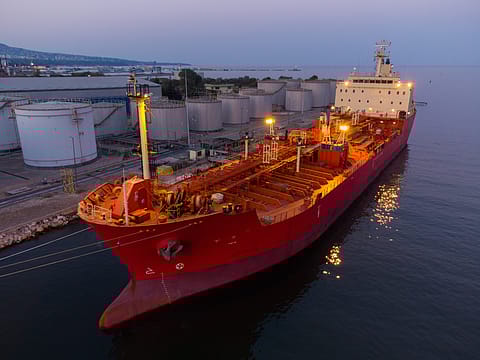
The Strait of Hormuz, located between Iran and Oman, is regarded as the world’s most important oil shipping lane.
Iran shuts Strait of Hormuz, threatens to target vessels amid escalating conflict; raises fears of soaring oil prices
Iran has closed the Strait of Hormuz, threatening to attack vessels attempting passage, escalating tensions and raising fears of increased oil prices. This strategic waterway is crucial for global oil supply, with nearly 20% of daily consumption passing through. The move follows US-Israeli strikes on Iran, prompting retaliatory missile attacks on Gulf states hosting US bases.
This summary is AI-generated, and Fortune India is not responsible for its content or any associated copyright issues.
The declaration marks Tehran’s strongest warning yet after signalling over the weekend its intent to block the crucial oil export corridor in response to recent military strikes.
The Strait of Hormuz, located between Iran and Oman, is regarded as the world’s most important oil shipping lane.
Iran has announced the closure of the Strait of Hormuz, warning that it will open fire on any vessel attempting to transit the strategic waterway, according to reports citing Iranian state media.
As per news reports, Ebrahim Jabari, a senior adviser to the commander-in-chief of the Islamic Revolutionary Guard Corps (IRGC), said the strait had been sealed and cautioned that Revolutionary Guards forces, along with Iran’s regular navy, would set ships ablaze if they attempted to pass through.
Tehran issues warning
The declaration marks Tehran’s strongest warning yet after signalling over the weekend its intent to block the crucial oil export corridor in response to recent military strikes.
The Strait of Hormuz, located between Iran and Oman, is regarded as the world’s most important oil shipping lane. It connects major Gulf producers — including Saudi Arabia, Iraq, and the United Arab Emirates — to global markets via the Gulf of Oman and the Arabian Sea. Nearly 20% of global daily oil consumption passes through the narrow channel, which is about 33 km wide at its tightest point.
The move follows joint US and Israeli strikes on Iran on February 28 aimed at destabilising its leadership. US President Donald Trump has said Washington would support Iranians seeking to remove the ruling clerical establishment.
In retaliation, Iran launched multiple missile barrages targeting Gulf states hosting US military bases, including Qatar, Kuwait and Bahrain. Missiles were also fired toward the UAE, Saudi Arabia, and Oman.
Impact on shipping and oil markets
Shipping through the strait has slowed to a near halt amid Iranian attacks on oil tankers operating in the region. At least five tankers have reportedly been damaged, two personnel killed and around 150 vessels stranded near the waterway.
Oil prices climbed above $79.40 per barrel on Monday, after touching $73 per barrel on Friday ahead of the weekend strikes. Vessel tracking service Kpler indicated that limited traffic continued on Sunday, primarily ships flying the Iranian and Chinese flags.
The escalation adds to existing strains on global shipping, which has already faced disruption from attacks by Yemen’s Iran-aligned Houthi militants in the Red Sea and Gulf of Aden since the outbreak of the Gaza conflict in 2023.
Follow Fortune India
NEXT STORY