The FAQs are AI-generated, and Fortune India is not responsible for its content or any associated copyright issues.
Iran war impact: Conflict heightens macro risks with stress building across sectors, says FICCI report
/ 3 min read
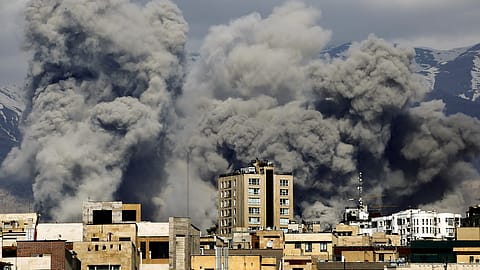
Companies have been advised to adopt scenario-based planning, including preparing a ‘Middle East Crisis’ version of budgets to optimise sales, margins and capital expenditure. | Credits: Getty Images
Iran war impact: Conflict heightens macro risks with stress building across sectors, says FICCI report
FICCI’s new report on the West Asia conflict warns of rising economic risks for India, urging coordinated action by industry and government. It calls for scenario-based financial planning, diversified energy sources, logistics resilience, and supply-chain diversification, while highlighting government steps and the opportunity to accelerate structural reforms and long-term energy transition for greater economic resilience.
This summary is AI-generated, and Fortune India is not responsible for its content or any associated copyright issues.
Despite the challenges, the report said the crisis presents an opportunity for India to accelerate structural reforms aimed at reducing external vulnerabilities and strengthening economic resilience.
Companies have been advised to adopt scenario-based planning, including preparing a ‘Middle East Crisis’ version of budgets to optimise sales, margins and capital expenditure. | Credits: Getty Images
The FICCI on Thursday released a report titled ‘West Asia Conflict: Implications for India and Imperatives for Industry and Government’, highlighting the emerging economic risks from raging geopolitical conflict in West Asia and outlining a road map for joint action by industry and government.
As per the report, early signs of stress across sectors, underscoring the need for proactive measures to mitigate immediate risks while building long-term resilience. Despite the challenges, the report said the crisis also presents an opportunity for India to accelerate structural reforms aimed at reducing external vulnerabilities and strengthening economic resilience.
Two-pronged strategy for industry
The report outlined a two-pronged strategy for industry, focusing on financial resilience and operational continuity amid uncertainty over the duration and escalation of the conflict.
On the financial front, companies have been advised to adopt scenario-based planning, including preparing a ‘Middle East Crisis’ version of budgets to optimise sales, margins and capital expenditure. Firms are also encouraged to secure additional funding lines and hedge currency risks to safeguard cash flows.
Businesses should assess the financial health of key suppliers and customers, review insurance coverage, and strengthen cybersecurity protocols to manage risks in an uncertain environment.
To address operational disruptions, the report recommended short-term measures such as prioritising demand, aligning production with input availability, optimising logistics through shipment consolidation, and improving coordination with global shipping lines. Some companies have already set up cross-functional “war rooms” to manage supply shortages in real time.
Flexibility in energy usage is another key focus area. Industry players are encouraged to diversify energy sources by adopting multi-fuel options, including biofuels and electrification, and increasing reliance on alternatives such as solar power, piped natural gas and coke oven gas. Energy efficiency measures, including audits and AI-driven monitoring, were also highlighted.
Recommended Stories
Medium- to long-term strategies
For long-term resilience, the report mentioned the need for diversification of supply chains and reduced dependence on specific geographies. Companies are encouraged to expand global supplier bases, strengthen domestic sourcing, and pursue backward integration where feasible.
Accelerating the energy transition is another priority, with a focus on renewable energy adoption, green hydrogen investments, and energy-efficient technologies. Firms are also urged to work with vendors to enable their transition to cleaner energy sources.
Logistics resilience was highlighted as critical, with recommendations to explore alternative trade routes, expand multimodal transport, and invest in digital tools for real-time supply chain visibility.
Interventions by the government
According to the report, the government has already taken several steps, including forming empowered groups, reducing fuel excise duties, introducing the RELIEF scheme, restoring RoDTEP benefits, and rationalising duties for SEZs.
RANK
COMPANY NAME
REVENUE
(INR CR)
(INR CR)
{{#current-rank}} {{current-rank}} {{/current-rank}} {{^current-rank}} {{rank}} {{/current-rank}} {{name}} {{#revenue}} {{revenue}} {{/revenue}} {{^revenue}} {{noi}} {{/revenue}}
For the short term, it recommended ensuring stable energy supplies through diplomatic engagement and long-term sourcing agreements. It also suggested setting up state-level energy security cells for real-time monitoring and coordination.
Fast-tracking customs clearances, particularly for time-sensitive imports, and extending financial and regulatory support to MSMEs were identified as critical. The report also called for emergency financing mechanisms and advisories to address force majeure risks in public procurement.
The report outlined key policy measures to enhance long-term resilience, including diversifying oil and gas sourcing, expanding domestic gas infrastructure, and increasing strategic petroleum reserves.
Scaling up renewable energy and clean technologies such as green hydrogen, battery storage and biogas was flagged as essential for energy security. The development of resilient trade infrastructure, including alternative economic corridors and stronger multimodal connectivity, was also highlighted.
The report also suggested that the government initiate discussions within the GST Council on bringing petroleum products under GST to improve efficiency and reduce cost burdens.
In the agricultural sector, ensuring fertiliser availability and promoting bio-fertilisers and precision agriculture were recommended to build long-term input resilience.