Structural reset in domestic retail: Q-com rides digital wave even as kirana stores remain indispensable
/ 3 min read
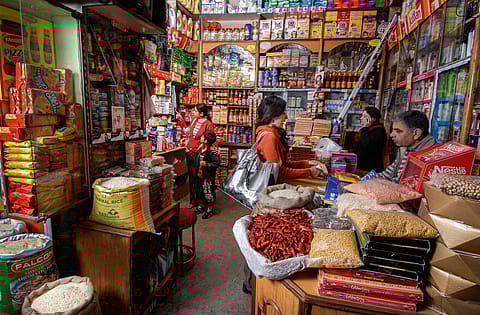
Relative share is under pressure. About 51% of consumers report a decline in reliance on kiranas over the past year, according to the reprot | Credits: Narendra Bisht
Structural reset in domestic retail: Q-com rides digital wave even as kirana stores remain indispensable
Quick commerce in India has evolved from a 10-minute novelty into a habit shaping what, when and how people buy. A Grant Thornton Bharat report shows consumers now split purchases across channels, using q-comm for urgent or unplanned needs while still relying on kiranas for routine, trust-led shopping. The future points to a hybrid, interconnected retail ecosystem.
This summary is AI-generated, and Fortune India is not responsible for its content or any associated copyright issues.
Consumer behaviour is fragmenting across channels instead of shifting wholesale from one format to another, says a report by Grant Thornton
Relative share is under pressure. About 51% of consumers report a decline in reliance on kiranas over the past year, according to the reprot | Credits: Narendra Bisht
Quick commerce in India has moved beyond being a novelty about 10-minute deliveries. It is now starting to shape how people think about everyday consumption including what they buy, when they buy it, and how much planning goes into it.
A new report by Grant Thornton Bharat shows that the real shift is behavioural. Consumers are no longer choosing one format over another. Instead, they are splitting their shopping across platforms depending on the situation. And in that mix, quick commerce is increasingly becoming the go-to for anything urgent or unplanned.
Nearly 45% of consumers now use quick commerce for last-minute needs or daily top-ups, while 19% turn to it for impulse purchases like snacks. What stands out is that over 70% say they would continue using these platforms even if discounts were reduced.
The q-comm model is built around this immediacy. Dark stores typically stock a few thousand high-rotation products, optimised for local demand, with larger facilities scaling up to tens of thousands of SKUs in dense urban clusters.
The 'now' habit is such created that it’s less about saving money and more about saving time now.
As a result, consumer behaviour is fragmenting across channels instead of shifting wholesale from one format to another, per the report.
Neighbourhood kirana stores, for instance, continue to hold their ground in routine grocery shopping and trust-led transactions. But their relative share is under pressure. About 51% of consumers report a decline in reliance on kiranas over the past year, even as 13% say their dependence has increased and 27% see no change.
Consumers are not abandoning kiranas entirely; they are simply redistributing spends depending on urgency, convenience and product type, suggests the report.
This explains why quick commerce continues to gain traction across categories like snacks, beverages, dairy, bakery, and increasingly even fruits and vegetables. These are segments once considered firmly within the domain of neighbourhood stores.
{{#most-powerful-women-snapshot-individual.slug}} {{/most-powerful-women-snapshot-individual.slug}} {{^most-powerful-women-snapshot-individual.slug}} {{/most-powerful-women-snapshot-individual.slug}} {{#showRanking}} {{current-rank}} {{/showRanking}} {{#photo.0.url}}
{{name}}
Kiranas look to plug into the ecosystem
For kirana retailers, this shift is creating both pressure and opportunity. Many are grappling with tighter margins, shorter credit cycles and rising expectations around assortment and availability. At the same time, there is a growing openness to collaboration with digital platforms.
Around 40% of kirana store owners expressed interest in partnering with quick commerce platforms, while another 32% said they were interested but unclear about how such partnerships would work. A further 20% indicated willingness if supported with technology or operational assistance.
While digital payments are now widely accepted, adoption of more advanced tools such as inventory management systems or digital ordering platforms remains limited due to cost and complexity.
Consumers are increasingly seeking premium and imported products, particularly in categories like snacks, beverages and personal care. Kiranas have been slower to tap into this trend, largely due to inventory risks and uncertain demand patterns.
Is hybrid retail the way forward?
Evidently, India’s retail landscape is not moving towards a single dominant format. Instead, it is becoming more interconnected. Quick commerce is capturing a larger share of high-frequency and discovery-led purchases, while traditional retail continues to anchor bulk buying and trust.
This shift is also pushing consumer goods companies to rethink distribution strategies. Many are moving towards multi-format approaches, tailoring product portfolios, pack sizes and pricing to suit different retail channels, according to the report.
As Naveen Malpani, partner and consumer industry leader at Grant Thornton Bharat puts it, the future is not about one channel replacing another, but about how well they work together. “The relevance of kiranas will increasingly depend on how effectively they embrace technology, strengthen digital integrations, and tap into premiumisation trends to meet evolving consumer expectations. The next phase of retail will be driven by connected, purpose-led ecosystems where physical and digital retail work in tandem to deliver greater value, convenience, and choice,” he added.
Growth, meanwhile, is expected to come increasingly from Tier II and smaller cities, where rising incomes and smartphone penetration are expanding access to digital commerce.
Follow Fortune India
NEXT STORY