The FAQs are AI-generated, and Fortune India is not responsible for its content or any associated copyright issues.
LPG bookings edge toward normal as summer season eases demand
/ 2 min read
Efforts to raise domestic output by diverting petrochemical pools into LPG production, led to a 40-50 per cent rise in output
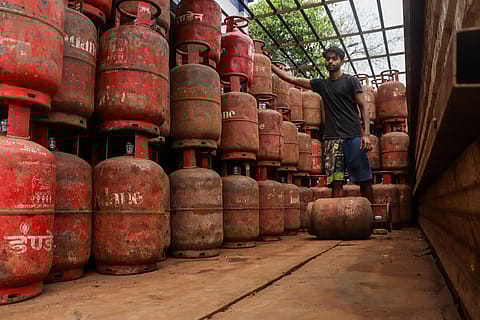
The latest directive has formally brought a wide range of industrial sectors under the allocation framework, effectively ensuring predictable supply for these segments. | Credits: Getty Images
Cooking gas LPG demand is inching towards normalcy as domestic supplies increased as onset of summer chips away demand, a senior official said on Friday.
With the war in West Asia disrupting global energy supplies, cooking gas availability in India, too, was impacted. Following this, the government prioritised supplies to domestic household kitchens by cutting supplies to commercial establishments such as hotels and restaurants.
The cuts spark panic, prompting even domestic consumers to rush to secure LPG refills. Daily bookings exceeded 88 lakhs at peak last month as against pre-crisis bookings of about 45 lakh a day.
Efforts to raise domestic output by diverting petrochemical pools into LPG production, led to a 40-50 per cent rise in output, prompting restoration of some of those supplies.
At a news briefing, Sujata Sharma, Joint Secretary in the Ministry of Petroleum and Natural Gas, said daily bookings are in the range of 46-50 lakh currently.
"Deliveries are normal. Yesterday (on April 16), about 50 lakh refill cylinders were delivered at doorsteps of users," she said, adding that the data suggests gradual return to normalcy.
Also aiding is the onset of summer when heating requirements falls.
Recommended Stories
"There is certainly a dip in demand," she said without giving absolute numbers.
She said India has maintained stable supplies of cooking gas and transport fuels despite disruptions linked to geopolitical tensions, with the government prioritising household consumption and stepping up allocations to key sectors.
Domestic LPG deliveries remain normal, with no shortages have been reported at distributor points, she said.
Online bookings account for about 98 per cent of the total demand, and authenticated deliveries have risen to over 90 per cent to curb diversion.
RANK
COMPANY NAME
REVENUE
(INR CR)
(INR CR)
{{#current-rank}} {{current-rank}} {{/current-rank}} {{^current-rank}} {{rank}} {{/current-rank}} {{name}} {{#revenue}} {{revenue}} {{/revenue}} {{^revenue}} {{noi}} {{/revenue}}
Commercial LPG supply has been restored to around 70 per cent of pre-crisis levels, supported by targeted measures, including increased allocation of smaller cylinders for migrant workers and expanded distribution campaigns by state-run oil marketing companies.
Since March 23, more than 16.41 lakh market-priced 5-kg LPG cylinders have been sold to those without a proper domestic cooking gas connections, she said.
These include migrants, students and working professionals as well as small businesses.
A total of 1.5 lakh tonnes (equivalent to more than 79.14 lakh of 19 kg commercial LPG cylinders) of commercial LPG have been sold since March 14, she said, adding that this includes more than 8,850 tonnes of Auto LPG.
Authorities have also accelerated a shift towards piped natural gas (PNG), prioritising full supply to households and transport segments using compressed natural gas. Gas allocation to fertiliser plants has been raised to about 95 per cent of recent average consumption, while industrial supply has been increased to as much as 80 per cent.
To ease pressure on LPG demand, city gas distributors have been directed to expand piped natural gas (PNG) connections for commercial establishments, with incentives rolled out by companies, including Indraprastha Gas Ltd, Mahanagar Gas, GAIL Gas, and Bharat Petroleum.
Refineries are operating at high utilisation rates with adequate crude inventories, while petrol and diesel supplies remain sufficient across retail outlets. The government has cut excise duties on petrol and diesel by Rs 10 per litre to shield consumers from a surge in global oil prices, and raised export levies on diesel and aviation fuel to ensure domestic availability