LPG supply concerns push snacks makers to diversify energy use
/ 3 min read
Credits: Getty Images
LPG supply concerns push snacks makers to diversify energy use
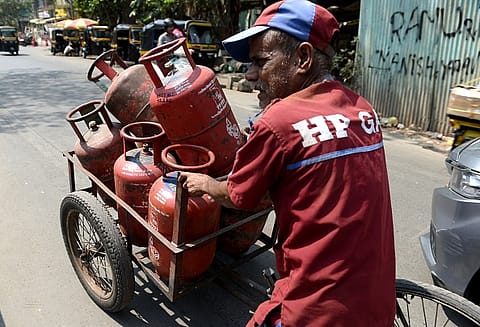
Amid rising LPG supply concerns due to West Asia tensions, snacks manufacturers are diversifying energy sources to maintain production and protect margins. Energy-intensive processes like frying and roasting make fuel availability crucial, prompting companies to explore alternatives and improve efficiency. The focus is on resilience in energy sourcing to ensure continuity in production.
This summary is AI-generated, and Fortune India is not responsible for its content or any associated copyright issues.
Companies say short-term disruptions in LPG availability could force adjustments across production facilities, though larger organised players are increasingly looking to diversify their energy mix to reduce dependence on a single fuel source.
THIS STORY FEATURES
Credits: Getty Images
Rising uncertainty around LPG supply amid tensions in West Asia is prompting snacks and namkeen manufacturers to rethink production planning and explore alternative energy sources, even as companies try to maintain output and protect margins.
Manufacturing in the snacks industry depends heavily on energy-intensive processes such as frying and roasting, making fuel availability a critical operational input. Companies say short-term disruptions in LPG availability could force adjustments across production facilities, though larger organised players are increasingly looking to diversify their energy mix to reduce dependence on a single fuel source.
“For the snacks and namkeen industry, manufacturing relies heavily on energy-intensive processes such as frying and roasting, making fuel availability an important operational input,” said Neha Rao, vice president-marketing at Bikaji Foods International Limited.
“Short-term supply tightness in LPG definitely requires adjustments in production planning across facilities. At the same time, organised manufacturers in the sector are increasingly looking at diversifying their energy mix and improving efficiency across plants to reduce dependence on a single fuel source,” she said. The focus, Rao added, is on maintaining production continuity while building resilience in energy sourcing.
India is the world’s second-largest importer of LPG and receives 60% of supplies from the United Arab Emirates, Kuwait, Qatar and Saudi Arabia.
Could crude volatility squeeze FMCG margins?
The broader concern stems from the possibility of sustained volatility in global crude prices if the West Asia conflict intensifies. Analysts say higher oil prices can ripple across the fast-moving consumer goods (FMCG) sector through multiple cost channels.
“If the West Asia conflict pushes crude sustainably above $90 per barrel from the recent $75–$80 range, FMCG companies could face 100–150 basis points of gross margin pressure over the next two quarters,” said Sandeep Abhange, research analyst – Consumer & Midcaps at LKP Securities Ltd.
According to Abhange, about 8–12% of the FMCG industry’s cost base is linked to crude derivatives. These include packaging materials such as PET and HDPE, linear alkylbenzene used in detergents, and logistics expenses. Any sustained increase in crude prices would therefore push up operating costs.
A key risk lies around the Strait of Hormuz, through which nearly 30% of global seaborne oil trade passes. Any disruption there could raise freight costs by 20–30%, affecting both input sourcing and exports to markets such as Iran.
{{#most-powerful-women-snapshot-individual.slug}} {{/most-powerful-women-snapshot-individual.slug}} {{^most-powerful-women-snapshot-individual.slug}} {{/most-powerful-women-snapshot-individual.slug}} {{#showRanking}} {{current-rank}} {{/showRanking}} {{#photo.0.url}}
{{name}}
Large FMCG companies may attempt to offset part of the pressure through staggered price increases of 1–3%. However, Abhange noted that margins could still shrink if companies delay price hikes to avoid hurting demand.
While traditional namkeen makers depend heavily on gas frying, some newer snack brands say their manufacturing processes offer insulation from LPG supply disruptions.
Karan Korke, co-founder and chief marketing officer at The Healthy Binge, said the company has not had to discontinue products because its portfolio is baked rather than deep-fried.
“The West Asia situation has created uncertainty in LPG supply, which impacts many snacks and namkeen makers reliant on gas frying,” Korke said. “Since all our products are baked rather than deep-fried, we have not had to discontinue any items despite the ongoing LPG supply challenges.”
He added that the company continues to see steady demand for its chips, particularly on quick-commerce platforms.
As geopolitical tensions keep commodity markets on edge, industry players say the ability to adapt, whether through energy diversification, manufacturing efficiency or alternative cooking processes, could become increasingly important for FMCG navigating volatile fuel markets.
Follow Fortune India
NEXT STORY