Lush bets on Myntra to crack India’s fast-growing premium beauty market
/ 4 min read
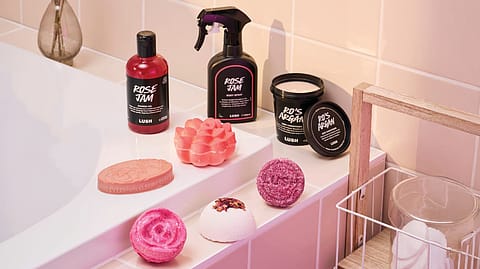
For Myntra, the partnership strengthens its play in premium and international beauty—a segment it says is growing at 2.5 times the broader online luxury beauty market.
Lush bets on Myntra to crack India’s fast-growing premium beauty market
British cosmetics brand Lush has entered India's e-commerce market through Myntra, aiming to capture the fast-growing premium beauty segment. Partnering with Bilberry Brands India, Lush plans to offer over 150 products, emphasizing its ethical and sustainable philosophy. This move strengthens Myntra's position in premium beauty, appealing to a young, conscious consumer base.
This summary is AI-generated, and Fortune India is not responsible for its content or any associated copyright issues.
With 150 SKUs at launch, the UK brand eyes Gen Z, tier 2 demand, and conscious consumption trends to drive scale.
For Myntra, the partnership strengthens its play in premium and international beauty—a segment it says is growing at 2.5 times the broader online luxury beauty market.
British cosmetics brand Lush has made its India e-commerce debut through Myntra, marking a significant step in its renewed push into one of the world’s fastest-growing beauty markets. The entry comes via a strategic licensing partnership with Bengaluru-based Bilberry Brands India, as the company looks to build an omnichannel presence spanning digital, direct-to-consumer, and physical retail.
The launch brings over 150 products across skincare, haircare, bath, body, and fragrance categories to Myntra’s platform, with plans to scale the assortment to around 300 Stock Keeping Units (SKU) by April. Known globally for its handmade, cruelty-free formulations and minimal packaging ethos, Lush is positioning itself as a philosophy-led brand in India rather than competing purely on product innovation.
For Myntra, the partnership strengthens its play in premium and international beauty—a segment it says is growing at 2.5 times the broader online luxury beauty market. The Flipkart-owned platform currently has over 75 million monthly active users, including 21 million beauty shoppers, with Gen Z accounting for nearly 60% of its beauty customer base.
“This partnership signals the kind of brand Myntra has become for global beauty players,” said Venu Nair, Chief of Strategic Partnerships and Omnichannel at Myntra, noting that nearly 45% of demand for international brands comes from non-metro markets. “What Myntra brings at this launch opens up access to 21 million beauty users and expands the base very rapidly and effectively at one instance.”
He added that Lush offers something “very unique and different” to its customer base, reinforcing Myntra’s positioning as a destination for differentiated global brands.
Why is Lush betting on a philosophy-led entry into India?
Lush’s India strategy hinges less on product novelty and more on its ethical positioning—an approach that executives believe resonates with a rapidly evolving consumer base. Around 85% of its products are preservative-free, 95% are vegan, and the entire range is vegetarian. Nearly 35% of its offerings are sold without packaging, while the rest use recycled or sustainably sourced materials.
“The biggest competitive advantage for Lush in India is not just its product, but its philosophy,” Nair said, pointing to growing consumer awareness around ingredient sourcing, sustainability, and ethical practices.
Vishal Anand, Founder and CEO of Bilberry Brands India, described the approach as a “balanced omnichannel strategy,” combining experiential retail with digital scale. Myntra, he said, provides immediate access to a large, digitally savvy audience, including consumers in tier 2 and tier 3 cities, where premium beauty demand is rising sharply.
“It will be a mix, it will be an omnichannel building of the brand in the country through physical stores, through our D2C, and now through this strategic partnership in e-commerce,” Anand said.
He emphasised that the brand’s differentiation lies in its formulation philosophy. “We are fresh, ethical, clean beauty where our ingredients are the freshest in terms of making the product. 85% of the products are with zero preservatives, 95% are vegan and 100% are vegetarian,” he said.
How is Myntra and Lush reframing beauty for the new-age consumer?
The partnership also reflects a shift in how beauty is being marketed to younger consumers. Instead of a traditional “bath and body” positioning, Myntra and Lush plan to anchor the brand around self-care rituals, wellness, and sustainability-led narratives.
{{#most-powerful-women-snapshot-individual.slug}} {{/most-powerful-women-snapshot-individual.slug}} {{^most-powerful-women-snapshot-individual.slug}} {{/most-powerful-women-snapshot-individual.slug}} {{#showRanking}} {{current-rank}} {{/showRanking}} {{#photo.0.url}}
{{name}}
This includes content-first engagement strategies such as routine-based storytelling, product demos, and community-driven campaigns. Influencer collaborations will also pivot away from conventional beauty creators toward wellness advocates and sustainability voices.
“So, for Lush, what we have been doing is to adopt a non-traditional beauty playbook focused on storytelling, community and experience. It is content first, it is experience led, led by product demos and routine-based content such as night rituals and self-care days,” Nair said.
Industry trends appear to support this approach. The Indian beauty consumer has moved from single-product usage to multi-step routines, with increasing emphasis on transparency and ingredient awareness.
“The Indian consumer has evolved very fast. It has moved from being a single-product user to a multi-product, regime-based usage and sequencing of how beauty has to be used,” Nair noted, adding that consumers are now actively seeking information and aligning with global beauty practices.
At the same time, Anand pointed to a structural shift towards premiumisation. “If you divide beauty into segments, the premium is growing much faster than the overall beauty market in the country,” he said.
Can Lush stand out in India’s crowded but expanding beauty market?
Lush’s entry comes at a time when India’s online beauty market is becoming increasingly competitive, with platforms such as Nykaa and Reliance-backed Tira expanding aggressively. Myntra, however, is betting on its broader ecosystem—spanning fashion, beauty, and lifestyle—along with tech-led discovery tools like AI-powered skin analysis and virtual try-ons.
Speed is another lever. Its M-Now service promises delivery within 30 to 120 minutes, a capability Myntra sees as critical in driving impulse purchases and repeat engagement.
Nair outlined four key differentiators for Myntra: a large and engaged consumer base, a wide selection of over 4,000 beauty brands, technology-led discovery, and deep personalisation. “Each customer will see a different homepage based on where they are shopping from, what they have been browsing and what they have bought. The brands and products shown are very unique to that individual,” he said.
For Lush, the timing appears aligned with both market maturity and consumer readiness. “India is one of the most exciting beauty markets today,” Anand said, adding that consumers are actively seeking brands that combine authenticity, sustainability, and transparency.
As global brands deepen their India focus, Lush’s success will likely depend on how well its values-driven positioning translates into sustained consumer adoption—particularly beyond metros, where the next wave of premium beauty growth is unfolding.
Follow Fortune India
NEXT STORY