The FAQs are AI-generated, and Fortune India is not responsible for its content or any associated copyright issues.
Maruti Suzuki to hike vehicle prices by up to ₹30,000 from June 2026 as inflationary pressures persist
/ 2 min read
The move comes as India’s largest carmaker flags sustained input cost pressures despite earlier cost optimisation measures
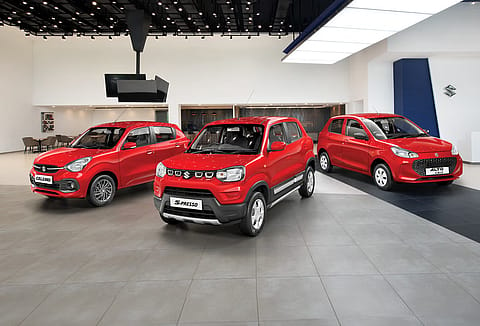
Maruti Suzuki’s portfolio spans high-volume entry-level models such as Alto K10 and WagonR | Credits: MSIL
Maruti Suzuki India, the country’s largest passenger vehicle manufacturer, on Thursday announced a price increase of up to ₹30,000 across its model portfolio, effective June 2026, citing an elevated inflationary environment and continuing cost pressures. The revision will be applicable across variants and segments, spanning its entry-level hatchbacks to its premium utility vehicles.
In a regulatory filing, the company said it has been absorbing cost pressures through internal efficiencies over the past several months. However, it noted that sustained input cost inflation has left limited room to fully offset the impact. Maruti Suzuki currently sells vehicles ranging from the S-Presso at ₹3.49 lakh to the Invicto, priced up to ₹28.7 lakh (ex-showroom).
Inflationary pressures push pricing action
“For the past few months, the company has been making continuous efforts to mitigate the cost impact to the extent possible through cost reduction measures,” Maruti Suzuki said in its filing. However, it added that “with inflationary pressures now at elevated levels and the adverse cost environment persisting, the company has to pass on a portion of the increased costs to the market, while continuing to ensure that the impact on customers is kept to the minimum extent possible.”
The company did not specify segment-wise hikes but indicated that the increase will be calibrated across its portfolio to balance affordability with margin pressures. The move comes at a time when commodity prices and supply chain costs remain volatile for the automobile sector.
Maruti Suzuki’s portfolio spans high-volume entry-level models such as Alto K10 and WagonR, along with compact SUVs and multi-purpose vehicles catering to urban and semi-urban markets. The company had previously undertaken selective price adjustments in response to shifting regulatory and tax dynamics.
Past price cuts and shifting pricing strategy
In September last year, following GST 2.0 adjustments, the automaker had reduced prices on several entry-level models, including S-Presso by up to ₹1,29,600, Alto K10 by up to ₹1,07,600, Celerio by ₹94,100, and WagonR by up to ₹79,600, reflecting the sensitivity of the mass-market segment to tax and policy changes.
The latest hike also aligns with a broader industry pattern, where automakers such as Hyundai Motor India, Tata Motors, Mahindra & Mahindra, and Honda Cars India have undertaken periodic price revisions over the past year to offset rising input costs, logistics expenses and currency fluctuations, underscoring a sector-wide push to protect margins amid uneven demand conditions.
Follow Fortune India
Frequently Asked Questions
NEXT STORY