The FAQs are AI-generated, and Fortune India is not responsible for its content or any associated copyright issues.
RBI must end limbo on Tata Sons’ deregistration plea: InGovern’s Subramanian
/ 5 min read
Proxy advisory firm’s founder believes the regulator has, through a series of recent moves, all but signalled that the Tata Group holding company must be listed
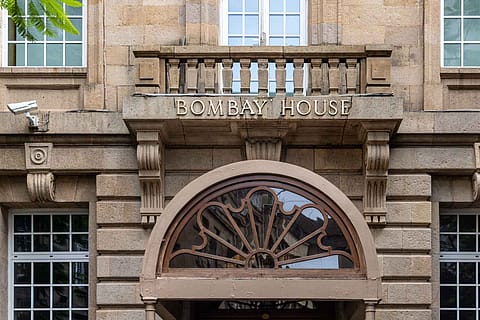
Bombay House | Credits: Narendra Bisht
The Reserve Bank of India (RBI) must bring finality to Tata Sons Pvt. Ltd's two-year-old application seeking to surrender its registration as a Core Investment Company (CIC), and explicitly reject it, InGovern Research Services, the Bengaluru-based proxy advisory firm, has stated in a report.
In an interview to Fortune India, InGovern founder and managing director Shriram Subramanian points out that the central bank, through a series of recent regulatory moves, has effectively foreclosed every route by which the holding company of the $180 billion Tata Group could avoid a listing, and that it is now incumbent on the regulator to put its position on paper.
“The RBI is, in effect, saying it without saying it,” says Subramanian, pointing to two developments. The regulator has continued to classify Tata Sons in the Upper Layer but quietly dropped an earlier caveat that had noted the holding company's deregistration application was pending. Further, on April 29, the RBI issued a clarification rejecting the industry's argument that equity investments sourced from “owned funds” should be excluded from the definition of indirect public funds.
Tata Sons had filed the deregistration application in March 2024, after repaying its standalone debt, to sidestep the mandatory listing obligation that comes with being classified an Upper Layer NBFC under the RBI's scale-based regulation framework. The deadline for such voluntary deregistration applications was September 2025. “The application has been pending for about two years, and that the listing deadline [of September 2025] has anyway lapsed,” says Subramanian. The InGovern note, titled “Tata Sons' Deregistration: A Case for Regulatory Finality,” calls the application “Dead on Arrival.”
Filed in March 2024, this application has now been rendered substantively and procedurally deficient by the evolving regulatory landscape of 2026, states the report.
“What is the point in keeping it in limbo? Reject it or accept it, either way, te RBI must decide on the application by Tata Sons,” says Subramanian.
Why Tata Sons fails the “Look-Through” test
InGovern's report highlights that 13–14% of Tata Sons' equity is held by listed Tata entities, with Tata Steel and Tata Motors at around 3.06% each, Tata Chemicals 2.53%, Tata Power 1.65%, Indian Hotels at 1.11%, and others, all of which are themselves funded by public equity and debt, creating what the regulator calls a “look through” loop.
The report also walks through recent precedents the RBI has set: L&T Finance's reclassification as an NBFC-ICC in August 2024 after merging its subsidiaries into the parent; Tata Capital's IPO in October 2025; Piramal Enterprises' merger into Piramal Finance; and Tata Motors Finance's merger into Tata Capital. In each case, surrender of the CIC was accepted only after the entity ceased to exist as a standalone holding structure or merged into a listed, regulated framework. Tata Sons, InGovern argues, is attempting what the report terms a “Naked Surrender,” keeping its structure intact while shedding regulatory oversight. “This is procedurally inconsistent with the RBI’s handling of every other major NBFC-UL in the 2025-2026 cycle,” states the report.
The report adds that the continued private status of Tata Sons imposes an artificial holding-company discount on its listed subsidiaries and keeps the parent outside the reach of SEBI's LODR Regulation 23 on related party transactions, as well as the requirement for at least 50% independent directors on the board of an Upper Layer NBFC. More than 1.2 crore public shareholders are invested across the seven listed Tata entities.
InGovern's three formal recommendations to the RBI are: an explicit, public rejection of the March 2024 application; a directive to Tata Sons to initiate the listing process by the March 2027 deadline; and immediate formalisation of the proposed ₹1 lakh crore asset threshold for automatic Upper Layer classification, which it says would permanently close the deregistration loophole.
Regulatory clarity, not valuation debate
On what purpose listing would serve when all the major Tata operating companies are already publicly traded, unlike, for instance, Berkshire Hathaway, where the operating businesses sit unlisted within the parent, Subramanian is clear that he is not making an investor argument. “We are not talking from an investor perspective but from a regulatory one. In any event, there are also a lot of unlisted companies, including Air India, that are held by Tata Sons. But the note we have prepared is from a purely regulatory perspective,” Subramanian tells Fortune India.
{{#most-powerful-women-snapshot-individual.slug}} {{/most-powerful-women-snapshot-individual.slug}} {{^most-powerful-women-snapshot-individual.slug}} {{/most-powerful-women-snapshot-individual.slug}} {{#showRanking}} {{current-rank}} {{/showRanking}} {{#photo.0.url}}
{{name}}
The RBI's April 29 clarification, he argues, is decisive. The regulator had said the carve-out for owned funds was not acceptable because the use of leverage, multiple layers, and the fungibility of money make it difficult to establish whether equity infusion by a group entity is genuinely from its own funds. “Since the seven listed Tata entities together hold shares in Tata Sons, the holding company effectively has access to indirect public funds,” says Subramanian.
On the question of whether listing made sense for an entity whose value lies in long-gestation businesses such as Air India, the digital ventures, online quick commerce, and semiconductors, businesses that do not lend themselves to quarterly market scrutiny, Subramanian believes that itself is the reason why the company should be listed. “Because these are long-gestation projects that need to be funded, Tata Sons can neither raise debt funding nor can it access the equity markets. So, where will it get the funds?” says Subramanian.
Though, thus far, Tata Sons has had to rely on internal accruals, overwhelmingly on dividends from Tata Consultancy Services (TCS), and an occasional 2–3% block-deal stake sales in the IT major. With TCS itself navigating disruption from artificial intelligence, and with Air India unlikely to turn profitable for the next several years, Subramanian points out that Tata Sons is capital constrained. “It cannot meet its own obligations,” says Subramanian.
In fact, Subramanian hints that a public listing will make it easier for the entity to fund those long gestation projects. “We have loss-making companies that have got listed in the stock markets,” says Subramanian.
On the prospect that a listed Tata Sons would attract a steep holding-company discount and therefore not serve its purpose, Subramanian declines to enter the valuation debate: “We should leave that to the markets to decide. That is a separate matter. We are not commenting on the valuation. This report is only about regulatory intent.”
InGovern’s contention hinges on regulatory consistency. Every other major Upper Layer NBFC has either listed or merged into a listed entity, including the group's own Tata Capital, which completed its IPO in October 2025. “If you see RBI's list of all CICs, every one of them is listed, except Tata Sons. So, effectively, the Tata Group, which always talks about compliance and governance, is the only entity that is not compliant,” feels Subramanian.
He pointed out that even government-owned entities such as Power Finance Corporation and REC Ltd have not been exempted from the Upper Layer classification. “Even government-owned entities are not exempted, so why should this [Tata Sons] be exempted?” says Subramanian.
The regulator has invited public feedback on its new asset-size-based classification approach by May 4. As per which, any entity with assets above Rs 1 lakh crore falls automatically into the Upper Layer. Tata Sons asset base stands at around Rs 1.75 lakh crore as of FY25.
Frequently Asked Questions
NEXT STORY