The FAQs are AI-generated, and Fortune India is not responsible for its content or any associated copyright issues.
Sugar mills want sugar and ethanol prices aligned with revised sugarcane price for farmers
/ 2 min read
Industry body urges government to raise sugar MSP and ethanol rates in step with higher cane FRP, warning mills face cost pressures that could affect timely payments to 5.5 crore farmers
The association noted that lower ethanol allocation to the sugar sector has also led to a growing mismatch between installed distillation capacity and domestic offtake
Indian Sugar & Bio-energy Manufacturers Association (ISMA) has asked the government to align the Minimum Selling Price (MSP) of sugar and ethanol procurement prices with the revised Fair and Remunerative Price (FRP) of sugarcane.
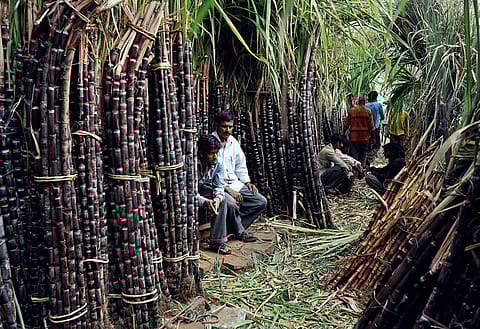
The government had on May 5 increased the FRP of sugarcane for Sugar Season 2026-27 (October - September) to Rs.365 per quintal from ₹355 a quintal given during last year. Sugar mills will now be required to procure sugarcane from farmers at the newly approved price. The revised FRP will benefit nearly 5.5 crore sugarcane farmers across the country.
According to ISMA, this increase will result in an additional income of over ₹15,000 - 20,000 crore for farmers, taking total cane payments to around ₹1.3 lakh crore in the upcoming season. This is expected to provide a strong impetus to rural demand and reinforce the agricultural economy, particularly in regions where sugarcane cultivation is a primary livelihood.
“While the FRP increase rightly supports farmers, it also raises the cost of raw material for mills. A proportionate revision in sugar MSP and ethanol procurement prices would enable mills to absorb these higher costs without financial strain, thereby maintaining operational stability and ensuring timely cane payments to farmers”, Deepak Ballani, Director General, ISMA said.
The association noted that lower ethanol allocation to the sugar sector has also led to a growing mismatch between installed distillation capacity and domestic offtake. “This has resulted in underutilisation of capacities, contributing to financial stress and erosion of revenue streams within the industry. A timely revision in sugar and ethanol pricing, along with equitable ethanol allocation, is essential to restore feedstock balance, improve capacity utilisation, and provide long-term policy certainty to investors and stakeholders”, Ballani said.
The revised FRP approved will be applicable for purchase of sugarcane from the farmers in the Sugar Season 2026-27 (starting from October 1) by sugar mills. According to official data, in the previous Sugar Season 2024-25, about 99.5% of sugar cane dues (Rs.1,02,209 crore out of Rs.1,02,687 crore cane dues) have been paid to farmers until April 20. In the current Sugar Season 2025-26, about 88.6% percent of the dues (₹99.961 crores out of cane dues of Rs1,12,740 crore) have been paid to farmers.
Follow Fortune India
Frequently Asked Questions
NEXT STORY