Tax relief, startup push, digital expansion boost middle class over last 12 years, says govt
/ 2 min read
The Centre said I-T relief has been extended for the fourth time in 12 years, with nearly 88% of taxpayers, those earning up to ₹12 lakh annually, expected to benefit directly.
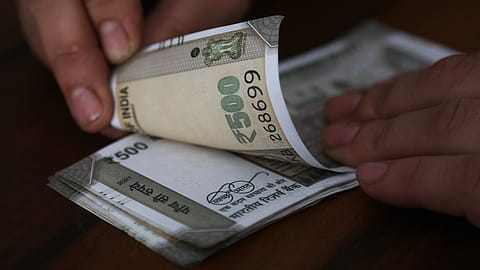
The standard deduction for salaried employees has also been increased from ₹50,000 to ₹75,000. | Credits: Sanjay Rawat
India's middle class has witnessed some major gains in income, housing, digital access, and employment opportunities over the past 12 years, driven by a series of government reforms and welfare initiatives, according to the Centre. The government highlighted the progress as Prime Minister Narendra Modi completed 4,399 consecutive days in office on Tuesday, becoming India's longest-serving elected Prime Minister.
According to the government, the middle class, which accounts for nearly one-third of the country's population, has benefited from higher disposable incomes, expanded access to digital services, improved urban infrastructure, and greater opportunities for economic mobility.
Tax relief and simpler compliance
Tax relief has been a key component of the government's strategy. Under the Union Budget 2025-26, annual personal income of up to ₹12.75 lakh has been made tax-free under the new tax regime. The Centre said income tax relief has been extended for the fourth time in 12 years, with nearly 88% of taxpayers, those earning up to ₹12 lakh annually, expected to benefit directly.
The standard deduction for salaried employees has also been increased from ₹50,000 to ₹75,000. Additionally, the New Income Tax Act, 2025 aims to simplify tax compliance through a digital, transparent, and low-dispute framework, reducing paperwork, and streamlining the filing process.
Retirement security gets a boost
Retirement security has also been strengthened through the Unified Pension Scheme (UPS), which came into effect in April 2025. The scheme guarantees a minimum monthly pension of ₹10,000 for eligible central government employees with at least 10 years of service, along with inflation-linked dearness relief and family pension benefits.
Startup ecosystem creates jobs
The Centre highlighted the rapid growth of India's startup ecosystem, with more than 2.22 lakh startups registered over the past decade. These ventures have generated over 23 lakh jobs and created new entrepreneurial opportunities across sectors.
Digital revolution accelerates
Digital connectivity has expanded sharply during the period, with the cost of one gigabyte of mobile data falling by nearly 97%, from about ₹269 in 2014 to ₹8-10 currently. The government said the decline in data costs has boosted internet penetration, particularly in rural areas, improving access to information, education, and digital services.
The adoption of digital payments has also accelerated, with Unified Payments Interface (UPI) transactions touching record levels, reflecting the country's growing digital economy.
Vande Bharat and rail modernisation
In the railways sector, more than nine crore passengers have travelled on Vande Bharat trains, with 164 services currently in operation. The government said the trains have emerged as a preferred mode of travel owing to their speed, comfort and indigenous technology.
Housing and urban infrastructure expansion
On the housing front, the government said around ₹9 lakh crore has been allocated under the Pradhan Mantri Awas Yojana (Urban), with nearly one crore beneficiaries allotted homes. Increased public investment in housing and urban infrastructure has supported construction activity and improved living standards in cities. Metro rail networks have also expanded to 26 cities, enhancing urban mobility and connectivity across the country.
According to the Centre, the combined impact of tax reforms, digital transformation, infrastructure development, housing support, and job creation has strengthened the aspirations and purchasing power of India's middle class, making it a key contributor to the country's economic growth.
Follow Fortune India
NEXT STORY