
PM Modi’s 12-year journey: How financial inclusion, digital infrastructure, and formal credit widened India’s economic base
ADVERTISEMENT
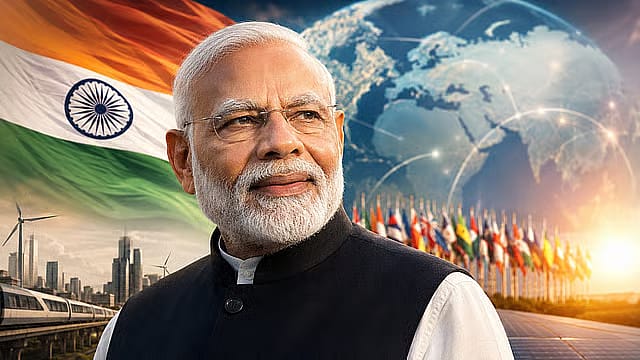
As Prime Minister Narendra Modi completed 12 years in office on Wednesday, the government highlighted a range of achievements spanning welfare, infrastructure, and governance. Beyond the headline reforms, however, some of the most visible economic changes of the past decade have come through the expansion of financial inclusion, digital infrastructure, and access to formal credit.
Government data shows more than 58 crore Jan Dhan accounts have been opened since 2014, while over ₹51 lakh crore has been transferred through the Jan Dhan-Aadhaar-Mobile (JAM) architecture. According to the government, the framework has helped streamline welfare delivery while bringing millions of previously unbanked Indians into the formal financial system.
Banking access and formalisation
The Jan Dhan programme has evolved from a financial inclusion initiative into a key pillar of direct benefit transfers. By linking bank accounts, Aadhaar and mobile connectivity, the JAM framework has enabled subsidies and welfare payments to be transferred directly to beneficiaries.
The government also cites a decline in multidimensional poverty, with more than 25 crore people moving out of poverty over the past decade. While economists continue to debate the relative contribution of individual schemes, wider access to banking, direct transfers, and improved service delivery are widely regarded as important factors in expanding economic participation.
"The focus was not merely on opening accounts but on integrating citizens into the formal economy," the report said, highlighting the role of digital identity and banking access in broadening participation in economic activity.
Digital rails and entrepreneurship
Lower data costs and rising smartphone penetration have accelerated digital adoption, helping online services, fintech firms and digital commerce scale rapidly across the country. The report notes that mobile data prices have fallen sharply since 2014, creating the conditions for greater internet usage and digital transactions.
The rise of the Unified Payments Interface (UPI) has further changed retail payments, making digital transactions commonplace across both urban and rural India. The government says the growth of digital payments and online services has widened financial access and reduced transaction frictions across sectors, although assessments of the broader economic impact vary.
Access to institutional finance has widened as well. Under Stand-Up India, loans worth more than ₹15,000 crore have been sanctioned to SC/ST entrepreneurs, while PM SVANidhi has disbursed over ₹17,000 crore to street vendors. These initiatives were aimed at turning "job seekers into job creators" by expanding access to formal credit channels.
Building economic capacity
Alongside financial inclusion, the government has pursued broader structural reforms. Goods and Services Tax (GST) created a unified indirect tax framework, while Production-Linked Incentive (PLI) schemes sought to boost domestic manufacturing and attract investment across sectors such as electronics, automobiles, and pharmaceuticals.
The policy push was accompanied by higher public capital expenditure and large-scale infrastructure programmes spanning roads, railways, logistics, and freight corridors. The government argues that initiatives such as PM Gati Shakti and investments in transport infrastructure are helping improve connectivity and reduce logistics bottlenecks, although the full economic impact will play out over time.
Furthermore, trade policy has also received renewed attention. India has signed free trade agreements with countries and blocs including the UAE, Australia and the European Free Trade Association (EFTA), with the government positioning these deals as instruments to boost exports, attract investment, and deepen integration with global supply chains.