The FAQs are AI-generated, and Fortune India is not responsible for its content or any associated copyright issues.
Tim Cook’s eventful stint: Building the Apple ecosystem
/ 2 min read
From wearables to Apple Silicon and spatial computing, Cook’s tenure reshaped Apple’s product strategy and broadened its reach
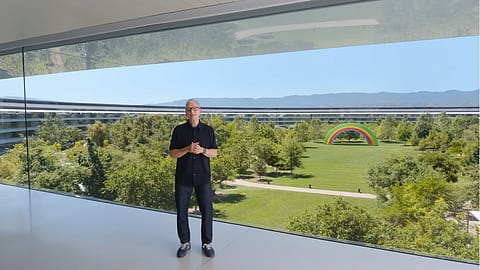
Apple CEO Tim Cook during WWDC 2025 | Credits: Apple YouTube
Tim Cook took over as CEO of Apple on August 24,2011, on the day Steve Jobs announced he was stepping down and passing on the baton to Cook, then COO. The 150-word letter was also Jobs’s way of saying goodbye to the community. A little over 40 days later, tragedy struck.
On October 5, 2011, Steve Jobs passed away, leaving Cook without a friend and mentor, and with giant shoes to fill. Now, as he prepares to step down as Apple’s longest-serving CEO, Cook can count many more wins than losses in his storied tenure. Among his many wins are making Apple the world’s first trillion-dollar company (its market cap currently is around $4 trillion); transitioning the tech giant from a hardware-focussed firm to a deeply integrated ecosystem player; and celebrating Apple’s 50th anniversary, among many others. And notwithstanding Apple’s struggles with AI, Cook has prepared the tech giant for a sustainable future with steady expansion across products and services and rising prominence as an environment-friendly brand.
Here’s a look at some of the highlights under Cook, till now:
The rise of wearables
In 2015, the Apple Watch was launched, and made a strong case for wearables in its successive iterations, as it evolved into a health-focussed device with features such as ECG monitoring, blood oxygen tracking and fall detection.
Pushing wireless audio
Apple introduced the AirPods in 2016, along with the iPhone 7, which ditched the headphones jack. This made wireless earphones a necessity, and with practically most other phone manufacturers giving the headphones jack a miss in subsequent years, earbuds became a necessity.
Ditching the home button and multiple models
In 2017, the iPhone X brought a significant change in smartphone design. It removed the home button, introduced a full-screen OLED display and replaced Touch ID with Face ID. Soon, other phone makers followed suit. The next year, Apple introduced its multiple model annual line-up with the iPhone XR, XS, and XS Max. This allowed Apple to cater to different price segments while maintaining its premium positioning.
Hitting $1 trillion
On August 2, 2018, Apple became the first company in the world to be valued at $1 trillion. Today, its market cap stands at around $4 trillion.
Recommended Stories
Meet Apple Silicon
In 2020, Apple shifted Macs to its own chips, starting with the M1. This move improved performance and battery life, while also enabling Macs to run apps designed for iPhones and iPads.
Moving into spatial computing
In 2023, Apple introduced the Apple Vision Pro, entering the spatial computing segment. The device allowed users to interact using eye tracking, hand gestures and voice, offering a new way to engage with digital content.
Tim Cook successfully navigated the traumatic first days to emerge a stronger leader and set Apple up for sustainable success during his tenure. Along the way he and Apple also learnt to successfully reflect on Steve Jobs with joy, not sadness, as he famously said in 2017.