The FAQs are AI-generated, and Fortune India is not responsible for its content or any associated copyright issues.
US court verdict against Trump's 10% tariff is limited in scope, may invite appeals for applicability across products
/ 2 min read
The court called the tariffs “invalid” and “unauthorized by law,” saying the law was meant for balance-of-payments emergencies, not for broad tariffs aimed at cutting trade deficits.
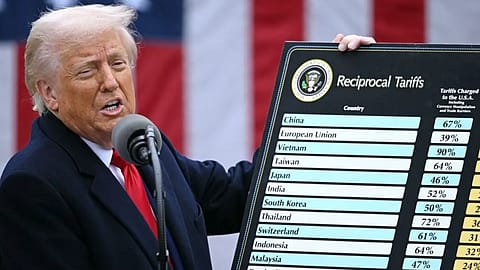
Unless the ruling becomes applicable to all products on which 10% tariff has been levied, it will not impact exports that have been carried out from India since February 20, the date when the additional tariff came into force. | Credits: Donald Trump's X account.
With the United States Court of International Trade striking down US President Donald Trump’s 10% global tariff, use of Section 122 of that country’s Trade Act of 1974 as a means to levy additional tariffs on goods imports has come under scrutiny.
The court called the tariffs “invalid” and “unauthorized by law,” saying the law was meant for balance-of-payments emergencies, not for broad tariffs aimed at cutting trade deficits.
Incidentally, the current ruling applies only to the parties that filed the case — the state of Washington, spice importer Burlap & Barrel, and toy maker Basic Fun, and does not invalidate Trump’s tariff measure as such. With the Trump administration expected to appeal immediately before the United States Court of Appeals for the Federal Circuit, and the petitioners likely to seek broader nationwide applicability of the ruling, the case could eventually return to the Supreme Court, extending uncertainty around the administration’s trade strategy, notes Delhi based think tank Global Trade Research Initiative (GTRI).
Unless the ruling becomes applicable to all products on which 10% tariff has been levied, it will not impact exports that have been carried out from India since February 20, the date when the additional tariff came into force. Earlier, US Courts had struck down the reciprocal tariffs imposed by Trump on all goods imports in a unilateral manner. If the Section 122 tariffs are invalidated by courts on all products, the US tariff system will return to its pre-Trump structure based on standard Most-Favoured-Nation (MFN) tariff rates under the WTO framework.
"The Trump administration is now expected to rely more on targeted trade measures such as Section 301 investigations and Section 232 national-security tariffs. These tools could be used against partner countries for sectors like steel, semiconductors, automobiles, pharmaceuticals, and critical minerals," Ajay Srivastava, founder GTRI said.
According to Srivastava, India should wait until the United States develops a more stable and legally reliable trade system before concluding the Bilateral Trade Agreement.
“The continuing uncertainty around U.S. tariff policy, with major Trump-era tariffs repeatedly struck down by courts, makes any long-term trade commitments by India difficult to justify. At present, the U.S. is also not prepared to reduce its standard Most-Favoured-Nation (MFN) tariffs, while expecting India to lower or eliminate it MFN duties across most sectors. Under such conditions, any trade deal risks becoming one-sided, with India offering permanent market access concessions without receiving any meaningful tariff benefits in return”, he said.
Frequently Asked Questions
NEXT STORY