The FAQs are AI-generated, and Fortune India is not responsible for its content or any associated copyright issues.
West Asia crisis: Govt to set up weekly monitoring system to track EXIM trends
/ 2 min read
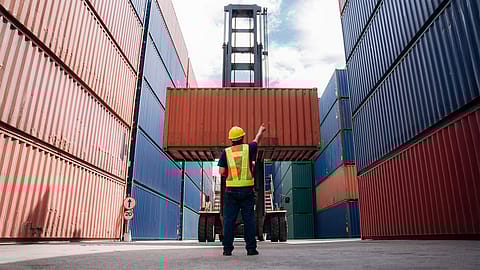
Industry participants highlighted the increase in prices of critical inputs, placing particular stress on MSMEs. | Credits: Shutterstock
West Asia crisis: Govt to set up weekly monitoring system to track EXIM trends
India’s commerce ministry will launch a weekly monitoring system to track export-import trends and sectoral stress as West Asia tensions disrupt supply chains. At a meeting led by Commerce Secretary Rajesh Agrawal, exporters flagged rising costs of packaging inputs like polymers and resins, logistics bottlenecks, and liquidity issues, particularly affecting MSMEs and sectors such as apparel, leather and medical devices.
This summary is AI-generated, and Fortune India is not responsible for its content or any associated copyright issues.
The meeting, chaired by Commerce Secretary Rajesh Agrawal, focused on challenges arising from disruptions in packaging materials and associated inputs.
Industry participants highlighted the increase in prices of critical inputs, placing particular stress on MSMEs. | Credits: Shutterstock
The commerce ministry on Friday said it will set up a weekly monitoring mechanism to track export-import trends and sectoral stress indicators amid concerns that supply chain disruptions, logistics constraints, and rising input costs due to geopolitical tensions could impact industries.
The concerns and challenges of the exporting community with regard to the rising cost of packaging material and disruptions in the ship movement in international waters, particularly to the West Asia region, were discussed in two separate meetings on March 9.
The meeting, chaired by Commerce Secretary Rajesh Agrawal, focused on challenges arising from disruptions in packaging materials and associated inputs.
It was observed that the ongoing geopolitical developments can impact the availability and pricing of key petrochemical inputs, such as polymers and resins, leading to increased costs for packaging materials across sectors.
Industry participants highlighted the increase in prices of critical inputs, placing particular stress on MSMEs.
Exporters highlighted that stress in supply chains, logistics constraints and rising input costs can impact industries, such as apparel, leather, telecom/optical fibre and medical devices.
Stakeholders flagged the need for support in terms of continued availability of critical inputs like LNG, helium and petrochemical derivatives, along with early GST refunds to improve liquidity, the ministry said in a statement.
Recommended Stories
Agrawal emphasised the need for undertaking time-bound assessments of key packaging inputs, including mapping domestic production capacity and identifying import dependencies.
"He mentioned that a structured monitoring mechanism for tracking export-import trends and sectoral stress indicators on a weekly basis will also be instituted," it said.
Following the meeting, the Ministry of Ports, Shipping and Waterways has directed all ports and terminal operators to take immediate action to enhance transparency and operational efficiency.
These measures include publication of concessions and waivers provided to cargo and vessels, review of bunker fuel availability, and expedited evacuation of stranded containers, reinforcing efficiency across the system, it said.
RANK
COMPANY NAME
REVENUE
(INR CR)
(INR CR)
{{#current-rank}} {{current-rank}} {{/current-rank}} {{^current-rank}} {{rank}} {{/current-rank}} {{name}} {{#revenue}} {{revenue}} {{/revenue}} {{^revenue}} {{noi}} {{/revenue}}
Logistics-related issues were discussed between the Commerce Secretary, Shipping Secretary, senior officials, port authorities, shipping agencies, Export Promotion Councils (EPCs), industry representatives and other stakeholders.
The conflict in West Asia has posed challenges for exporters to ship goods to the Gulf region, with which India had a bilateral trade of $178 billion in 2024-25 ($56.87 billion exports and $121.67 billion imports).