The FAQs are AI-generated, and Fortune India is not responsible for its content or any associated copyright issues.
Why Haleon sees India as a key battleground for the future of consumer health
/ 4 min read
Haleon currently serves around 1.6 billion consumers globally and wants to add another billion consumers over the next three to four years. India alone could contribute 300-400 million of those consumers.
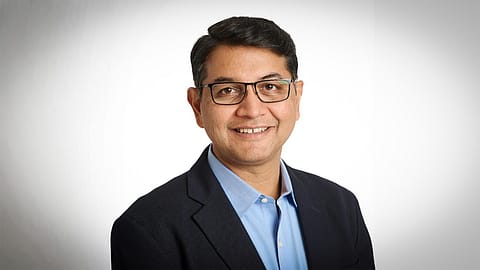
Credits: LinkedIn @Kedar Lele
For Kedar Lele, the newly appointed CEO and president of the India Subcontinent at Haleon, the opportunity lies in a simple but powerful shift underway in India. Consumers are moving from curative healthcare to preventive wellness, and that transition is opening up massive headroom for its brands such as Sensodyne, ENO, Centrum, Crocin and Paradontax.
“We are not an illness company. We are a wellness company,” Lele said during an interaction with journalists, outlining a strategy that revolves around widening category penetration, making premium healthcare products more accessible and building everyday preventive health habits among consumers.
The company reported first quarter 2026 revenue of £2.9 billion, with organic revenue growth of 2.2%. India delivered double-digit growth during the quarter, driven by “excellent in-market execution across Oral Health”. The company had earlier reported global revenue of £11,030 million for full-year 2025. Lele shared the India business has continued to grow in high double digits in both volume and value terms while consistently gaining market share, helping drive around 5.1% organic revenue growth for Haleon’s wider Asia Pacific business.
Lele believes India’s role inside the company is set to become far bigger. Haleon currently serves around 1.6 billion consumers globally and wants to add another billion consumers over the next three to four years.
India alone could contribute 300-400 million of those consumers, he said.
“South Asia will do a lot,” Lele said. “We want to grow in high double digits, which is where our growth has been. We’ve been in teens. We want to accelerate that more,” he said. “Can we double this business in four years’ time? For sure. Can we do it in three years’ time? That’s the objective.”
That ambition explains why Haleon has elevated South Asia into a separate operating unit as part of its new global structure announced earlier this year. While mature markets such as Europe and the US contribute nearly 60% of Haleon’s business, growth markets are now driving a disproportionate share of incremental growth.
Betting on preventive healthcare
Lele sees India at a “fabulous juncture” where consumer goods and healthcare are increasingly intersecting. Rising awareness, smartphone penetration, e-commerce access and premiumisation are changing the way Indians approach health products.
“Consumers are moving towards more holistic, proactive, preventive and pre-emptive care,” he said.
That thesis is helping shape Haleon’s India playbook. Sensodyne remains the company’s biggest value brand in India and continues to gain market share. Lele said one out of two Indians above the age of 35 suffers from tooth sensitivity, while oral care penetration for the company still stands at only around 20% households.
“We own the sensitivity space,” he said, adding that Sensodyne commands over 60% share in the sensitivity toothpaste segment.
{{#most-powerful-women-snapshot-individual.slug}} {{/most-powerful-women-snapshot-individual.slug}} {{^most-powerful-women-snapshot-individual.slug}} {{/most-powerful-women-snapshot-individual.slug}} {{#showRanking}} {{current-rank}} {{/showRanking}} {{#photo.0.url}}
{{name}}
The company is now broadening the franchise beyond toothpaste into adjacent categories such as toothbrushes, whitening products and specialised offerings like repair-and-protect and rapid-relief variants. Haleon has also introduced smaller ₹20 access packs of Sensodyne to deepen rural and kirana penetration.
“Nowhere in the world will you be able to buy Sensodyne for ₹20. We are the only ones who have got this innovation right now,” Lele said, adding that markets in South America and Southeast Asia are already studying the model.
The company is simultaneously trying to “consumerise” brands that were historically doctor-led or pharmacy-led. Lele pointed to Parodontax, positioned around night brushing and gum care, and Pronamel, which targets younger consumers before sensitivity sets in.
“There is a great opportunity to consumerise these brands and make them mainstream,” he said.
Rural push and distribution expansion
A major part of Haleon’s next growth phase will come from expanding distribution deeper into India. Over the past 18 months, the company has nearly doubled its controlled retail coverage to one million outlets by adding about 4.5 lakh outlets, including a significant push into rural markets.
“For a company of our size, being able to go to a million outlets in a controlled coverage manner is substantial,” Lele said.
While rural currently contributes around 20-25% of Haleon India’s business, Lele sees significant runway ahead, especially as smaller packs improve affordability.
ENO already has deep mass penetration. More than one billion sachets of ENO are sold annually in India, according to the company. Lele described the digestive health brand as one that reaches virtually every Indian household. “Every Indian, in a year, at least has one pack of ENO,” he said.
The company is now looking at extending such access-led innovation across categories. Centrum Recharge, a ₹10 vitamin energy sachet aimed at hydration and supplementation, is one example of that strategy.
Lele also hinted at a future manufacturing expansion in India. Currently, most products are locally produced through contract manufacturers, but Haleon could eventually invest in its own facilities as scale rises.
“We do believe that there will be a scale and time where we would have to put in some of our own manufacturing setup,” he said, adding that India could also emerge as an export hub for some products.
Insulation against geopolitical upheaval
Even amid inflation concerns and geopolitical tensions, Lele remains optimistic about demand for consumer healthcare products in India. The company is closely monitoring the impact of the West Asia conflict and the resulting pressure on crude-linked inputs and consumer sentiment.
Lele said the company has so far remained relatively insulated from the direct fallout because most of its products sold in India are manufactured locally and do not rely heavily on imported raw materials. The primary exposure, he noted, is through packaging costs linked to crude oil derivatives.
“Fortunately for us, apart from packaging, there is no other crude oil derivative that we have got in our products,” he said. “Packaging is a small part of our total raw material cost. So even if it goes up by 40%, it is not going to affect us too much within the year.”
Lele added that the benefits consumers received from GST reductions over the past year may gradually get offset by higher inflation stemming from geopolitical tensions and commodity price volatility.
For a company that now sees India as one of its biggest growth markets globally, the next phase will be less about introducing unfamiliar brands and more about turning everyday healthcare into a mass consumption habit.
Follow Fortune India
Frequently Asked Questions
NEXT STORY