Amid the Middle East war, RBI unlikely to turn aggressive to protect the rupee
/ 4 min read
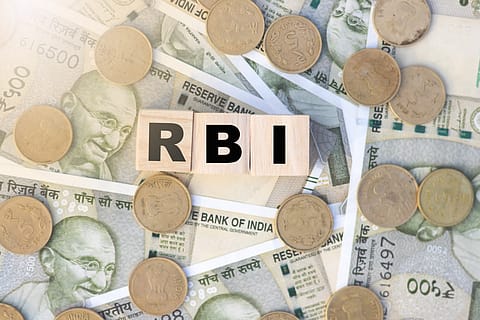
Till the war struck, India’s macro-economic fundamentals were quite fine, with benign inflation and impressive Q3FY26 GDP growth of 7.8%
Amid the Middle East war, RBI unlikely to turn aggressive to protect the rupee
Amid escalating Middle East tensions and a strengthening dollar, the Reserve Bank of India is unlikely to take aggressive measures to protect the rupee, which hit a record low of 92.35 against the dollar. Economists suggest that the RBI will focus on reducing volatility rather than intervening heavily, as external factors like oil supply disruptions drive market dynamics.
This summary is AI-generated, and Fortune India is not responsible for its content or any associated copyright issues.
But the central bank will also not allow a free fall. An intervention will come only when the oil movement is extreme
Till the war struck, India’s macro-economic fundamentals were quite fine, with benign inflation and impressive Q3FY26 GDP growth of 7.8%
As the US-Iran war shows no sign of de-escalating and the dollar strengthens, it is quite likely that the Reserve Bank of India (RBI) will not take an aggressive step to prevent a further depreciation, economists and analysts say. The rupee slid to a record low of 92.35 to the dollar intra-day Monday, as crude oil prices continued to rise and raise inflation concerns.
News came in during the day that the Group of Seven finance ministers will not release strategic oil reserves immediately. They were ready to take necessary measure to boost energy supplies, but will wait.
“In the current scenario there are very few variables that the RBI, or any central bank for that matter, can control,” said Garima Kapoor, deputy head of research and economist at Elara Securities said.
Sakshi Gupta, principal economist at HDFC Bank said the longer the war goes on, the greater will be the pressure on the rupee. “This time there is an actual supply shock, which the market is attempting to factor in,” she said.
Till the war struck, India’s macro-economic fundamentals were quite fine, with benign inflation and impressive Q3FY26 GDP growth of 7.8%. But India is being viewed as an anti-AI trade, meaning where AI adoption, regulation and exposure to global AI is less. But it has also meant poor foreign flow flows, in fact outflows. “Now in the current scenario, with poor net foreign fund flows, a strengthening dollar, India’s current account deficit will rise and investors will avoid exposure to Asian economies right now, which appear vulnerable to shock.
Every rise of $10 results in a 30 basis points rise in the current account deficit, economists say.
No extreme reaction from RBI likely
The RBI’s well publicised view is that it will not try to control the value of the rupee in the market, but will reduce volatility.
“So what can a central bank do, except to reduce volatility. There is no extreme reaction they can take, because if this is an outcome due to some external
developments….if the crisis were to reverse, the situation which is risky will become neutral, Kapoor says.
“Acting very aggressively right now, will not help, as much as it might, probably when things start to get a little normal, she added. She did not think the RBI will try far excessively to prevent a moderating or a depreciation. They will intervene only when the movements are extreme.
HDFC Bank’s Gupta said that there is a general risk of trade. “Also people do not want to put funds into riskier assets, so everything is flowing to the US dollar and people are pulling out of emerging markets, which are perceived riskier.”
{{#most-powerful-women-snapshot-individual.slug}} {{/most-powerful-women-snapshot-individual.slug}} {{^most-powerful-women-snapshot-individual.slug}} {{/most-powerful-women-snapshot-individual.slug}} {{#showRanking}} {{current-rank}} {{/showRanking}} {{#photo.0.url}}
{{name}}
Naveen Mathur, director, Commodity, Currency and GIFT City, IFSC, also agrees. “The RBI will have to keep taking action. Oil will be the key factor in the macro-economic architecture.
In the case of previous wars, such as the ongoing Russia-Ukraine war, the challenges were multitude: India did get impacted, but the dependence on Russia for its oil, then, was not so heavy. “In the current situation it is not the price of oil which is the problem, it is the availability of crude which is the problem,” Kapoor said. India would plan to go ahead and pay an escalated price for oil, if it were available.
In the current scenario, a rise in inflationary pressures, fear of growth softening, will never spell good news for the rupee.
HDFC Bank’s Gupta says the RBI will ideally not allow a free fall for the rupee. “Free fall will feed into itself. Marketmen will start selling, fearing that there is a free fall, so the price will depreciate more,” Gupta said.
“While we expect the RBI to actively intervene to limit immediate forex volatility we could the rupee moving in the 91-93 range in the near term, influenced by the degree and extent of how the tensions unfold, particularly in regards to the supply disruption at the Strait of Hormuz.
The economists also said that even if the war de-escalated, depending on the overshoot of the rupee, it may retrace from a low but will at beat claw back to 91 levels. Most economists are now not projecting a long-term or end of the year level for the rupee, due the extreme economic developments.
Follow Fortune India
NEXT STORY