Budget 2026: Jobs and skilling emerge as key growth priorities
With a large young labour force entering the market annually, Budget 2026 is anticipated to focus on measures that expand formal employment, enhance employability, and support labour-intensive sectors
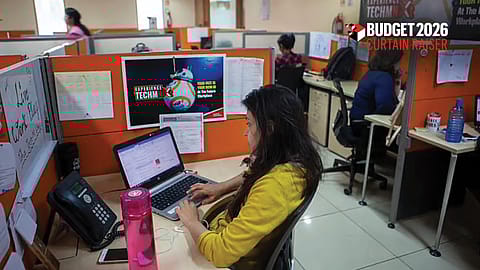
As the Union Budget 2026 approaches on 1 February 2026, employment generation and workforce skilling are expected to take centre stage, with policymakers balancing economic growth and job creation. While India has maintained robust GDP growth, the distribution, quality, and sustainability of jobs remain under scrutiny.
With a large young labour force entering the market annually, Budget 2026 is anticipated to focus on measures that expand formal employment, enhance employability, and support labour-intensive sectors.
Past Budgets and employment frameworks
Recent Budgets have shaped the employment ecosystem through incentives and reforms. Production Linked Incentive (PLI) schemes across manufacturing sectors since 2021 have aimed to boost output and create jobs through domestic value addition. Infrastructure investments in roads, railways, logistics, and housing have supported construction-led employment, particularly for semi-skilled workers.
Skilling initiatives, including the expansion of Pradhan Mantri Kaushal Vikas Yojana (PMKVY) and digital training platforms, have sought to align workforce capabilities with industry needs. Budgets have also emphasised startups and MSMEs, recognising their role as major employment generators.
Employment intensity and sectoral gaps
Despite these efforts, formal employment growth has remained uneven. Services have absorbed most new workers, while manufacturing-led job expansion has lagged. Stakeholders highlight skill mismatches, compliance burdens, and constrained MSME financing as challenges, calling for targeted incentives to promote labour-intensive hiring.
Skilling, MSMEs, and emerging sectors
Skilling is expected to be a focus, with closer alignment between vocational training, higher education, and sectors such as electronics, green energy, AI, and advanced manufacturing. MSMEs are seeking improved credit access and simplified compliance to expand formal employment and scale operations.
Policy continuity and sustainable job creation
Beyond new schemes, experts emphasise policy stability, sustained public investment, and private-sector participation as critical to converting growth into durable employment gains. Budget 2026 is seen as an opportunity to establish a framework that balances short-term job creation with long-term workforce development.