The FAQs are AI-generated, and Fortune India is not responsible for its content or any associated copyright issues.
CII pushes GIS land bank, single-window system to cut project delays; calls for national reform in industrial land management
/ 2 min read
Industry body flags fragmented processes and high transaction costs as key hurdles to manufacturing growth, proposes end-to-end overhaul
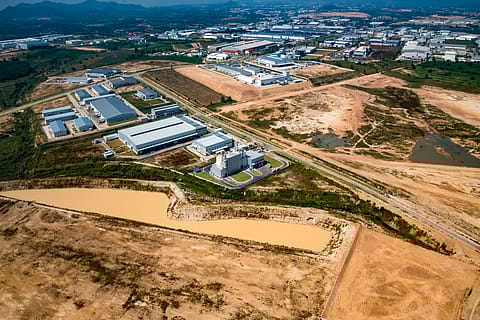
Representational Image | Credits: JHA
The Confederation of Indian Industry (CII) has called for a comprehensive overhaul of India’s industrial land management framework, warning that fragmented processes and regulatory bottlenecks are slowing investments and delaying project execution. In its latest report, “CII Land Mission: Framework to Reform Industrial Land Management in India”, the industry body outlined a roadmap to improve transparency, reduce costs and accelerate manufacturing-led growth.
The report underscores that industrial land is a critical input for sectors such as manufacturing, infrastructure, renewable energy and logistics, but access remains constrained due to unclear titles, delayed possession, regulatory complexity and underutilisation of allocated land. These inefficiencies, it noted, raise the cost of capital and weaken investor confidence, particularly for MSMEs and greenfield projects.
Fragmented processes, high costs flagged
Prepared under the leadership of T. V. Narendran, the report identifies systemic gaps across the land lifecycle, including non-standardised documentation, multiple departmental approvals and absence of defined timelines. It highlights that wide inter-state variation in stamp duty and registration charges further inflates upfront project costs and distorts investment decisions.
CII Director General Chandrajit Banerjee said, “India’s manufacturing ambitions under Make in India, National Industrial Corridors, renewable energy expansion, and modern logistics cannot be realised unless industrial land becomes predictable, transparent, and investment ready.”
GIS land bank, digital approvals proposed
Among its key recommendations, the report proposes the creation of a unified, GIS-enabled National Industrial Land Bank providing real-time data on land availability, zoning, utilities, environmental constraints and title clarity. It also advocates a fully integrated digital single-window system to streamline approvals, standardise documentation and introduce service-level agreements, including deemed approvals for non-sensitive clearances.
Recommended Stories
Narendran noted that “the challenge in industrial land is not only acquisition, but readiness and utilisation,” pointing to delays arising from infrastructure gaps, unclear titles and prolonged downstream approvals even after land allotment.
To reduce legal uncertainty, CII has recommended digitisation of land records, GIS-linked cadastral mapping, and introduction of title insurance for large industrial parcels. It has also proposed standardised social impact assessment templates, land pooling models and district-level fast-track acquisition cells.
National council to drive reforms
At an institutional level, the report calls for setting up a National Industrial Land Council, modelled on a GST-like framework, to harmonise regulations across states and monitor implementation. State-level land authorities would support execution on the ground.
RANK
COMPANY NAME
REVENUE
(INR CR)
(INR CR)
{{#current-rank}} {{current-rank}} {{/current-rank}} {{^current-rank}} {{rank}} {{/current-rank}} {{name}} {{#revenue}} {{revenue}} {{/revenue}} {{^revenue}} {{noi}} {{/revenue}}
CII said coordinated implementation of these reforms could significantly reduce project timelines, lower transaction costs and improve land utilisation, strengthening India’s position as a global manufacturing hub.