The FAQs are AI-generated, and Fortune India is not responsible for its content or any associated copyright issues.
Digital access, cyber security challenges in DPI ecosystem: Nageswaran
/ 2 min read
Nageswaran said large sections of the population, particularly the elderly, people living in areas with poor connectivity and those with low literacy and limited digital fluency, still face barriers in accessing digital services.
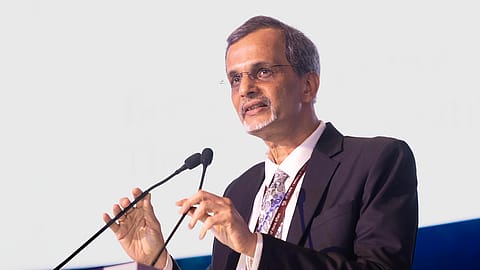
V. Anantha Nageswaran, Chief Economic Advisor. | Credits: Sanjay Rawat
India's digital public infrastructure (DPI) has achieved world-class scale, but challenges relating to digital access, data governance, interoperability and cyber security remain areas of concern, Chief Economic Advisor V. Anantha Nageswaran said on Friday.
Addressing an ICRIER event on "Digital Public Infrastructure & Public Service Delivery", Nageswaran said large sections of the population, particularly the elderly, people living in areas with poor connectivity and those with low literacy and limited digital fluency, still face barriers in accessing digital services.
"Digital infrastructure, however sophisticated, is not the same as digital inclusion in the fullest sense. The last great challenge of ensuring that those who most need services are also those who can most easily access them through digital means, that remains an ongoing effort," Nageswaran said.
He said legislative and institutional framework in the area of data sharing and digital records is still evolving.
Nageswaran said interoperability of DPI across states remains a "work in progress" and although Union Government systems are increasingly well integrated, the quality and completeness of state-level digital infrastructure varies considerably.
"Since a significant portion of service delivery in health, education, land records and local welfare schemes happens at the state level, the quality of citizen experience is often determined more by state capacity than by central infrastructure," Nageswaran said.
With regard to cyber security, he said the security pillar requires sustained institutional attention as sophistication of threats evolves continuously.
" India has built over a relatively short period a digital public infrastructure that is generally world-class in scale, design and operational reach. It has demonstrably improved the inclusion, efficiency and security of welfare measure," Nageswaran said.
India used Jan Dhan accounts, Aadhaar authentication and mobile connectivity, collectively known as the JAM Trinity , to enable direct benefit transfers and reduce leakages by routing welfare benefits straight into beneficiaries' bank accounts.
DPI is reshaping how nations govern, transact and deliver services. In this transformation, India has moved from being a large user of digital systems to a builder of population scale digital architecture.
Frequently Asked Questions
NEXT STORY