The FAQs are AI-generated, and Fortune India is not responsible for its content or any associated copyright issues.
India’s fertiliser subsidy bill may overshoot ₹1.71 lakh crore in FY27 amid West Asia crisis
/ 2 min read
Rising global prices of urea and other nutrients could push subsidy outgo higher, even as government assures stable supply for the kharif 2026 season
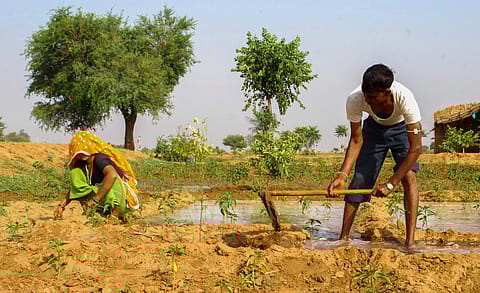
Representational Image | Credits: Sanjay Rawat
The government's fertiliser subsidy bill for the 2026-27 fiscal is expected to exceed the budgetary allocation of Rs 1.71 lakh crore, with rising costs of imported urea and other fertilisers driven by the ongoing West Asia crisis, a senior ministry official said Monday.
"We know that the costs have risen. Cost of both urea and other fertilisers showing an upward trend... There will surely be an increase, but as of now, cannot say," Aparna S Sharma, Additional Secretary in the Department of Fertilisers, said at an inter-ministerial briefing on developments in West Asia.
Despite the supply chain disruptions triggered by the West Asia crisis, Sharma said fertiliser availability remains "strong and stable" for the kharif 2026 season.
Domestic production for March-April stood at 67.76 lakh tonnes — comprising urea (40.72 lakh tonnes), Di ammonium Phosphate (5.39 lakh tonnes), NPK (13.65 lakh tonnes) and SSP (8 lakh tonnes) — supplemented by imports of 17 lakh tonnes. The imports were managed through coordinated efforts involving the ministries of ports and external affairs.
For May, the department has set a domestic production target of 22 lakh tonnes of urea, 4 lakh tonnes of DAP and 8 lakh tonnes of NPK. Some urea plants that had temporarily shut down are set to resume operations, with gas supply already secured, she said.
A global tender for urea imports has been processed, with supplies expected in May-June. A separate global tender for 19 lakh tonnes of NPK fertilisers has also been floated to meet peak demand.
The Department of Agriculture has assessed the fertiliser requirement for kharif 2026 at 390.54 lakh tonnes. Against this, states have already stocked 195.71 lakh tonnes — nearly 50 per cent of the requirement — reflecting what officials described as "improved planning and advanced stocking".
State-wise demand has been mapped based on the agriculture ministry's assessment, with stocking and advance planning already undertaken. Beyond central-level stocking, redistribution within districts remains the responsibility of state governments.
"We are having regular meetings with states. As the season approaches, a 24x7 contingency cell will be set up to tackle redistribution issues," Sharma said
Frequently Asked Questions
NEXT STORY