The FAQs are AI-generated, and Fortune India is not responsible for its content or any associated copyright issues.
Ganga Expressway to unlock multi-phase realty growth in 12 UP districts; warehousing to come up within 5 km of 18 nodes: Knight Frank India
/ 2 min read
Knight Frank India outlines a three-phase development cycle along the 594-km corridor, with Grade A warehousing leading early gains and residential, industrial assets following over the next decade
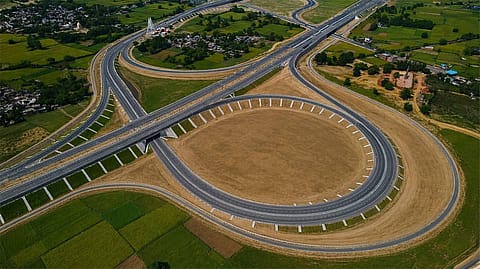
Ganga Expressway is now the longest expressway in Uttar Pradesh | Credits: UPEIDA
The Ganga Expressway, which just got inaugurated by Prime Minister Narendra Modi, is set to unlock a multi-phase real estate growth cycle across 12 districts of Uttar Pradesh, with Grade A warehousing expected to emerge within a 5-km radius of 18 interchange nodes in the initial years, according to a report by Knight Frank India. The 594-km corridor is expected to drive a shift from city-centric development to a distributed, corridor-led model of value creation.
The report highlights that development along the expressway will unfold in stages, beginning with logistics and warehousing, followed by industrial, residential and commercial expansion over the medium to long term. This phased progression is expected to extend Uttar Pradesh’s real estate growth beyond traditional hubs such as Lucknow, Noida and Ghaziabad into a broader, infrastructure-led economic corridor.
Warehousing to lead early gains, industrial activity to follow
In the first phase—spanning up to three years after operationalisation—Grade A warehousing is expected to dominate development activity, particularly within 5 km of interchange nodes. This zone is likely to witness the fastest price discovery, driven by logistics demand and improved connectivity, following trends seen along other expressway corridors.
As the corridor matures, the second phase—between years two and five—will see industrial activation across districts, with rising demand for manufacturing units, logistics parks and supply chain infrastructure. This phase is also expected to trigger residential growth in district towns, alongside expansion in retail, office spaces, and social infrastructure such as education and healthcare.
Long-Term value creation to extend beyond core nodes
Beyond the initial growth zones, development is expected to gradually expand into surrounding areas over a five- to ten-year horizon. This third phase will be characterised by land aggregation, residential expansion and long-term industrial investments, particularly in districts currently classified as early-stage markets.
Knight Frank’s District Readiness Index indicates that Meerut and Prayagraj are best positioned to capture early gains, given their relatively stronger ecosystem readiness. Meanwhile, districts such as Hardoi, Unnao, Hapur and Rae Bareli are expected to emerge as key industrial and logistics hubs in the near term, supported by improving infrastructure and rising investor interest.
Sectoral opportunities spread across the corridor
The corridor is also expected to unlock sector-specific opportunities across districts. Meerut could see residential growth driven by NCR spillover, while agro-processing clusters in Pratapgarh, Shahjahanpur and Hardoi are likely to benefit from improved connectivity.
Cold chain infrastructure is expected to gain traction in Pratapgarh, Unnao and Hapur, while manufacturing-led growth is projected in districts such as Amroha, Badaun and Shahjahanpur.
According to Knight Frank, the expressway will create a unified high-speed economic corridor linking western Uttar Pradesh’s manufacturing base with central agricultural regions and eastern education and pilgrimage hubs, potentially emerging as a key driver of North India’s next phase of real estate and economic growth
Frequently Asked Questions
NEXT STORY