The FAQs are AI-generated, and Fortune India is not responsible for its content or any associated copyright issues.
India must build buffers, cut import dependence to weather West Asia-like shocks: EAC-PM Chief
/ 4 min read
EAC-PM chief urges stronger commodity stockpiles, diversified supply chains and reduced fossil-fuel reliance as West Asia conflict exposes India’s import risks
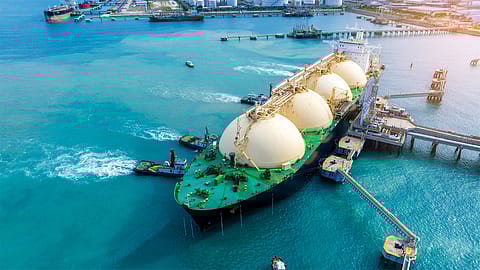
Since the beginning of the war in West Asia on February 28, crude oil prices soared to a four-year high of USD 126 per barrel on Thursday, from about USD 73 before the war. | Credits: Shutterstock
India must map and monitor key economic vulnerabilities, particularly in areas such as energy, food, fertilisers, metals, and critical minerals, and proactively address both supply disruptions and price volatility to mitigate the impact of future West Asia-like crisis, a top government official said on Monday.
Economic Advisory Council to the Prime Minister (EAC-PM) Chairman S Mahendra Dev in an interview with PTI further said the ongoing West Asia conflict highlights the need for a forward-looking approach to risk management.
"India must map and monitor key economic vulnerabilities, particularly in areas such as energy, food, fertilisers, metals and critical minerals, and proactively address both supply disruptions and price volatility," Dev said.
He said this calls for a substantial strengthening of physical buffers, including an expansion of strategic petroleum reserves and the creation of stockpiles for essential commodities, going beyond the conventional reliance on foreign exchange reserves and foodgrain stocks.
Since the beginning of the war in West Asia on February 28, crude oil prices soared to a four-year high of USD 126 per barrel on Thursday, from about USD 73 before the war.
Dev said reducing excessive dependence on imports is critical.
"This can be achieved through greater diversification of supply sources and trade routes, alongside more strategic and effective utilisation of free trade agreements," he said, adding that over the medium term, the most sustainable solution lies in addressing structural dependence on fossil fuels.
Noting that uncertainties and frequent shocks will be there at the global level in future also, Dev said India's corporate sector has received significant profits in the last few years.
"They also have to play an important role in India's growth story by increasing private investment instead of sitting on cash," he said.
Dev pointed out that India has made several domestic reforms, including ease of doing business to attract domestic and foreign investment.
On what policy options the government has given the current uncertainties, he said to cushion the impact of the ongoing conflict in West Asia, a combination of fiscal, monetary, trade and supply-side interventions is being deployed.
{{#most-powerful-women-snapshot-individual.slug}} {{/most-powerful-women-snapshot-individual.slug}} {{^most-powerful-women-snapshot-individual.slug}} {{/most-powerful-women-snapshot-individual.slug}} {{#showRanking}} {{current-rank}} {{/showRanking}} {{#photo.0.url}}
{{name}}
"The government has developed an emergency response mechanism, which has helped it respond to the crisis since Covid," he said.
Dev noted that the West Asia crisis can have an impact on the global economy through higher energy prices, slow growth in trade, supply chain shocks, higher logistic costs, lower remittances, etc.
"The conflict will have some impact on the Indian economy as the country imports 90 per cent of its crude requirements and 50 per cent of its gas (LNG) requirements," he said.
However, the economist observed that India has displayed resilience in the face of global headwinds generated by the war in West Asia.
"The economy has been strong and robust due to strong fundamentals: fiscal deficit 4.4 per cent of GDP: debt-GDP ratio centre 56 per cent of GDP; combined debt with states 81 per cent of GDP; debt of India is among the lowest as compared to high debt of other countries," he said.
Dev predicted that the current account deficit (CAD) was below 1 per cent in FY26 but it may increase in FY27 but can be managed.
Responding to a question on the impact of the West Asia crisis will have on India's GDP growth, Dev said under the scenario projection of assuming USD 95 per barrel of crude oil, the GDP growth would be 6.7 per cent and inflation 5 per cent in FY27.
"It shows that the impact on growth and inflation would be contained even if there is an increase in global crude oil prices. This is of course subject to the length of the conflict and the trajectory which oil prices take," he said.
India's economic growth in FY26 is estimated at 7.6 per cent.
According to RBI baseline projections, real GDP growth for FY27 will be 6.9 per cent with 4.6 per cent inflation assuming USD 85 per barrel of crude oil.
On the rupee's steady decline in recent months, Dev said it can largely be attributed to heightened global uncertainty, which has triggered a risk-off sentiment and volatility across global financial markets.
"Rupee weakening seems to be a temporary cyclical rather than structural problem."
Dev noted that the trade balance performed well in March despite global headwinds, supported by robust export performance across a diversified set of markets, helping cushion external sector pressures.
"The foreign portfolio investors( FPIs) will return to India once normalises happens in West Asia," he said, adding that the gross FDI inflows is expected to be USD 90 billion in 2025-26.
According to him, it may increase further, supported by several government reforms and supply chain shifts.
Noting that India's investment momentum is a direct outcome of policy clarity and the trust global investors place in India's systems, Dev said several states are attracting foreign investment due to proactive policies.
"While there is near-term volatility amid global headwinds, underlying external fundamentals remain relatively resilient," he said.
The fell 24 paise to close at an all-time low of 95.08 against the US dollar on Monday as the ongoing tensions in the Middle East continue to keep markets on edge.
Frequently Asked Questions
NEXT STORY