India’s civil nuclear energy ambitions soar to the next level, as the first Fast Breeder Reactor takes off
/ 4 min read
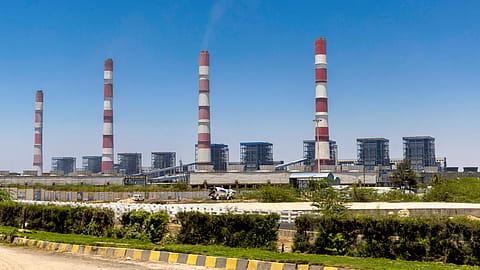
Representational image | Credits: Narendra Bisht
India’s civil nuclear energy ambitions soar to the next level, as the first Fast Breeder Reactor takes off
India’s nuclear programme enters a decisive second phase as the 500 MW Prototype Fast Breeder Reactor at Kalpakkam attains first criticality, positioning the country alongside Russia in commercial-scale fast breeder technology. The PFBR anchors India’s three-stage, closed fuel cycle strategy to convert vast thorium reserves into Uranium-233, underpinning long-term energy security and a planned 100 GW nuclear capacity by 2047.
This summary is AI-generated, and Fortune India is not responsible for its content or any associated copyright issues.
With the Kalpakkam PFBR achieving first criticality, India enters the second stage of its three-phase nuclear roadmap, unlocking fuel-breeding capabilities that could significantly accelerate its push towards long-term energy security and a 100 GW nuclear target by 2047.
Representational image | Credits: Narendra Bisht
India's current nuclear capacity is 8.8 Gigawatt (GW)—about 25 nuclear reactors in operation across seven power plants—developed since India's first nuclear reactor, Apsara, was commissioned in 1956 at the Bhabha Atomic Research Centre (BARC) in Trombay, Mumbai. In 2024–25, these nuclear power plants together generated 56,681 Million Units of electricity. But that is only 3.1% of India's total power generation.
That will change in the coming years, and nuclear energy is going to be a major contributor to India's energy mix. With the 500-megawatt (MW) Prototype Fast Breeder Reactor (PFBR) at Kalpakkam in Tamil Nadu successfully attaining its first 'criticality' or sustained and controlled nuclear fission chain reaction on April 6, India's civil nuclear energy ambitions have entered its second phase—the ability to make fuel-saving commercial-scale Fast Breeder Reactors (FBR).
At present, only Russia has such commercial-scale FBRs, the BN-800 (Beloyarsk-4) and an older BN-600 (-3). Countries like the US, France and Germany had built FBRs in the past, but those were either discarded or shut down due to high costs and technical complexities.
India’s three-stage nuclear roadmap
A vision first conceived by Homi Jehangir Bhabha, the architect of India's nuclear programme, the Department of Atomic Energy (DAE) envisions a three-stage nuclear power programme built on a closed nuclear fuel cycle. It intends to progressively multiply domestic fissile resources and secure long-term energy independence. India has limited uranium reserves, but one of the largest thorium reserves in the world.
In the first stage, Pressurised Heavy Water Reactors (PHWRs) are built using natural uranium as fuel to generate power. The spent fuel from these reactors produces plutonium, which becomes the primary input for the next stage. The plutonium obtained from Stage 1 is used as fuel in FBRs, which generate more fuel than they consume. The PFBR at Kalpakkam marks India's entry into this stage. These reactors will be used to breed Uranium-233 from thorium, laying the groundwork for Stage 3, in which Thorium-Based Reactors will harness India's vast thorium reserves at scale, using the Uranium-233 bred in Stage 2 as fuel. The whole idea is to convert Thorium-232 into Uranium-233 for sustainable, long-term energy generation.
How do FBRs work?
Unlike conventional thermal reactors, the PFBR uses Uranium-Plutonium Mixed Oxide (MOX) fuel. The fissile material used is recovered from the reprocessing of spent fuel from PHWRs. The core of the PFBR is surrounded by a blanket of Uranium-238. Fast neutrons convert this into fissile Plutonium-239, enabling the reactor to produce more fuel than it consumes. The reactor is designed to eventually use Thorium-232 in the blanket. Through transmutation, Thorium-232 will be converted into Uranium-233, the fuel that will power India's third stage of nuclear energy based on thorium.
The spent fuel generated by the PFBR will be reprocessed and recycled back into the reactor. This closes the second-stage fuel cycle and paves the way for large-scale use of India's abundant thorium reserves in Stage 3.
Thorium is considered a practically vast energy source, and this stage holds the key to India's long-term energy security. Thorium is extracted from monazite, a mineral found in beach sands that contains about 8–10% thorium. India's beaches in Kollam and Alappuzha in Kerala, parts of Tamil Nadu, Andhra Pradesh, and parts of West Bengal and Odisha, hold about 1.07 million tonnes or one-fourth of the world’s thorium resources, adequate to fuel India's nuclear plants for centuries.
India’s first PFBR
The Kalpakkam PFBR was built by Bharatiya Nabhikiya Vidyut Nigam Limited (BHAVINI), a Government of India enterprise under the Department of Atomic Energy (DAE), established in 2003. Its primary mandate was to construct, commission, and operate India's PFBR at the Kalpakkam Nuclear Complex. The Indira Gandhi Centre for Atomic Research (IGCAR), established in 1971 at Kalpakkam, developed the PFBR. Prime Minister Narendra Modi witnessed the commencement of "Core Loading" at India's first indigenous FBR at Kalpakkam on March 4, 2024.
As a prelude to the FBR programme, a Fast Breeder Test Reactor (FBTR) attained first criticality on October 18, 1985, at Kalpakkam, and in March 2022, this reactor was successfully operated at its design capacity of 40 MW.
To meet the fuel processing and recycling needs, the DAE is constructing an Integrated Nuclear Reprocessing Plant (INRP) at Tarapur. In parallel, to meet the challenges of PFBR spent fuel reprocessing, a Demonstration Fast Reactor Fuel reprocessing plant has been constructed, which was dedicated to the nation by Prime Minister Narendra Modi on January 2, 2024. A large-scale commercial Fast Reactor Fuel Cycle Facility (FRFCF) is also under construction at Kalpakkam.
{{#most-powerful-women-snapshot-individual.slug}} {{/most-powerful-women-snapshot-individual.slug}} {{^most-powerful-women-snapshot-individual.slug}} {{/most-powerful-women-snapshot-individual.slug}} {{#showRanking}} {{current-rank}} {{/showRanking}} {{#photo.0.url}}
{{name}}
With the prototype fast breeder reactor attaining criticality, the next stage will be to develop twin fast breeder reactors (FBR-1 & 2) at the adjoining site of PFBR at Kalpakkam, to make use of the co-located fast reactor fuel cycle facility (FRFCF). The R&D and technology development towards detailed design of FBR-1 & 2 (2 x 500 MW) are being carried out at IGCAR.
Vision 2047
India's nuclear capacity is set to grow nearly three times in the coming years. With indigenous 700 MW reactors and 1,000 MW reactors being developed through international cooperation, the installed capacity is projected to reach 22.38 GW by 2031–32. The Government has announced the Nuclear Energy Mission, outlined in the Union Budget 2025–26, to achieve 100 GW of nuclear power generation capacity by 2047.
The Nuclear Energy Mission allocated ₹20,000 crore towards the design, development, and deployment of Small Modular Reactors (SMRs). Plans are to have at least five indigenously designed SMRs operational by 2033. The Bhabha Atomic Research Centre (BARC) is leading the development of next-generation reactor designs, including the 200 MWe Bharat Small Modular Reactor (BSMR-200), the 55 MWe SMR-55, and a High-Temperature Gas-Cooled Reactor of up to 5 MWth (Megawatt thermal) designed for hydrogen generation.
To support the mission, the Government has enacted the ‘The Sustainable Harnessing and Advancement of Nuclear Energy for Transforming India (SHANTI) Act, 2025.’ The Act consolidates and modernises India's nuclear legal framework and enables limited private participation in the nuclear sector under regulatory oversight, opening new avenues for collaboration and investment.
Follow Fortune India
NEXT STORY