India’s GDP growth to moderate to 7.1% in FY27 despite global headwinds: Crisil
/ 2 min read
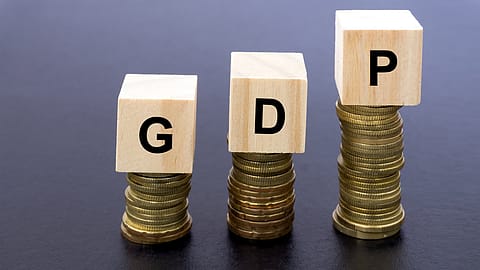
India's GDP growth | Credits: Fortune India
India’s GDP growth to moderate to 7.1% in FY27 despite global headwinds: Crisil
India's GDP growth is projected to moderate to 7.1% in FY27, down from 7.6% in FY26, as strong domestic demand and private investment counter global challenges, according to Crisil. Despite geopolitical tensions and trade disruptions, India's economy remains resilient, driven by robust consumption and infrastructure spending.
This summary is AI-generated, and Fortune India is not responsible for its content or any associated copyright issues.
Domestic demand, public capex and emerging-sector investments expected to anchor growth even as geopolitical risks persist.
India's GDP growth | Credits: Fortune India
India’s economic growth is expected to moderate slightly but remain resilient at 7.1% in fiscal 2027, compared with 7.6% in fiscal 2026, as strong domestic demand and a gradual revival in private investment offset global uncertainties, according to a report by Crisil.
The forecast, announced at the 10th edition of Crisil’s India Outlook Conclave, indicates India’s ability to sustain growth even as geopolitical tensions, trade disruptions and protectionist policies continue to cloud the global economic environment.
What will drive India’s growth in FY27?
Crisil expects domestic demand to remain the primary engine of growth, supported by strong consumption and sustained infrastructure spending.
Private consumption, which accounts for about 57% of India’s GDP, will continue to anchor economic activity, though its pace could moderate slightly as one-off tax benefits taper.
Fiscal measures such as income tax cuts, rationalisation of goods and services tax rates, higher direct benefit transfers and adequate liquidity are expected to support household spending by improving disposable incomes and lowering borrowing costs.
Will investments pick up further?
Investment activity is expected to strengthen gradually as the private sector expands capital expenditure beyond traditional infrastructure segments.
Public infrastructure spending will remain a key pillar, with government capex estimated at around 3.1% of GDP, helping crowd in private investment.
Crisil expects industrial capital expenditure to reach roughly ₹9.1 lakh crore annually between fiscal 2027 and fiscal 2031, representing a 1.5-times increase from current levels.
Emerging sectors such as semiconductors, electronics manufacturing, electric vehicles, solar photovoltaics, defence and artificial intelligence-related infrastructure are likely to drive the next phase of investment growth.
What are the risks to the outlook?
Despite the strong domestic fundamentals, Crisil cautioned that global risks remain elevated.
Geopolitical conflicts—particularly in the Middle East—could lead to spikes in crude oil and commodity prices, potentially disrupting trade flows and affecting inflation.
{{#most-powerful-women-snapshot-individual.slug}} {{/most-powerful-women-snapshot-individual.slug}} {{^most-powerful-women-snapshot-individual.slug}} {{/most-powerful-women-snapshot-individual.slug}} {{#showRanking}} {{current-rank}} {{/showRanking}} {{#photo.0.url}}
{{name}}
Trade uncertainty and rising protectionism also pose risks to global demand and capital flows.
What does the outlook mean for businesses?
Corporate revenue growth is expected to remain steady at 8–9%, supported by resilient consumption and improving investment activity.
However, margins could come under pressure, with Ebitda margins projected to decline by 40–60 basis points due to supply disruptions and commodity price volatility.
Discretionary sectors such as automobiles, consumer durables, airlines and hotels are expected to outperform, benefiting from rising incomes, better affordability and evolving consumption patterns.
Follow Fortune India
NEXT STORY