India's growth momentum weakens in April-May, manufacturing remains resilient despite headwinds: HSBC
/ 2 min read
Based on its database of 100 growth indicators, HSBC said overall economic activity softened in the first two months of the current fiscal period.
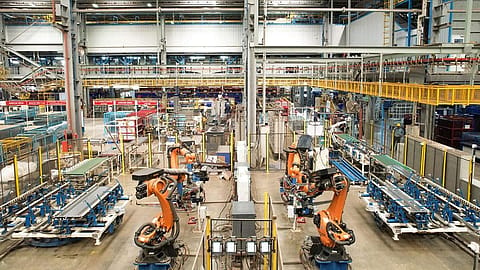
Manufacturing, which accounts for nearly 20% of India's GDP, remained resilient despite a spike in energy and industrial input costs between March and May. | Credits: File Photo
India's economic growth momentum showed signs of moderation during April and May, although the manufacturing sector continued to provide support despite rising input costs, according to a report by HSBC Global Investment Research.
Based on its database of 100 growth indicators, HSBC said overall economic activity softened in the first two months of the current fiscal period. However, the resilience of manufacturing helped cushion the slowdown, even as concerns mount over the outlook for agriculture amid the possibility of a strong El Niño.
Manufacturing remains resilient despite spike in energy, industrial input costs
Manufacturing, which accounts for nearly 20% of India's GDP, remained resilient despite a spike in energy and industrial input costs between March and May. The report attributed this strength to precautionary inventory build-up by companies amid uncertainty in global energy markets, a trend that was particularly visible in consumer goods.
It also noted that lower US tariffs created a temporary opportunity for exporters to accelerate non-oil shipments ahead of the possible implementation of Section 301 tariffs, lending further support to factory activity.
'Very strong' El Niño may adversely affect farm output
In contrast, the agriculture sector, which contributes another 20% to GDP, is expected to face increasing pressure in the coming months. HSBC warned that the likelihood of a "very strong El Niño" could adversely affect farm output as temperatures remain above normal, rainfall is running about 30% below average, and reservoir water levels are lower than they were at the same time last year.
The weak monsoon has also slowed sowing activity, with only around 17% of the normal cropped area sown so far, compared with 24% during the corresponding period last year. Oilseeds and pulses have been the worst affected, raising concerns as India relies heavily on imports of these crops.
The report said the emerging stress in agriculture is already beginning to weigh on rural demand. Youth unemployment has risen faster in rural areas than in urban centres, while two-wheeler sales, growth in rural bank deposits and domestic GST collections have all shown signs of slowing.
Services sector critical in sustaining growth
With manufacturing expected to lose some momentum and agriculture facing weather-related risks, HSBC believes the services sector will be critical in sustaining economic growth during the second half of 2026.
The report identified two key drivers within services, which account for around 55% of India's GDP.
First, the decline in global crude oil prices towards pre-conflict levels is expected to support the trade and transport segment, which contributes about 15% to GDP, by lowering operating costs.
Second, easier financial conditions following the government's foreign exchange package are likely to provide a boost to the financial sector, which makes up roughly a quarter of the economy. HSBC noted that borrowing costs across a range of financial instruments have already begun to decline, even before capital inflows triggered by the package have gathered pace.
RANK
COMPANY NAME
REVENUE
(INR CR)
(INR CR)
{{#current-rank}} {{current-rank}} {{/current-rank}} {{^current-rank}} {{rank}} {{/current-rank}} {{name}} {{#revenue}} {{revenue}} {{/revenue}} {{^revenue}} {{noi}} {{/revenue}}
According to the report, the performance of the services sector will be crucial in offsetting the expected weakness in agriculture and sustaining India's growth trajectory in the months ahead.
NEXT STORY