PHDCCI urges RBI to ease LC norms, expand MSME credit through NBFCs
/ 3 min read
Industry body flags payment delays in Letters of Credit and calls for higher lending limits to MSMEs under priority sector norms
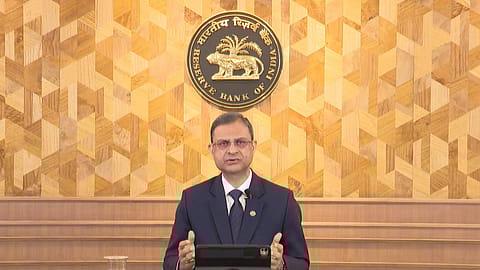
Sanjay Malhotra, Governor, Reserve Bank of India | Credits: Fortune India
Industry body PHD Chamber of Commerce and Industry (PHDCCI) has urged the Reserve Bank of India (RBI) to address operational bottlenecks in trade finance and improve credit flow to micro, small, and medium enterprises (MSMEs), raising several concerns during a meeting with the central bank Governor Sanjay Malhotra on Monday.
The chamber highlighted inconsistent treatment of discrepancies in Letter of Credit (LC) documents by issuing banks and sought clearer regulatory guidance to ensure greater certainty for exporters and suppliers.
“Banks sometimes refuse payment even when discrepancies are minor and have been formally waived by the LC applicant. This undermines the reliability of Letters of Credit as payment instruments. Arbitrary use of discretion by banks in accepting or rejecting discrepancy waivers creates uncertainty for suppliers and exporters,” said Rajeev Juneja, President, PHDCCI.
He urged the RBI to issue operational guidelines directing banks to honour LC documents where discrepancies have been formally waived by the applicant, except in cases involving fraud or material risk.
“We request the RBI to issue clear operational guidelines requiring banks to honour LC documents where discrepancies have been formally waived by the applicant, except in cases involving fraud or material risk. RBI may also prescribe uniform procedures and standardised documentation practices for discrepancy waivers, ensuring consistency across banks,” he added.
Push for higher MSME lending limits
PHDCCI also sought a review of the current cap on bank credit routed through non-banking financial companies (NBFCs) for lending to MSMEs under priority sector norms.
“Another important issue is to increase the Credit to MSMEs through NBFCs limit and treat it as indirect finance. RBI restored the classification of credit to MSMEs through the NBFC under Priority Sector, but only partially to the extent of ₹20 lacs per borrower. With the revision in classification criteria of MSMEs announced in the Budget 2025, almost 99% of enterprises in India are now MSMEs with their turnover limit increasing up to 500 crores, therefore, this ₹20 lakh loan limit is insufficient,” said Dr. Ranjeet Mehta, CEO and Secretary General, PHDCCI.
He said the industry body has requested the central bank to either remove the cap or raise it substantially. “Considering the issue, it is earnestly desired that the credit given by banks to NBFCs for the purpose of on-lending to micro, small, and medium enterprises should be treated as indirect finance to MSMEs eligible for classification under the Priority Sector lending of banks and the ceiling of ₹20 lacs per borrower should be removed altogether or should be increased to at least ₹1 crore per borrower which would be equivalent to just the minimum working capital required by a micro enterprise with turnover up to ₹10 crore as per the revised definition,” he added.
Concerns over rating agencies, telecom norms
The chamber also flagged operational challenges arising from regulatory requirements for business calls. Under current norms, regulated entities are required to use 1600-series numbers for service and transactional calls and 1400-series numbers for promotional calls.
According to PHDCCI, many customers tend to ignore calls originating from these number series as they are often perceived as telemarketing calls, affecting genuine business communication.
In addition, the industry body raised concerns about alleged unfair trade practices by rating agencies, stating that some agencies demand rating fees for future periods even when ratings are not required.
{{#most-powerful-women-snapshot-individual.slug}} {{/most-powerful-women-snapshot-individual.slug}} {{^most-powerful-women-snapshot-individual.slug}} {{/most-powerful-women-snapshot-individual.slug}} {{#showRanking}} {{current-rank}} {{/showRanking}} {{#photo.0.url}}
{{name}}
PHDCCI also recommended introducing greater uniformity and digitalisation in documentation processes and proposed the introduction of a dedicated ‘MSME Credit Card’ to distinguish credit cards issued to micro enterprises from regular retail credit cards. It also suggested standardising the application process, eligibility criteria, and issuance procedures for such cards to improve access to credit for small businesses.
Follow Fortune India
NEXT STORY