Prolonged Middle East conflict, crude above $100 may strain India’s external sector: Standard Chartered
/ 3 min read
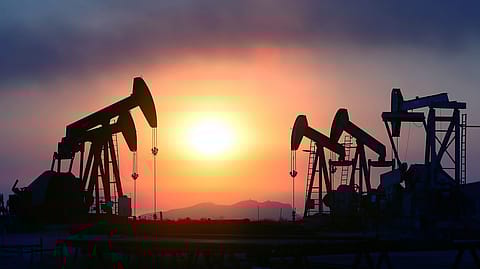
According to RBI estimates, every 10% rise in crude oil prices can reduce GDP growth by about 15 basis points. | Credits: Getty Images
Prolonged Middle East conflict, crude above $100 may strain India’s external sector: Standard Chartered
Standard Chartered warns that prolonged Middle East conflict and sustained crude oil prices above $100 per barrel could strain India's external sector. While India's macroeconomic resilience is stronger than during the Russia-Ukraine war, elevated energy prices may impact growth, inflation, and fiscal dynamics, necessitating policy measures to curb demand and manage the import bill.
This summary is AI-generated, and Fortune India is not responsible for its content or any associated copyright issues.
India’s growth outlook could weaken if energy prices remain high or supplies are disrupted.
According to RBI estimates, every 10% rise in crude oil prices can reduce GDP growth by about 15 basis points. | Credits: Getty Images
A short-lived escalation in the Middle East and a temporary spike in energy prices are unlikely to significantly alter India’s FY27 macroeconomic outlook, but a prolonged conflict with crude oil sustaining above $100 per barrel could pose serious risks to the country’s external sector, according to a report by Standard Chartered.
In its report titled ‘India – Impact of Middle East tensions’, the bank said India’s macroeconomic resilience remains relatively stronger than during the early phase of the Russia–Ukraine War, though growth, inflation and fiscal dynamics could deteriorate if energy prices remain elevated for a prolonged period.
Why external sector could face greater pressure
The report noted that unlike the two years preceding the Russia–Ukraine conflict, when India recorded balance of payments (BoP) surpluses of about $100 billion, the country has run deficits for the past two years.
As a result, the external sector could face greater pressure if oil prices stay elevated. The bank said the Indian Rupee may have to act as the “shock absorber” to cushion the economy, while policy measures aimed at curbing demand and containing the import bill will also be crucial.
Higher energy prices could also shift the balance of risks for monetary policy. While the bank does not expect steep rate increases like those seen in FY23, it said the likelihood of a policy rate hike by the Reserve Bank of India may rise if energy prices remain elevated and global interest rates increase.
Sustained crude oil prices can reduce growth
India’s growth outlook could weaken if energy prices remain high or supplies are disrupted. According to RBI estimates, every 10% rise in crude oil prices can reduce GDP growth by about 15 basis points.
A sustained rise in prices could also reduce energy supply, particularly cooking gas and natural gas, and dampen exports to the Middle East. India currently depends on imports for about 50% of its liquefied natural gas (LNG) requirements and roughly 65% of its LPG consumption.
The government has introduced mitigation measures, including prioritising natural gas supply to domestic consumption, transport and fertiliser sectors. Authorities have also assured adequate fertiliser availability for the upcoming summer crop season.
However, the report cautioned that lower availability of natural gas, particularly for smaller industries, and higher fuel costs could still weigh on growth. Sectors such as hotels and restaurants, which contribute around 1% to India’s real gross value added (GVA), may be affected if cooking gas supplies tighten.
Inflation risks remain manageable
The report said inflationary pressures could intensify if energy prices remain elevated. Under an adverse scenario, headline consumer price inflation could rise toward 4.5%–5% in FY27.
Inflation may increase through two channels—higher retail fuel and gas prices and disruptions in energy supply chains. The extent of the impact will depend on global commodity prices, movements in the rupee, the ability of the government and corporates to absorb cost pressures, and measures taken to diversify supply sources.
{{#most-powerful-women-snapshot-individual.slug}} {{/most-powerful-women-snapshot-individual.slug}} {{^most-powerful-women-snapshot-individual.slug}} {{/most-powerful-women-snapshot-individual.slug}} {{#showRanking}} {{current-rank}} {{/showRanking}} {{#photo.0.url}}
{{name}}
Unlike 2022, however, the government’s capacity to absorb higher fuel costs through tax cuts may be limited due to fiscal constraints. Excise duty on petrol currently stands at ₹22 per litre, compared with ₹28 in February 2022, while diesel duty has declined to ₹18 from ₹22 earlier.
Oil marketing companies may incur losses ranging from ₹10 to ₹30 per litre on petrol and diesel depending on crude prices, currency movements and refining margins. Still, analysts believe inflationary pressures may not be as severe as in the immediate aftermath of the Russia–Ukraine war, given currently lower inflation levels.
Current account deficit likely to widen
The report warned that the current account deficit may widen to 1.3%–2.5% of GDP if crude prices remain in the $90–$110 per barrel range. Higher energy prices and supply disruptions could significantly widen the trade deficit through increased import bills and weaker exports to the Middle East. The situation is further complicated by weaker capital inflows compared with the period before the Russia–Ukraine war.
In FY23, India’s balance of payments swung from a surplus of $47 billion in the previous year to a deficit of $9 billion. Prior to the war, India had recorded capital inflows of about $85 billion, while the past 12 months have seen net capital outflows of around $5.5 billion.
Foreign exchange reserves also offer a smaller cushion than before, with import cover currently at about 10.1 months compared with around 14 months in February 2022.
Follow Fortune India
NEXT STORY