The FAQs are AI-generated, and Fortune India is not responsible for its content or any associated copyright issues.
RBI may act if supply shocks become embedded in prices: Governor Malhotra
/ 2 min read
The governor said India’s 200-basis-point tolerance band around the 4% inflation target gives the RBI enough room to absorb short-term volatility, while still keeping price stability in focus.
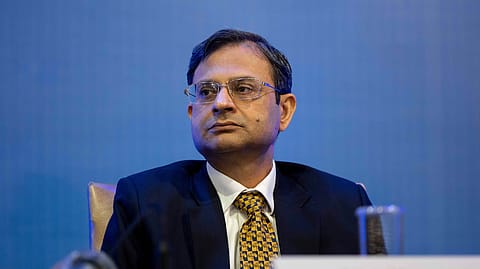
RBI Governor Sanjay Malhotra. | Credits: Narendra Bisht
The Reserve Bank of India is keeping a close vigil on whether supply shocks become embedded in the broader price level, Governor Sanjay Malhotra said, as India navigates a sharp jump in wholesale inflation and a still-contained but rising retail print. Malhotra said the central bank will look through temporary shocks, but it will not hesitate if second-round effects start feeding wages, transport costs and general inflation.
What RBI is watching
“In a supply shock, we generally try to ‘look through’ the first-round impact, if we believe that it is transitory and will dissipate quickly,” Malhotra said at a panel discussion hosted by the Swiss National Bank and the IMF. “However, if sustained increase in prices drives up wages, production and transportation costs and leads to generalisation of inflation pressures, the ‘look through’ approach is no longer optimal, requiring tighter policy.”
He added that the RBI is “keeping a close vigil on whether and when the supply shock can become embedded in the general price level that may warrant monetary policy action.” The governor said India’s 200-basis-point tolerance band around the 4% inflation target gives the RBI enough room to absorb short-term volatility, while still keeping price stability in focus.
Inflation backdrop
The remarks come against a mixed inflation picture. India’s consumer price inflation rose to 3.48% in April 2026 from 3.40% in March, remaining below the RBI’s 4% midpoint but extending its upward trend. At the wholesale level, price pressures were far sharper: WPI jumped to 8.3% in April, the highest in months, driven by fuel, crude and other manufacturing inputs.
That widening gap matters because wholesale inflation often feeds into retail prices with a lag. The RBI has already flagged supply-chain disruptions from the West Asia conflict as a risk to both growth and inflation, and Malhotra has repeatedly stressed that policy will stay data-dependent rather than pre-committed.
Fuel, forex and policy
The macro backdrop has also forced the government to act on fuel demand and foreign exchange outflows. Prime Minister Narendra Modi recently urged citizens to reduce petrol and diesel consumption, use public transport, carpool, work from home where possible and delay gold purchases amid global uncertainty. Soon after, state-run fuel retailers raised petrol and diesel prices by ₹3 per litre, a move seen as part of the effort to conserve fuel and ease external pressure.
For the RBI, the issue is not just the first hit from higher oil or commodity prices, but whether those shocks become broader and stickier. Malhotra’s message is that the central bank is prepared to stay patient if inflation remains transitory, but it will tighten if the shock becomes generalized.