The FAQs are AI-generated, and Fortune India is not responsible for its content or any associated copyright issues.
RBI’s decision to keep repo rate unchanged aims to contain inflationary expectations and defend currency, say economists
/ 3 min read
According to experts, the decision was taken as the MPC acknowledged risks to the growth-inflation outlook amid the ongoing West Asia crisis
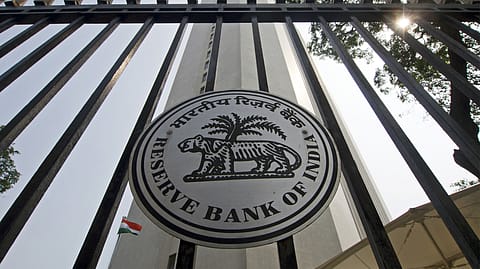
According to experts, the decision was taken as the MPC acknowledged risks to the growth-inflation outlook amid the ongoing West Asia crisis. | Credits: Getty Images
Economists and policy experts say that the Reserve Bank of India’s (RBI) decision to keep the repo rate unchanged was aimed at containing inflationary expectations and defending the currency, which is already volatile due to the West Asia crisis.
“The hawkish pause underscored the central bank’s resolve to contain inflationary expectations and defend the currency, while recognizing that tighter policy rates have historically only had a limited impact on exchange-rate dynamics,” said Radhika Rao, Senior Economist and Executive Director, DBS Bank.
On Friday, the Monetary Policy Committee (MPC), led by RBI Governor Sanjay Malhotra, announced that the central bank had decided to keep policy rates unchanged at 5.25%, maintaining a ‘neutral’ stance. The standing deposit facility (SDF) rate was also kept unchanged at 5.0%, with the marginal standing facility (MSF) rate and the bank rate also remaining steady at 5.50%.
According to experts, the decision was taken as the MPC acknowledged risks to the growth-inflation outlook amid the ongoing West Asia crisis. “The MPC acknowledged risks to the growth-inflation outlook due to the ongoing West Asia crisis, and raised the inflation forecast to 5.1% while lowering the growth forecast to 6.6%, with upside/downside risks respectively,” said Madhavi Arora, Chief Economist, Emkay Global Financial Services.
Notably, the MPC’s announcements also included widening the universe of eligible bond securities, discounted swap windows for FCNR(B) deposits, and moves to boost concessional external commercial borrowings, among others. Separately, it announced tax breaks in withholding tax (currently 20%) and capital gains tax for debt investors.
According to Rao, this is a step to encourage dollar inflows and stabilise the currency. “The central bank ticked all boxes to spur dollar inflows and stabilise the currency, signalling that all hands are on deck. The policy guidance was cautious on inflationary risks from the ongoing West Asia crisis and sub-normal southwest monsoon,” she said.
To the question of when the RBI will change the repo rate, experts say that the central bank will raise rates only if inflation becomes entrenched. “It is clear that the RBI will only raise rates now when inflation becomes entrenched and has second-round effects, with a clear delineation between monetary and FX policy,” Arora explained.
Recommended Stories
However, experts also cautioned that if the crisis in West Asia drags on, there could be a significant downside to growth.
“The RBI has lowered the growth projections and increased the inflation projections. These are understandable, but the important point is that the Governor has flagged significant downside risks to the 6.6% growth rate and 4.7% inflation projections. Clearly, the RBI is signalling that there are strong headwinds and is possibly landing the message in tranches that, in the event the West Asia conflict drags on, there would be a significant downside to growth,” Ranen Banerjee, Partner and Leader, Economic Advisory, PwC India, said.
The inflation projection of 5.9% in Q3 is very close to the upper limit of 6% of the target band. “If the inflation prints come in close to these projections and the upward risks continue, then the MPC could change its stance in the next meeting and press the rate increase button at its December meeting,” Banerjee added.
Dipti Deshpande, Principal Economist, Crisil, said, "The status quo on policy rates was as per our expectations. With a data-driven approach, the Monetary Policy Committee (MPC) is keenly watching risks on inflation and growth, which are yet to materialise meaningfully. Headline inflation has stayed below its 4% target so far. Bigger moves were seen on attracting foreign capital and supporting the rupee, which has depreciated sharply, posing a bigger concern than growth and inflation so far."
RANK
COMPANY NAME
REVENUE
(INR CR)
(INR CR)
{{#current-rank}} {{current-rank}} {{/current-rank}} {{^current-rank}} {{rank}} {{/current-rank}} {{name}} {{#revenue}} {{revenue}} {{/revenue}} {{^revenue}} {{noi}} {{/revenue}}
The RBI focussed on easing domestic regulations for foreign capital investors. It, however, gave clear communication on its rupee management, which remains rooted in curbing excessive volatility and speculation rather than defending a specific level, she said.
"Our forecasts of CPI inflation at 5.1% and GDP growth at 6.6% for this fiscal align with those of the MPC. With this, headline inflation will stay within MPC’s target range of 2-6% despite rising from the current rate and edging closer to the upper tolerance inflation band in the interim. If the energy prices normalise in the coming months, we expect the MPC to look through the short-term rise in inflation. The MPC will balance its inflation mandate with growth, where downside risks are also deepening with prolonging of the conflict. In the milieu, we expect the MPC to keep rates unchanged this fiscal," Deshpande added.
Experts believe that RBI’s decision provides much-needed stability amid global uncertainties. "The RBI’s decision provides much-needed stability amid global uncertainties. Predictable interest rates help businesses and consumers plan with confidence, while stable borrowing costs support homebuyers and investment activity. For the real estate sector, this move is expected to sustain buyer sentiment and contribute to steady, long-term growth," said Rohit Kishore, CEO, Hero Realty.