Retail inflation in May marginally rises to 3.93% as food prices firm up
/ 2 min read
Food and beverages inflation stood at 4.55% in May, with the food component alone recording inflation of 4.78%.
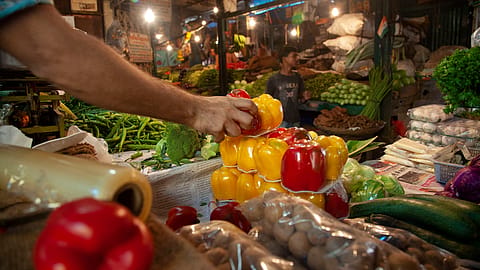
Ginger prices also remained elevated, recording inflation of 32.49%. However, some food commodities continued to witness deflation. | Credits: Fortune India
India's retail inflation rose marginally in May, with the Consumer Price Index (CPI)-based inflation rate increasing to 3.93% from 3.48% in April, according to provisional data released by the Ministry of Statistics and Programme Implementation (MoSPI) on Friday.
The year-on-year inflation rate, based on the All India Consumer Price Index (base year 2024), stood at 3.93% in May 2026 compared with the same month a year ago. Rural inflation came in at 4.25% while urban inflation was lower at 3.53%.
Food prices push up inflation
Food and beverages inflation also accelerated during the month. It stood at 4.55% in May, with the food component alone recording inflation of 4.78%. Food inflation in rural areas stood at 4.85% while urban food inflation was recorded at 4.66%.
Among food items, tomatoes continued to be a key inflation driver, with prices rising 48.43% year-on-year in May, up from 35.26% in April. Ginger prices also remained elevated, recording inflation of 32.49%. However, some food commodities continued to witness deflation. Potato prices declined 23.71% year-on-year while peas recorded a contraction of 11.47% during the month.
“The moderation of headline retail inflation below 4 per cent reflects the resilience of India's macroeconomic fundamentals and the effectiveness of ongoing efforts to maintain price stability. While food prices remain subject to seasonal fluctuations, inflation across broad level continues to remain contained, supporting household purchasing power," said Rajeev Juneja, President, PHDCCI”
While Kharif crops such as tomato and ginger show high inflation rates in May 2026 (48.93% and 32.49% respectively), the prices of Motor car and Jeep and Motor cycle and scooter has shown a stark decline (-7.19% and -3.56% y-o-y deflation) in the same time period. Rural inflation increased to 4.25%, while urban inflation stood at 3.53%, reflecting relatively stronger food price pressures in rural areas. Housing inflation remained subdued at 2.12%, while transport inflation was contained at 1.75%, contributing to overall macroeconomic stability, he added.
Housing inflation relatively subdued
Meanwhile, housing inflation remained relatively subdued. The year-on-year housing inflation rate stood at 2.12% in May. Rural housing inflation was higher at 2.73%, compared with 1.91% in urban areas.
Meanwhile, silver jewellery registered the steepest increase among major tracked items, with inflation soaring to 155.23%.
The latest data indicates that while headline inflation remains within the Reserve Bank of India's comfort range, rising food prices contributed to the uptick in overall consumer inflation during the month.
Radhika Rao, Senior Economist & Executive Director, DBS Bank, said, "May inflation came in slightly below consensus. Contribution from the food segments likely rose on perishables (including vegetables), edible oils, cereals, pulses, milk and related categories, not helped by heatwave conditions in some parts of the country. Concurrently pump fuel prices were increased in a staggered fashion since mid-May, besides higher CNG and commercial LPG (this month), imparting first and second derivative impact through the coming months."
Rao said that while a build-up in price pressures is being watched closely against the backdrop of the ongoing West Asia conflict, India’s inflation is at still below the mid-range of the 2-6% target, and thereby less of an immediate policy concern. "This is consistent with the central bank’s view that current inflation readings remain manageable. However, policymakers continue to closely monitor upcoming inflation prints as higher input costs gradually filter through from downstream industries to consumers, weather-related risks unfold, and the progress of the monsoon season becomes clearer," she added.
NEXT STORY