The FAQs are AI-generated, and Fortune India is not responsible for its content or any associated copyright issues.
Tier-2 cities add 5.9 million sq. ft. Grade-A retail space since 2020; Chandigarh, Mangaluru lead global brand push: Knight Frank India report
/ 2 min read
Knight Frank’s KF-IBPR 2026 study says Tier-2 India now has 61% Grade-A retail stock versus 45% in Tier-1 cities, while over 90% of US F&B brands have expanded beyond metros
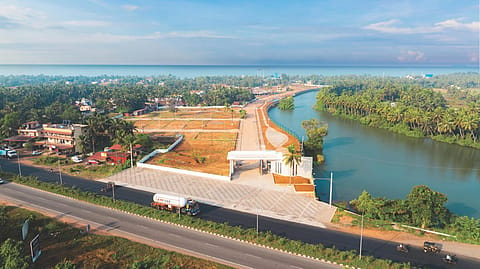
Mangalore real state market | Credits: Rohan Corporation
India’s organised retail expansion is rapidly shifting beyond metros, with Tier-2 cities emerging as the new growth engines for international brands, according to Knight Frank India’s International Brand Penetration Ranking (KF-IBPR) 2026 study.
The report, which assessed 24 Tier-2 cities across parameters such as brand intensity, consumption power, retail infrastructure and market readiness, found that smaller cities are increasingly outperforming larger urban centres in international retail penetration and mall quality.
Chandigarh, with a population of just 1.3 million, topped the rankings, while Mangaluru emerged as the country’s most brand-dense Tier-2 market with over 102 international brand stores per million people — nearly double Chandigarh’s density. Lucknow, meanwhile, recorded the highest concentration of unique international brands at 112 across 5.6 million square feet of shopping centre stock.
Tier-2 cities outpaces metros in retail Development
Knight Frank India said the country is now witnessing the rise of “two retail Indias” — a mature Tier-1 market struggling with ageing mall infrastructure and rising vacancies, and a younger Tier-2 ecosystem with cleaner, institutionally developed retail assets.
Tier-1 cities currently account for nearly 98 million sq ft of organised retail stock but continue to grapple with legacy Grade-C malls and elevated vacancy levels from the 2004–2013 retail development cycle. The study noted that Tier-1 markets today have around 60 “ghost malls” operating with vacancy levels exceeding 40%.
In contrast, Tier-2 India’s retail stock of 36 million sq. ft. has largely been developed after 2010, resulting in better operational efficiency and lower vacancies. Since 2020, these markets have added 5.9 million sq ft of Grade-A retail space — more than three times the additions seen in Tier-1 cities over the same period. Grade-A assets now account for 61% of retail stock in Tier-2 cities, compared with 45% in Tier-1 markets.
The report highlighted that consumption intensity, digital adoption and aspirational spending are replacing population size as the key determinants of retail success. Chandigarh recorded urban monthly per capita consumption expenditure of ₹13,425, compared with ₹5,114 in Chhattisgarh, underscoring the sharp consumption divide across emerging urban India.
Recommended Stories
Shishir Baijal, Chairman and Managing Director, Knight Frank India, said cities such as Chandigarh and Mangaluru are outperforming significantly larger urban centres because of stronger consumption intensity, superior retail infrastructure and sharper brand absorption capabilities. He added that India’s retail expansion runway is unmatched globally as the country is simultaneously modernising two retail ecosystems at different stages of maturity.
Global brands deepen presence in non-metro markets
The study found that American brands dominate Tier-2 retail internationalisation, accounting for 46% of all international stores and 91% of international food and beverage presence, largely driven by quick-service restaurant chains. UAE-based retail groups account for nearly 79% of the department-store footprint across Tier-2 India, while Asian brands lead categories such as consumer durables, home and lifestyle.
Knight Frank also identified Surat, Jaipur and Nagpur as structurally underserved retail markets where sizeable consumer demand exists but Grade-A retail infrastructure remains inadequate to support deeper international brand penetration.