The FAQs are AI-generated, and Fortune India is not responsible for its content or any associated copyright issues.
Trump administration launches new tariff investigations into 16 countries, including India — here’s why
/ 3 min read
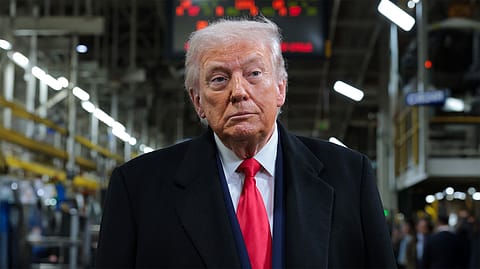
US President Donald Trump | Credits: Getty Images
Trump administration launches new tariff investigations into 16 countries, including India — here’s why
The Trump administration has initiated new trade investigations into 16 countries, including India, under Section 301 of the Trade Act of 1974. This move aims to impose fresh tariffs on major trading partners following a Supreme Court ruling that struck down previous tariffs. The investigations focus on countries with excess industrial capacity and significant trade surpluses with the US.
This summary is AI-generated, and Fortune India is not responsible for its content or any associated copyright issues.
US Trade Representative Jamieson Greer said the investigation under Section 301 of the Trade Act of 1974 could lead to fresh tariffs on several major trading partners such as India, China, the European Union
US President Donald Trump | Credits: Getty Images
The administration of US President Donald Trump on Wednesday launched fresh trade investigations into 16 countries, including India, as it seeks to restore tariff pressure after the US Supreme Court struck down much of its earlier reciprocal tariff programme last month.
US Trade Representative Jamieson Greer said the investigation under Section 301 of the Trade Act of 1974 could lead to fresh tariffs on several major trading partners such as India, China, the European Union, Japan, South Korea, and Mexico, according to Reuters. Other economies being investigated include Taiwan, Vietnam, Thailand, Malaysia, Cambodia, Singapore, Indonesia, Bangladesh, Switzerland, and Norway. However, Canada, the US’ second-largest trading partner, is not part of the investigation.
The probes will examine whether major trading partners have excess industrial capacity. The findings could eventually replace Trump’s earlier reciprocal tariff policy, which the court had ruled illegal.
“So these investigations will focus on economies that we have evidence appear to exhibit structural excess capacity and production in various manufacturing sectors, such as through larger persistent trade surpluses or underutilised or unused capacity,” said Greer, reported Reuters.
He said the administration’s policy approach has not changed despite the court’s ruling. “The policy remains the same. The tools may change depending on the vagaries of courts and other things,” Greer said, adding that the aim is to protect American jobs.
What is Section 301?
The investigations are being conducted under Section 301 of the Trade Act of 1974. The provision allows the US Trade Representative to impose tariffs or take other countermeasures against countries that are found to be engaging in unfair trade practices.
The Trump administration argues that the 16 economies follow policies that disadvantage American manufacturers. Most of these countries also maintain significant goods trade surpluses with the US.
Recommended Stories
As part of the procedure, the Office of the US Trade Representative will invite written feedback from stakeholders and organise a public hearing. The countries under review will also be consulted during the investigation.
Greer said he aims to finish the probe, along with any proposed measures, before the temporary tariffs introduced earlier expire in July. Stakeholders can submit comments until April 15, while the public hearing is expected to take place around May 5.
Probe follows US tariff ruling
The new investigation comes after a February 20 ruling by the US Supreme Court, which declared that the global tariffs imposed by the Trump administration under a national emergency law were illegal.
Following the decision, Trump introduced a temporary 10% tariff for 150 days under Section 122 of the Trade Act of 1974.
RANK
COMPANY NAME
REVENUE
(INR CR)
(INR CR)
{{#current-rank}} {{current-rank}} {{/current-rank}} {{^current-rank}} {{rank}} {{/current-rank}} {{name}} {{#revenue}} {{revenue}} {{/revenue}} {{^revenue}} {{noi}} {{/revenue}}
Greer said the administration had already signalled the possibility of such investigations, adding that trading partners should not be caught off guard. However, he did not clarify whether countries with existing trade agreements with the US would be protected from potential tariffs under the new probe.
He also said Trump remains focused on reducing the US trade deficit and strengthening domestic manufacturing. “He'll find a way to deal with unfair trading practices. He'll find a way to get our trade deficit down. He'll find a way to protect US manufacturing. We have a lot of tools to do it,” Greer said.
US plans separate forced labour probe
Reuters also reported that Greer announced another investigation under Section 301 of the Trade Act of 1974 to examine imports linked to forced labour. This probe could cover more than 60 countries and aims to block imports of goods produced using forced labour.
The US has already tightened restrictions on solar panels and other products from China’s Xinjiang region under the Uyghur Forced Labour Protection Act signed by former US President Joe Biden. The new investigation could extend similar restrictions to more countries.
Washington has accused Chinese authorities of running labour camps for ethnic Uyghurs and other Muslim minorities in Xinjiang. However, Beijing has denied these allegations.