DAC clears ₹2.38 lakh crore defence proposals; focus on air defence, transport, sustainment
/ 2 min read
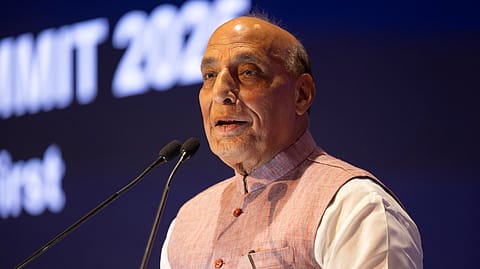
Union Defence Minister Rajnath Singh (file image) | Credits: Sanjay Rawat
DAC clears ₹2.38 lakh crore defence proposals; focus on air defence, transport, sustainment
The Defence Acquisition Council has approved proposals worth ₹2.38 lakh crore, focusing on air defence, transport, and sustainment. This includes air defence systems, transport aircraft, and artillery for the army, air force, and coast guard, marking one of the largest single-day approvals in recent years.
This summary is AI-generated, and Fortune India is not responsible for its content or any associated copyright issues.
In FY26 so far, AoNs worth ₹6.73 lakh crore have been accorded across 55 proposals, according to official data. Capital contracts signed during the year stand at ₹2.28 lakh crore, indicating a continued gap between approvals and actual contracting.
Union Defence Minister Rajnath Singh (file image) | Credits: Sanjay Rawat
The defence acquisition council (DAC) on Friday cleared proposals worth ₹2.38 lakh crore, covering a range of requirements across the army, air force and coast guard, in one of the largest single-day approvals in recent years.
The approvals — granted under the acceptance of necessity (AoN) route — include air defence systems, transport aircraft, artillery, surveillance platforms and communication systems.
For the army, clearances include an air defence tracked system, high-capacity radio relay, Dhanush artillery guns, runway-independent aerial surveillance systems and armour-piercing ammunition.
For the air force, the DAC approved procurement of medium transport aircraft to replace the ageing AN-32 and IL-76 fleets, additional S-400 long-range air defence systems, remotely piloted strike aircraft and overhaul of Su-30 engine aggregates.
The coast guard will procure heavy-duty air cushion vehicles for coastal patrol, search and rescue and logistics operations.
Scale and pipeline
The ₹2.38 lakh crore approvals come close to the government’s annual capital outlay for defence modernisation, stressing the scale of the current procurement pipeline.
In FY26 so far, AoNs worth ₹6.73 lakh crore have been accorded across 55 proposals, according to official data. Capital contracts signed during the year stand at ₹2.28 lakh crore, indicating a continued gap between approvals and actual contracting.
The latest approvals point to three areas of focus:
Air defence: Expansion of layered systems, including additional S-400 units and Army-level tracking systems
Mobility: Replacement of legacy transport aircraft to strengthen airlift capability
Sustainment: Engine overhaul and ammunition replenishment
India’s defence budget for 2026-27 has earmarked over ₹2 lakh crore for capital expenditure, with a continued push on modernisation alongside constraints from committed revenue spending.
Follow Fortune India
NEXT STORY