From everyday to aspirations: Shoppers Stop’s reinvention journey
/ 6 min read
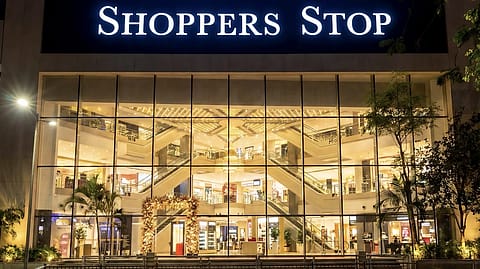
The newly renovated Shoppers Stop store in Juhu, Mumbai, which offers a high-end experience
From everyday to aspirations: Shoppers Stop’s reinvention journey
Under the leadership of Kavindra Mishra, Shoppers Stop is undergoing a transformation to reclaim its premium status. By focusing on premium brands and experiences, the store aims to differentiate itself from global competitors. The strategy includes expanding store sizes, enhancing customer experiences, and targeting young Indian families, resulting in increased sales and profitability.
This summary is AI-generated, and Fortune India is not responsible for its content or any associated copyright issues.
The repositioning exercise has helped the department store brand increase footfalls and like-to-like growth.
THIS STORY FEATURES
The newly renovated Shoppers Stop store in Juhu, Mumbai, which offers a high-end experience
When Kavindra Mishra took over as MD & CEO of Shoppers Stop in 2024, the country’s first lifestyle departmental store chain was battling an identity crisis. Once positioned as a premium department store, the brand over the years had diluted itself by trying to serve the needs of every customer segment (mass, premium and bridge to luxury). The number of non-performing stores were on the rise. There was also intense competition from global fashion and lifestyle brands such as H&M, Zara and Uniqlo which were taking away market share with an impactful private brands strategy. Moreover, post the pandemic most fashion brands heightened focus on their own brand stores. The idea was to be able to offer consumers the entire brand experience under one roof – from apparels to footwear, accessories, beauty and lingerie. Being part of a multibrand store wasn’t considered impactful.
The department store format was being written off globally too. However, Mishra’s enrolment into the board of the Intercontinental Group of Departmental Stores (IGDS), an association of department stores worldwide, deepened his conviction in the future of department stores. He realised that iconic brands such as Selfridges (UK), Central (Thailand) and Le Bon Marche (France) had got their mojo back post the pandemic losses with a strong premium positioning.
“When I started interacting with IGDS it was clear that department store formats which have premiumised are the ones that have sustained.”

It was not just premium positioning, these department brands also started focusing on building experiences which actually started moving the needle.
“Le Bon Marche has created a 65,000 sq.ft. space for events. Majority of its customer acquisition happens through customers who come to see those events and then shop. You have to be differentiated. There has to be a reason for customers to come to you. If I only sell brands which are available everywhere then there is no differentiation.”
The global success stories led Mishra to re-engineer the Shoppers Stop business model. The department store had reduced the size of its stores from 40,000 sq.ft. to about 25,000-30,000 sq.ft. post the pandemic. Mishra decided to get back to the erstwhile 35,000-40,000 sq.ft. format. The rationale was that a premium experience would need more space. He chose to focus on young Indian families. He made sure the store had everything that an aspirational Indian family would want – premium brands (across apparels, footwear, beauty, accessories and home), a designated play area for kids and a gaming arena for the young adults. Also on offer is a personal shopper experience, where a consumer can have a personal salesperson to help curate a look for her.
Mishra proudly claims that almost 25% of sales have already started coming out of the personal shopper service. In terms of brands, the consumer can opt for premium brands such as Superdry, Boss or Brooks Brothers in menswear to high-end designer brands such as Ritu Kumar, Anita Dongre, Forever New and Rareism in women’s apparel. In footwear, one could choose from brands such as Birkenstock, Guess, New Balance and Adidas. The beauty segment has an array of luxury brands such as Prada, Hermes and Balenciaga to name a few.
The re-engineering exercise has led to the closure of 10-15 stores, entry into newer markets and renovation of the existing the stores. “The moment you want to become premium, there are a set of stores you won’t want to have,” says Mishra. He says the repositioning has resulted in 4.5% like-to-like growth. “Next year we are looking at double digit growth. Our profitability has gone up too.” The department store chain currently has 117 stores.
The premiumisation strategy
As the homegrown Shoppers Stop was getting repositioned, India got its first luxury department store - Galeries Lafayette. The 130-year-old French departmental store chain opened its doors to Indian luxury connoisseurs in Mumbai last year.
“We are strong believers of the departmental store model, we have been doing it for the past 130 years and we would be doing it for the next 130 years,” Nicole Houze, executive chairman, Galeries Lafayette Group had told Fortune India. Houze was especially bullish about the ‘house of brands’ concept in India where real estate is difficult to get.
The store in India offers 270 luxury brands, many of which have entered India with Galeries Lafayette. In Paris, Galeries Lafayette is also increasing stickiness through experiences. It has opened a wellness section.
{{#most-powerful-women-snapshot-individual.slug}} {{/most-powerful-women-snapshot-individual.slug}} {{^most-powerful-women-snapshot-individual.slug}} {{/most-powerful-women-snapshot-individual.slug}} {{#showRanking}} {{current-rank}} {{/showRanking}} {{#photo.0.url}}
{{name}}
“We want to give new experiences to our consumers. During the Covid-19 pandemic, people became conscious about wellness. We have a large store in Paris (7,00,000 sq.ft.), so we have space to dedicate to wellness. It’s working very well,” said Houze.
Mishra’s rationale of offering a premium experience is definitely in sync with the stalwarts of the global department store industry. However, India has a diverse set of consumers even within the premium category, so the strategy is two-pronged. If one walks into the Juhu store of Shoppers Stop in Mumbai spread across four floors, the experience is luxurious. The brands on display are from premium to luxury. However, as one goes deeper into the suburbs, in Malad, the inventory is largely premium. The mix also has its private labels, especially in the women and kids’ section.
Mishra says the kind of brands largely depends on the population mix. Over 75% of its store inventory today comprises premium brands (two years ago it was 60%). Even in private brands the department store chain has chosen to premiumise. "The customer who buys Dior, Chanel or Tom Ford in glares doesn’t get excited with a Rs 599 shirt. So, even if we sell private brands, it was important to ensure that it was of great quality and priced at a premium,” Mishra explains.
“We have reduced private brands in menswear, which is a more a logo and brand driven business. The throughputs which you get in menswear with a brand, it’s difficult to get through a private brand. We have instead launched a private brand in kids wear,” he further explains.
The department store has also reduced its dependence on apparels. Today, non-apparels (beauty, bags, footwear, watches) contribute around 40%-42% of its overall mix. Here, the focus is on large aspirational global brands - Baume & Mercier in watches, Birkenstock in shoes or Guess and Tommy Hilfiger in bags. “When we looked at our customer base we found they are aspirational, willing to spend money, but because we are not offering those brands they were not buying from us. We introduced a handbag brand two years ago, 65% who bought that brand in the past year are existing Shoppers Stop customers who never bought bags from us. They wanted marquee brands but we didn’t have them. We realized that the need to merge brand power.”
Premium Bharat consumer
A significant part of Shoppers Stop expansion plan is its foray into tier 2-3 India. It has opened stores in Jhansi, Bareilly and Rajahmundry. Raipur has recently got its third Shoppers Stop store. The focus is on premiumisation in smaller cities and towns too. So, how different would the Bareilly store be from that of a Shoppers Store in a metro city? “It may not have a Boss or Brooks Brothers, but it will have a Levis or even an Armani. It will have all the top end beauty brands,” explains Mishra.
In fact, the third Shoppers Stop store in Raipur has a Boss shop-in-shop. “There is a lot consumption growth happening in these markets too,” he says.
Other formats
One of the Shoppers Stop group’s popular format is SS Beauty, its exclusive beauty offering. The 14-store chain which competes with Nykaa and Tira primarily in the metro cities is now looking at foraying in smaller cities too.
The ₹4,628 crore brand is also expanding its mass retail brand, Intune (private label apparels). “We are in the investment phase with Intune, we will burn money for a couple of years.” There are close to 80 Intuit stores currently.
With the flagship, Shoppers Stop, Mishra is confident that the premium positioning has already started paying off. “We can’t be everything for everyone,” he says.
Follow Fortune India
NEXT STORY