How Onitsuka Tiger is repositioning itself as a Made-in-Japan luxury brand
/ 9 min read
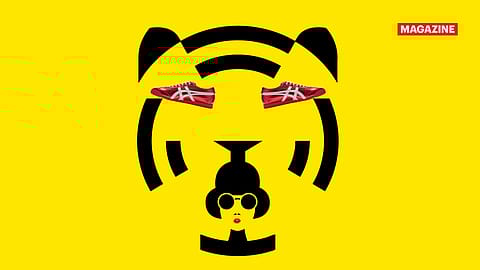
Credits: Anirban Ghosh
How Onitsuka Tiger is repositioning itself as a Made-in-Japan luxury brand
Onitsuka Tiger is transforming into a luxury brand by emphasizing its Japanese craftsmanship and heritage. With concept stores in Tokyo showcasing premium collections, the brand aims to offer a unique lifestyle experience. By focusing on high-quality products and strategic positioning, Onitsuka Tiger is establishing itself as a global luxury contender, distinct from its parent company ASICS.
This summary is AI-generated, and Fortune India is not responsible for its content or any associated copyright issues.
From being the nation’s shoemaker to making a fashion statement on the ramps of the Milan Fashion Week, Japan’s Onitsuka Tiger is on a journey of its own.
Credits: Anirban Ghosh
This story belongs to the Fortune India Magazine march-2026-indias-biggest-unicorns issue.
FOR A SNEAKERHEAD visiting Tokyo, a trip to the Onitsuka Tiger store is a must on the bucket list. This January, at 10 a.m., the serpentine queue in front of the Onitsuka Tiger Red Concept Store in the upmarket district of Ginza in Tokyo shows the popularity of the brand. People from various nations — who outnumber the locals — are waiting to enter the store that will open an hour later. When the shutters finally go up, only a quarter of the crowd is allowed to enter; the rest patiently wait for their turn.
Inside, one finds red-and-black fixtures, iconic Mexico 66 kicks, The Onitsuka (a smart formal shoe collection), signature oversized apparel and more recent launches such as leather bags. These combine with the aroma of freshly brewed coffee from the in-store café, giving you a whiff of the Onitsuka Tiger lifestyle experience.
This isn’t the only Onitsuka Tiger store on the block. On the main road, the Onitsuka Tiger Yellow Concept Store rubs shoulders with luxury brands such as Louis Vuitton, Prada, and Gucci. On display at the Yellow store are collections showcased at Milan Fashion Week; and pricing is at a 70-75% premium. Before you enter, the salesperson politely guides you towards the Red one down the road if all that you seek is a pair of Mexico 66s.
Though Onitsuka Tiger as a fashion lifestyle brand made a splash globally with Quentin Tarantino’s Kill Bill: Vol. 1 (2003) — Uma Thurman as The Bride wears a pair of Mexico 66s with a yellow tracksuit — it has been trying to reposition itself as a luxury brand since 2011. This positioning is not just about sneakers but also the entire ecosystem — apparel, leather bags, and, more recently, fragrances. As a part of this, it has showcased its collections at the Milan Fashion Week since 2002.
The Red store also houses premium sneakers — like the made-in-Italy collection inspired by the Mexico 66. These are displayed on a wall opposite to the Mexico 66 collection. The made-in-Italy kicks don’t look too different to me; yet they are priced at a premium. A young salesperson explains, “The Italian products look rugged and have a vintage look. Although the silhouette base or tooling is similar to Mexico 66, the treatment of the product, including the leather, is different.”
Ryoji Shoda, head of Onitsuka Tiger Company, says the brand has evolved from a wholesale-led one into a direct-to-consumer one with a focus on directly managed stores and exclusive e-commerce presence. From being sold mostly out of multi-brand stores, it has ensured that it is only available at upmarket high streets and luxury malls across the globe. For instance, in London, the brand has a Red Concept Store at the posh Covent Garden. Instead of showcasing 400-500 styles of shoes at one go, it has consciously moved towards launching just 150-200 styles, but of extremely high quality.
“In the past, consumption was largely temporary, driven by a ‘retro boom’ with a high dependency on trends. Today, global trust and recognition for the brand have taken root, establishing sustainable brand value. By securing prime locations in Europe during the pandemic, we were able to rapidly spread the brand experience through our flagship stores as travel demand surged post-Covid,” says Shoda.
More Stories from this Issue
Luxury is about legacy and heritage and Onitsuka Tiger has the ingredients for a luxury positioning, say experts. And Shoda, say his colleagues, has been instrumental in its luxury positioning. Though Onitsuka is part of the 810-billion yen ($5.16-billion) ASICS Corp., the 77-year-old brand — founded by Kihachiro Onitsuka in 1949 to nudge the youth of war-ravaged Japan to take to sports — precedes its parent. ASICS came into being in 1977 after an M&A deal that eclipsed the Onitsuka brand. But it was revived in 2002, and positioned as a fashion brand.
In fact, Nike co-founder Phil Knight cut his teeth as an entrepreneur by distributing Onitsuka shoes in the U.S. under the Blue Ribbon Sports company (which later transformed into Nike) in the early Sixties. By then its basketball shoes and Magic Runner had gained a lot of traction and Knight saw an opportunity to promote a brand he thought could take on the German footwear giants.
The strategy
Two similar-looking brands from the same company could be confusing (both ASICS and Onitsuka Tiger shoes have side stripes). Earlier, not many knew that while ASICS is a performance-driven sports shoe, Onitsuka Tiger is a fashion lifestyle brand. The latter’s uppers are made of leather and not suited for runs or treks. When Shoda took over in 2011, he realised that the two brands needed to be differentiated. He also realised that none of the luxury brands were focussing on athleisure. The strategy, therefore, was to combine high-fashion with sports and athleisure.
{{#most-powerful-women-snapshot-individual.slug}} {{/most-powerful-women-snapshot-individual.slug}} {{^most-powerful-women-snapshot-individual.slug}} {{/most-powerful-women-snapshot-individual.slug}} {{#showRanking}} {{current-rank}} {{/showRanking}} {{#photo.0.url}}
{{name}}
His first step towards building a luxury mindset was to get his employees to understand why the world needed Onitsuka Tiger sneakers. Japan is known for making high-precision, high-quality products. Shoda asked his team to wear that with pride on their sleeves. “Rather than speaking about the brand by putting exclusivity and rarity at the forefront, we believe these concepts naturally arise from what we value most — proposing unique, high-quality products that balance functionality and fashion, and building long-term, reliable relationships and product value.”
While Onitsuka Tiger did collaborate with a host of luxury brands, it was not until it made its debut at Milan that it was considered a serious luxury contender. It also put in place a full-fledged creative team in Milan. Rahul Prasad, MD of consulting firm Pike Preston India, says that after Kill Bill, the brand took off but then started losing relevance. “They needed to reinvent, which they are doing now,” he says.
Shoda explains that the debut at Milan reflected a deeper internal shift. “Moving towards luxury requires a mindset that prioritises intention over speed, emotion over volume, and craftsmanship over trends. Internally, it means giving our creative teams the space to experiment, refine, and tell stories with greater depth and confidence,” he says.
Despite its provenance, Onitsuka Tiger has the challenging task of making its presence felt among stalwarts such as Gucci, Dior, and Prada. Most luxury brand narratives centre around aristocracy or heritage craftsmanship and Shoda felt he needed to build a narrative that would stand out. He chose to reinterpret Onitsuka’s sporting roots.
“What sets us apart is the balance between tradition and experimentation. We embrace minimalism and innovation… Onitsuka Tiger — through a contemporary, global lens — offers a vision of luxury that is refined, expressive and quietly bold,” says Shoda.
So, how is it different from European luxury brands? “As a brand we are oversized, we have clean cuts. Europeans wear muted colours, but we have yellows and reds,” explains the salesperson at the Yellow store in Tokyo.
From premium to luxury
While luxury brands are popular in Japan, there aren’t too many home-grown ones. “People are curious about Japan; they respect Japanese craftsmanship. Moreover, the younger generation is also looking at buying something new and different. If Onitsuka Tiger can make something desirable for the new generation and is able to create a brand following, there is immense potential,” says Tikka Shatrujit Singh, chairman of global luxury consultancy JMC.
Luxury brands also need a different mindset. Onitsuka Tiger’s journey as a premium brand was about getting access in the market, building aspirations, and capitalising on trends. But a luxury positioning demands rarity. And Onitsuka Tiger’s moves were to open high-end stores at posh locations, and limit the styles it launches.
“They also have to be comfortable with slowing growth,” says Aditi Chand, co-founder, Tilfi, a luxury brand celebrating Banarasi craft. “If you are going to move from premium to luxury, your audience will change. So, growth will not be as fast,” she says, adding that the mindset of the brand has to be from creating aspiration to establishing authority. “It has to be clear why they are the best at what they do and why their product is distinctive.”
Scale is also important, quips JMC’s Singh. And that can only come if it increases its global presence, he says. He cites the examples of brands such as Chanel that are global and yet have maintained the narrative of rarity and heritage. Shoda’s move to establish authority is by adopting Japan’s obsessive focus on making high-quality products backed by technology.
As for provenance and authority, Shoda points to the brand’s recently inaugurated Onitsuka Innovative Factory at Tottori (Japan), the birthplace of its founder. There, its most premium handcrafted offering, Nippon Made, would be exclusively manufactured. The facility will also strengthen production of high value-added footwear such as The Onitsuka. From cutting the leather to embroidering the iconic stripes on the body of the shoe, over 70% of Nippon Made shoes will be handcrafted.
“This facility serves as Onitsuka Tiger’s new epicentre, integrating global design and technology with a foundation in Japanese craftsmanship. As we share our creations from our founder’s birthplace with the world, we are also committed to the succession of artisan skills and the nurturing of future talent, further evolving the values we have cultivated as a brand born in Japan,” says Shoda.
Most luxury brands offer a universe of products to their consumers. Onitsuka Tiger’s foray into apparel, bags, and fragrances is a conscious decision to offer consumers a Japanese maison experience. “If you build a luxury house and a more cohesive identity, you need to make the brand discernible in different formats and different touchpoints to give it more dimensionality,” explains Tilfi’s Chand.
Pricing and more
An integral part of the Onitsuka Tiger experience is its concept stores. Besides the Red and Yellow ones, there is the newly launched Orange Concept Store which would be the basic format that would be rolled out in most markets going forward.
Wouldn’t multiple formats create confusion? Consistency is key, agrees Singh of JMC. “They need to have a single brand identity and not give customers confusing signals.” The other point of confusion is the pricing. At the Red store in Tokyo, the average price of a pair of Mexico 66s is around 16,500 yen ($105, as of March 2), while the made-in-Italy version retails for around 50,000 yen ($319). A pair of denim trousers at the Yellow store could cost around 50,000 yen ($319).
Doesn’t the exclusivity of a luxury brand lie in its pricing? While Singh of JMC says that price hikes could happen once the brand gains wider acceptance, Prasad of Pike Preston says exclusivity starts with price-point, rarity, and customisation. “The price strategy of maintaining reasonable pricing doesn’t render exclusivity. If I see three other people wearing the same shoe it doesn’t make it special.”
Luxury, says Chand of Tilfi, is about authority and credibility. Pricing, she says, has to be a consequence of the choices that a brand makes. “Pricing has to be the result of a series of choices that you don’t have to over-explain. If it is about product excellence and craftsmanship, then it is defendable.”
Shoda says rarity and exclusivity would emerge from the brand’s storytelling. “Luxury, for us, is about creating desire through meaning — inviting our audience into a world that feels precise, considered, and unmistakably Onitsuka Tiger.” The brand’s belief is that what matters most is the luxury experience it seeks to offer, and not so much pricing. The strategy seems to be working. Its sales have more than quadrupled in the past five years from 33 billion yen to 136 billion yen (more than $870 million).
Meanwhile, its India journey is a developing story. Onitsuka Tiger entered India in 2017 and has a network of 14 stores (all franchise ones). Currently its merchandise comes from Indonesia, but the plan is to start manufacturing in India by the end of 2026. It also intends to launch company-owned stores by end of this year.
“India represents a dynamic and culturally rich opportunity for Onitsuka Tiger, particularly as a new generation of consumers embraces luxury as a form of self-expression rather than status alone. Our strategy in India is centred on building the brand thoughtfully and selectively, ensuring that growth never compromises identity,” says Shoda.
Globally, the intent is to spread its wings as an authentic Japanese luxury brand. The ‘Japanese tiger’ is definitely on the prowl.
Follow Fortune India
Sign in to read full story
To access our exclusive magazine content, sign in to your Fortune India account.
Sign In NowNEXT STORY