The savants of change: From trading floors to climate action, the Kamath brothers’ blueprint for wealth creation
/ 13 min read
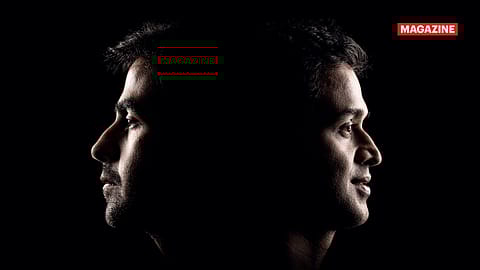
Credits: Narendra Bisht
The savants of change: From trading floors to climate action, the Kamath brothers’ blueprint for wealth creation
The Kamath brothers, founders of Zerodha, have built a financial powerhouse without venture capital, focusing on discipline and resilience. Their unique approach, eschewing traditional marketing and investor pressures, has led Zerodha to become a major player in India's brokerage industry. Their philosophy extends to Rainmatter, investing in startups and climate initiatives, emphasizing long-term growth and sustainability.
This summary is AI-generated, and Fortune India is not responsible for its content or any associated copyright issues.
How Bengaluru brothers Nikhil and Nithin Kamath are redefining wealth creation by bold startup bets, strategic capital with Rainmatter, and nurturing climate warriors through the foundation.
Credits: Narendra Bisht
This story belongs to the Fortune India Magazine march-2026-indias-biggest-unicorns issue.
ON A QUIET NOON, winding down through the bylanes of J.P. Nagar, we finally reach Zerodha’s HQ, housed in a modest bungalow that blends almost effortlessly into its residential landscape. Inside, the office of Nithin Kamath feels far removed from the stereotype workspace associated with fintech founders. Stripped of any ostentation, the space exudes the warmth of a cozy living room.
The lingering memory of his stroke still fresh — a medical episode that shocked those who were accustomed to seeing Nithin as a fitness freak — I ask if his recovery is complete. “It’s better,” responds Nithin.
It was a confluence of factors: poor sleep, his father’s demise, a bout of Covid. The kind of perfect storm that reminds us of our fragility. Yet Nithin continues to exude a quiet resilience. He has re-engineered his life: devices are off 90 minutes before bedtime, asleep by 9:30 p.m., up at 4:30 a.m. Yoga is the new add-on. Supplements have replaced insomnia. “You can’t be wired when you’re sleeping. You need to sleep completely relaxed,” he says.
In short, the discipline is new, but the need for it is hard-earned.
In some ways, the episode mirrors the arc of Zerodha itself: the country’s only bootstrapped profitable retail brokerage house that has matured into a resilient financial powerhouse.
At a time when founders are obsessed over optics — measuring their worth in unicorn valuations, magazine covers, and the velocity of their Insta stories — the Kamath brothers, Nithin and Nikhil, present a genuinely refreshing narrative. They built Zerodha without a single rupee from venture capitalists. They have never run marketing campaigns. The trading app, on installation, does not seek access to your contacts, camera, or messages. Nor does push notifications urge users to buy or sell stocks.
That true-to-label approach, in an, ironically, seed-the-greed business, is now the country’s second-largest retail broker with 6.85 million clients and 15.29% market share. The VC-backed and now-listed Groww (Billionbrains Garage Ventures) pipped Zerodha in 2024 to emerge as the No. 1 retail broker.
More Stories from this Issue
But for the Kamath brothers, it’s no sweat as they have already found their true north.
That characteristic restraint is the reason why the business today boasts a net worth of over ₹16,000 crore. At ₹4,237 crore, Zerodha’s FY25 profits are higher than that of bank-backed full-stack brokerage firms such as ICICI Securities (₹1,941 crore) and Kotak Securities (₹1,640 crore), or standalone firms such as Angel One (₹1,172 crore) or Groww (₹1,824 crore). With an estimated net worth of $6.08 billion (₹52,178 crore), according to the Fortune India-Waterfield Advisors 2025 ranking of India’s Top 100 Billionaires, the brothers are metamorphosing Zerodha into what may well be India’s most distinctive financial ecosystem: part Berkshire Hathaway, part pay-it-forward philanthropy.
One bet, two brothers
The Kamath brothers are separated by seven years. Nithin, 46, by his own cheerful admission, says Nikhil is much sharper when it comes to money. The dynamics between them defies the usual logic of family business, where egos tend to compound faster than growth. “I’ve always known he’s a much better trader than I am. He takes much smarter money decisions than I can,” says Nithin without a trace of begrudging.
{{#most-powerful-women-snapshot-individual.slug}} {{/most-powerful-women-snapshot-individual.slug}} {{^most-powerful-women-snapshot-individual.slug}} {{/most-powerful-women-snapshot-individual.slug}} {{#showRanking}} {{current-rank}} {{/showRanking}} {{#photo.0.url}}
{{name}}
That clarity of thought, though, came on a high!
When the brothers decided to start Zerodha in 2009, it was an idea that got crystallised on the election results day, when the markets surged 20% on Day 1. But the duo, having squared off their positions the previous night, watched the market rally on the second day, too! Amid a drinking binge at a resort, a plan was made: Nithin would build the broking business and Nikhil would keep trading. “I haven’t taken a single trade till now. And he has never interfered in the business,” says Nithin.
The brothers pooled their savings made through a decade of trading and acting as sub-brokers — ₹90 lakh went towards exchange deposit, leaving just ₹10 lakh for the business. Nikhil traded a modest proprietary book, generating ₹2-3 lakh a month. That income paid salaries and kept the lights on. “He’s the reason we didn’t have to raise external money,” acknowledges Nithin. In those first two years, from 2010 to 2012, this arrangement was not merely strategic. It was existential.
There were no investors to call, no board to reassure, no runway measured. Zerodha did not survive on burn; it survived on modesty and discipline. That psychological freedom went on to become the invisible engine that powered Zerodha’s rise.
For years, this separation allowed Zerodha to scale while its capital base grew quietly in parallel.
The Rainmatter philosophy
By 2016, Zerodha had found its footing. The company was generating free cash flow at a time when most of India’s new-age businesses were burning through venture capital with spectacular speed. The question was what to do with it.
The name Rainmatter itself came from a joke. Nithin and CTO Kailash Nadh were at a Cisco cloud conference in 2016, fooling around while a speaker droned on about being a “cloud chief”. Nithin quipped that if someone could be a cloud chief, he needed to be the “Rainmaker”.
But the philosophy behind Rainmatter is anything but frivolous, as 10% of Zerodha’s net worth goes towards the fund to spawn startups, aimed at creating an ecosystem of adjacent businesses even as Zerodha stays focussed on its core.
“Me and K (Kailash Nadh) both knew that if we put our eggs in too many baskets, it will go nowhere,” Nithin explains. The decision was to invest in or partner with companies building solutions adjacent to broking: smallcase (for thematic investing), Sensibull (for options strategies), or Digio (online boarding).
“Quietly, under Rainmatter, they have funded a lot of startups. Even those companies have grown. A case in point is smallcase,” points out Manoj Shenoy, co-founder and CEO, BugleRock Capital, one of the leading wealth managers in the country.
The strategic advantage was immediate. When smallcase launched, Zerodha was the only broker in the country to have it for almost a year and a half, giving them a significant head start.
“It was very obvious to us that unless you have the entrepreneurial spirit in each of these initiatives, it’s very tough to take them anywhere. We could have built something in-house but, probably, that would have died or ended up as just another feature,” says Nithin.
Vasanth Kamath, founder of smallCase, recalls the relationship that began even before his company was incorporated. “It was a meeting of minds,” Vasanth tells Fortune India. He pitched Nithin an early version of the product, and the response was immediate — he’d love to put money behind it.
Then came an offer that said everything about how the Kamaths operate: don’t worry about an office, just come work out of ours. The smallCase team took up a few desks at Zerodha for the next year and a half, free of the distractions of workplace admin while they focussed on building the business. When they eventually outgrew the space and said so, Nithin’s first instinct was to make more room. “The generosity was as much about clearing the path for a founder as it was about the capital,” says Vasanth.
Though smallCase, eventually, moved out of Zerodha, the association has since blossomed into a mutual fund joint venture as well. “We wouldn’t have done that without having the kind of relationship that we’ve had for over 10 years now,” says Vasanth.
But here’s what sets the Kamath approach apart from typical venture capital: they’re not in a hurry. “VCs in India are really copy-pasting what has worked in the U.S. But that doesn’t work in India,” Nithin explains. He points to his own journey. “It took 15-16 years before you could say Zerodha was moderately successful. And it will take another 20 years before you could say we’re a successful business.”
“They are absolute role models. They bootstrapped, made money, and are now helping others build businesses,” says Shenoy.
To date, Rainmatter has deployed ₹1,200 crore across 150 investments, ranging from ₹1 crore to ₹100 crore, with the bulk of the capital (70-75%) concentrated in 50-60 companies. For businesses core to Zerodha’s ecosystem — such as smallCase (stocks and MF), Ditto (health and term insurance), LearnApp (educational videos), and Tijori (data analytics)—they own a significant stake. For the rest, they typically hold less than 20%, acting like any other investor, but without the gun to the founder’s head demanding exits in seven or 10 years.
And unlike a typical founder-turned-investor obsessed over marking the portfolio to market, Nithin questions: “How do you mark-to-market a startup? It’s basically like having 150 pieces of art, whose value lies in the eyes of the beholder.” This is a harder admission than it appears. Most successful founders believe, at some level, that their success is transferable and that the same instincts that built the core business can be redirected to build the next one.
Dinesh Pai, head of investments, Rainmatter, and vice president, Zerodha, is emphatic that what sets Rainmatter apart from conventional venture capital is its philosophy rather than its cheque size: “We not only bring capital, but we also bring very patient capital. If you’re building in a sector that needs investors to stick around for as long as you possibly want, then we are probably the right partners.”
The fund operates as a single entity within Zerodha, with a lean team of about 10 people, and takes a deliberately passive stance with portfolio companies, offering network and insight without operational interference.
By 2019, with the fintech space largely covered, Rainmatter turned towards health and climate. And here, the pay-it-forward philosophy deepened.
Betting on the planet
The investments that define the Kamath brothers’ current chapter are, on the surface, unusual. Akshayakalpa Organic, India’s first certified organic dairy enterprise, has received ₹100 crore. Two Brothers Organic Farms, which breeds indigenous cows and grows fruits, vegetables, and dairy products organically, got ₹80 crore. These are not fintech bets. They are bets on the idea that climate change is the largest unpriced risk in the Indian economy.
The foundation is a fully independent entity and operates on an entirely different logic. Rather than chasing project-based CSR outcomes, it focusses on long-term capability-building within communities working on climate resilience and sustainability. The foundation has committed $100 million (around ₹900 crore) in grants over five years to grassroots organisations.
Pai explains the thinking behind it: “Somebody should be doing some of these hard things of making sure that there is resilience in the community, enabling them to think about what climate really means and to do it really well in terms of sustainability.” A separate team of 10 people runs the foundation, reflecting the different expertise required for grant-making versus investment evaluation.
Underlying both entities is a single defining trait that Pai sees running through everything that the Kamath brothers do. “A long-term approach is essentially what we really believe in. In the long game, everything can wait and you have to be more patient — you build things slowly, but the right way.” This patience, whether in backing a startup through a 10-15-year building cycle or in strengthening a grassroots community organisation, is what Pai identifies as the thread connecting the commercial and philanthropic arms of what the Kamaths have built around Zerodha.
The foundation’s philosophy is almost engineered to avoid the usual philanthropic traps. Rather than broad-spectrum charity spread across education, health, and upliftment, which the brothers did for years without clear impact, it focusses on the intersection of climate and enterprise.
The reasoning is systemic: the only actor with the scale to truly solve climate problems in India is the government.
The Nikhil evolution
For most of Zerodha’s existence, Nikhil was the invisible engine: the man in the room, reading charts, making returns that subsidised the brothers’ ambitions.
The shift began gradually. One evening, the brothers were talking about all the conversations Nikhil had in that room — with entrepreneurs, management teams, and people building interesting things — and how little of it was reaching the world. The timing coincided with the rise of podcasting. WTF was the result.
Nithin is unambiguous about what his brother has become: “He’s the best podcaster in India. That’s because he is intellectually very curious about knowing about the person, the business.” The curiosity that made Nikhil a good trader also makes him a remarkable interviewer. The guests come to him now. “The position of having to reach out has reversed,” says Nithin with a smile. Right from Prime Minister Narendra Modi to Elon Musk to Ray Dalio, the roll call on WTF has been impressive to say the least.
The irony isn’t lost: I’m struggling to get time with Nikhil for the article — which ultimately had to be done without his views — even as he indulges in multi-hour conversations with India’s top entrepreneurs and prominent leaders. “Nikhil is giving us journalists a hard time,” I admit. Nithin grins.
The new makeover of Nikhil also meant that prop trading is history. “We have decided to take it easy on trading since it was taking too much of everyone’s bandwidth,” reveals Nithin. Instead, large positional bets, in both public and private markets, is the order of the day. The philosophy is closer to what the late Rakesh Jhunjhunwala practised.
What’s interesting about the investment approach of the duo is the clear distinction between the investment vehicles. The larger, riskier personal bets flow through NKSquared and Gruhas, the private investment entities that Nikhil manages. This is deliberate. Zerodha’s investments through Rainmatter are more conservative, because Zerodha’s money belongs, in a meaningful sense, to more than just the brothers. “There are 1,100 employees,” Nithin says, and when he mentions fiduciary responsibility to them, it does not sound like a line from a governance manual. It sounds like something he actually thinks about. Though the brothers own the bulk of the ownership, the ESOPs are widely distributed. The average age of Zerodha’s employees is 32. The majority of the first hundred hires are still there.
The logic is clean: Zerodha’s money, carefully deployed. Personal money, aggressively deployed. The brothers’ personal investment portfolio reads like a who’s who of India’s new economy: Licious, Nourish You, Pee Safe, Subko, Ather, InCred Holdings, RDC Concrete, GreenLine Mobility, Nazara Technologies. They also bought a 5% stake in D’yavol Spirits, founded by Shah Rukh Khan and his son Aryan.
“In personal investments, we are as aggressive as you can be. We made it from nothing. So, if it goes... it’s nothing,” says Nithin.
Their personal investment vehicles, NKSquared and Gruhas, have done late-stage and growth-stage startups across climate tech, consumer brands, senior care, sustainability, and proptech. Gruhas has backed over 60 companies, including IPEC, PMI Electro Mobility, and Ossus Biorenewables.
And there’s the WTF Fund, which Nikhil manages through NKSquared. India’s first non-dilutive grant fund for founders under 25, it provides ₹20 lakh with no equity taken in return, alongside mentorship pods, GTM support, and a community infrastructure. Across three cohorts, it has already invested in 26 startups. In a landscape where every rupee of early-stage funding comes attached to a founder’s equity and an investor’s timeline, the WTF Fund is structurally unusual — the money cannot be reclaimed, and the founders keep everything they build.
A recent initiative is Foundery, a residential business launchpad co-founded with Kishore Biyani, founder of the Future Group. The initiative is positioned as a co-founder factory aimed at shortening the early-stage startup journey and producing investment-ready ventures in a tightly structured 90-day programme. A key differentiator is the programme’s equity-linked structure. Participants can retain up to 25% equity in the ventures they help create, while successful startups are eligible for seed funding of up to ₹4 crore, along with continued strategic support after the programme ends.
The Foundery’s mentor network includes founders and executives such as Vijay Shekhar Sharma, Kunal Bahl, Mithun Sacheti, Varun Berry, and Rama Bijapurkar, among others. Mentors will support founders across opportunity identification, validation, execution, and scaling.
The honest hypocrite
For someone who made a fortune building on retail investors’ rising appetite for equities, it’s hard to resist asking Nithin: why has Zerodha stayed private?
Nithin’s candour is disarming: “Essentially, the only hypocritical thing here would be to say that as a stockbroker, you’re staying private, when you’re asking everyone to come to the market and generate wealth.”
But he does not dodge the question and instead explains the reasoning: as long as broking constitutes a significant portion of Zerodha’s revenue, listing is irresponsible. Not to him, but to retail investors who would end up on the cap table. Broking is a volatile, cyclical business. “We are at the mercy of regulatory changes as overnight things (revenue streams) could disappear,” says Nithin. Last October, regulatory curbs on zero-day options trading resulted in volumes dropping 40%. It was the intended effect, but it also meant revenue walking out of the door. Getting retail investors, according to Nithin, into such a volatile story would be a betrayal of exactly the principle that has made Zerodha different.
The threshold he mentions is telling: if broking falls below 25% of revenues, a listing might make sense. The implication is that the investments made by Zerodha will be the architecture of a future business in which Zerodha is insulated enough from broking volatility to bear the scrutiny of public markets. “All these investments that we’ve done [under Zerodha] will, eventually, be a significant portion of our business,” says Nithin.
On whether it’s a playbook inspired by the Berkshire Hathaway approach, Nithin admits it is. “Though because of regulations the model [of using insurance float] is not possible in India, the idea has always been to be like a Berkshire,” says Nithin.
But he is quick to point out a subtle difference: “Even though Berkshire doesn’t look at it (short-term investing), they are looking at exits at some point in time as they have done more public investments than private.”
The structural aspiration is similar: a business that generates cash, paired with an investing arm that deploys it with patience and conviction. “Berkshire has been investing over the past 60 years, at Rainmatter, the journey is less than a decade. We are not investing as much as we are enabling entrepreneurs,” says Nithin.
Role models
In a manner of speaking, the Kamath brothers are not engaged in brokerage services or fintech adjacencies or climate investments. They are selling a proof of concept: building a financial powerhouse without compromising on ethics.
As our conversations wrap up, I notice a dog wandering through the office. Her name is Zeenu, Nithin reveals the story: “Someone had dropped her at the apartment with a broken leg 10 years ago. We brought her to the office, and she’s been here ever since.”
It’s a small detail, almost throwaway. But it captures something essential about the Kamaths’ philosophy: responsibility doesn’t end at intervention. It extends into stewardship.
In a country where 1% controls 90% of wealth, success often breeds arrogance as sudden wealth can amplify egos before it deepens wisdom. But the brothers offer a different blueprint: one where capital is not hoarded but deployed with intent.
They’re not perfect — Nithin is quick to say, “we’re not angels”. But then perfection was never the point. The direction is.
As Warren Buffett famously wrote: “Choose your heroes very carefully and then emulate them. You will never be perfect, but you can always be better.”
By that measure, the Kamath brothers have made a compelling case for themselves.
Follow Fortune India
Sign in to read full story
To access our exclusive magazine content, sign in to your Fortune India account.
Sign In NowNEXT STORY