IndiGo, SpiceJet shares tumble up to 10% as govt lifts domestic airfare caps
/ 2 min read
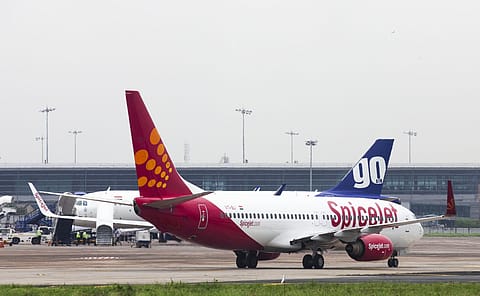
The government has announced that it will lift the temporary caps on domestic airfares from March 23, 2026 | Credits: Fortune India
IndiGo, SpiceJet shares tumble up to 10% as govt lifts domestic airfare caps
Shares of IndiGo and SpiceJet plummeted as the government lifted domestic airfare caps, allowing market-driven pricing. The decision, coupled with rising fuel costs due to U.S.-Iran tensions, led to a broader market sell-off. Investors are concerned about increased operating expenses, with aviation turbine fuel prices expected to rise, impacting airline profitability.
This summary is AI-generated, and Fortune India is not responsible for its content or any associated copyright issues.
InterGlobe Aviation, operator of IndiGo, fell as much as 6.1% to an intraday low of ₹3,894.80; SpiceJet shares plunged 10% to hit a low of ₹10.85 apiece.
THIS STORY FEATURES
The government has announced that it will lift the temporary caps on domestic airfares from March 23, 2026 | Credits: Fortune India
Shares of aviation companies InterGlobe Aviation and SpiceJet saw sharp selling pressure on Monday, in line with the broader market, as sentiment was dented following the government’s decision to remove temporary caps on domestic airfares.
Weighed down by the development, InterGlobe Aviation, operator of IndiGo, fell as much as 6.1% to an intraday low of ₹3,894.80 on the BSE. In a similar trend, SpiceJet shares plunged 10% to hit a low of ₹10.85 apiece.
The sell-off in aviation stocks also mirrored weakness in the broader market, with the BSE Sensex and Nifty 50 falling over 2% after U.S. President Donald Trump issued a stark ultimatum to Iran over the Strait of Hormuz, heightening fears of a wider geopolitical conflict and potential disruption to global oil supplies.

Govt lifts fare caps on domestic air travel
The government has announced that it will lift the temporary caps on domestic airfares from March 23, 2026, signalling a return to market-driven pricing after nearly three months of regulatory intervention. The caps, introduced on December 6, 2025, were aimed at curbing excessive fares following widespread flight disruptions caused by operational issues at IndiGo, which had led to a sharp spike in ticket prices.
The latest move comes at a time when airlines are grappling with rising cost pressures. Higher aviation turbine fuel (ATF) prices, driven in part by geopolitical tensions in West Asia, have significantly increased operating expenses. Industry bodies had been pushing for the removal of fare caps, arguing that the restrictions were denting revenues even as cost burdens remained elevated.
Rising fuel costs add to worries
Investors have also factored in the likelihood of further margin pressure from rising fuel costs. Union Civil Aviation Minister Ram Mohan Naidu on Sunday indicated that airlines could face renewed cost pressures from April 1 due to a potential increase in ATF prices. “ATF prices are revised on the first of every month, so the impact could be felt from April 1,” he said, adding that discussions with airlines are already underway.
ATF, a refined petroleum product used to power aircraft, typically accounts for 35-45% of an airline’s operating costs. Any sustained rise in global crude oil prices tends to push up ATF rates, directly impacting profitability and, eventually, ticket prices.
Concerns around fuel costs have intensified as international crude oil prices remain elevated, with Brent crude hovering around $107 per barrel. The surge has been driven by escalating tensions between the United States and Iran, raising fears of potential disruptions in the Strait of Hormuz-one of the world’s busiest oil transit routes.
(DISCLAIMER: The views and opinions expressed by investment experts on fortuneindia.com are either their own or of their organisations, but not necessarily that of fortuneindia.com and its editorial team. Readers are advised to consult certified experts before taking investment decisions.)
Follow Fortune India
NEXT STORY