Sensex falls 750 pts low from day’s high to settle at 74,533, Nifty ends at 23,114; here’s why
/ 3 min read
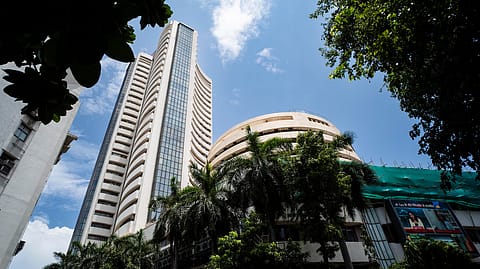
The BSE Sensex and NSE Nifty ended higher on March 20 | Credits: Getty Images
Sensex falls 750 pts low from day’s high to settle at 74,533, Nifty ends at 23,114; here’s why
Indian markets ended higher on Friday, with Sensex closing at 74,533 and Nifty at 23,114, despite a late sell-off triggered by rising crude prices and a weakening rupee. The session saw high volatility, with Sensex initially surging over 1,000 points. Analysts remain cautious due to ongoing geopolitical tensions and currency pressures.
This summary is AI-generated, and Fortune India is not responsible for its content or any associated copyright issues.
Selling pressure intensified in the final hours after Brent crude prices climbed back above the $110 per barrel mark amid reports of fresh exchanges of strikes between Iran and Israel.
THIS STORY FEATURES
The BSE Sensex and NSE Nifty ended higher on March 20 | Credits: Getty Images
Indian equities ended higher in a relief-driven rebound on Friday, supported by easing global cues, particularly a dip in crude oil prices after a partial relaxation of sanctions on Iranian oil shipments.
The BSE Sensex pared intraday gains to settle at 74,533, up 326 points, after retreating 753 points from its day’s high, while the NSE Nifty closed at 23,114, up 112 points, or 0.49%. The benchmark indices saw surge in volatility in late trades as renewed concerns over the energy situation unsettled investor sentiment.
During the session, the 30-share Sensex surged as much as 1,079 points to touch an intraday high of 75,286, after opening firm at 74,559. Similarly, the Nifty50 climbed 343 points to hit a high of 23,345.15, compared with its previous close of 23,002.
The broader market mirrored the trend, surrendering a significant portion of early gains. The Nifty MidCap and Nifty SmallCap indices ended higher by 0.67% and 0.09%, respectively.


Despite the rebound, India’s volatility index (VIX) remained elevated at 22.81, indicating persistent uncertainty and keeping derivatives positioning cautious.
What triggered the late sell-off?
Selling pressure intensified in the final hours after Brent crude prices climbed back above the $110 per barrel mark amid reports of fresh exchanges of strikes between Iran and Israel.
Investor sentiment was further weighed down by weakness in the Indian rupee, which slipped to a record low against the U.S. dollar, breaching the ₹93 mark for the first time. The depreciation was driven by concerns over disruptions to global energy supplies due to the ongoing Middle East conflict, raising risks to India’s growth-inflation balance.
Adding to the pressure, persistent selling in HDFC Bank dragged the Nifty Private Bank index lower, with the heavyweight stock declining 2.4% to emerge as the top laggard. Other key sectoral players, including ICICI Bank, Axis Bank and Kotak Mahindra Bank, also ended marginally lower, while the Bajaj twins, Bajaj Finance and Bajaj Finserv, closed slightly in the red.
On the other hand, Tata Steel, Tech Mahindra and Infosys were among the top gainers, rising 2–3%, while Reliance Industries and Titan Company also supported the upside, helping limit the broader market’s losses.
Near-term outlook remains cautious, say analysts
Hariprasad K, SEBI-registered research analyst and Founder of Livelong Wealth, said the current market phase reflects a technically driven recovery within a broader, fragile structure. Easing global cues, particularly a dip in crude oil prices following the partial relaxation of sanctions on Iranian oil shipments, helped cool the U.S. dollar and provided near-term support to risk assets, he noted.
“With volatility elevated, the currency under pressure and global uncertainties unresolved, the near-term outlook continues to favour a cautious, sell-on-rise approach unless supported by sustained easing in crude prices and geopolitical risks,” he said.
{{#most-powerful-women-snapshot-individual.slug}} {{/most-powerful-women-snapshot-individual.slug}} {{^most-powerful-women-snapshot-individual.slug}} {{/most-powerful-women-snapshot-individual.slug}} {{#showRanking}} {{current-rank}} {{/showRanking}} {{#photo.0.url}}
{{name}}
Ajit Mishra, SVP – Research at Religare Broking, said lingering geopolitical tensions, continued weakness in the rupee and persistent FII outflows remain key overhangs for the market.
“We maintain our cautious stance given the prevailing negative sentiment and recommend preferring hedged positions over naked trades until greater stability emerges. On the index front, the 23,400–23,600 zone is likely to act as a resistance area in case of a rebound, while 22,800 remains a critical support level. A break below this level could lead to further downside towards the 22,500 mark, despite oversold conditions,” he said.
Technically, the Nifty formed a “Doji” candlestick on the weekly chart, indicating the potential for a bullish reversal, said Vinay Rajani, Senior Technical Research Analyst at HDFC Securities. “Additionally, the RSI on weekly charts has shown positive divergence, reinforcing the possibility of a trend turnaround. However, for confirmation, the index must hold its recent swing low support at 22,930. On the upside, 23,378 and 23,868 remain critical resistance levels for the coming sessions,” he added.
(DISCLAIMER: The views and opinions expressed by investment experts on fortuneindia.com are either their own or of their organisations, but not necessarily that of fortuneindia.com and its editorial team. Readers are advised to consult certified experts before taking investment decisions.)
Follow Fortune India
NEXT STORY