Weekly market wrap: Nearly ₹14 lakh crore in investor wealth wiped out as Nifty, Sensex tumble amid global tensions
/ 3 min read
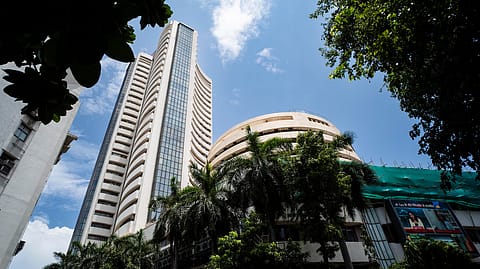
Markets were rattled by escalating tensions in West Asia involving the United States, Israel and Iran. | Credits: Getty Images
Weekly market wrap: Nearly ₹14 lakh crore in investor wealth wiped out as Nifty, Sensex tumble amid global tensions
Indian equity markets faced a significant downturn this week, with nearly ₹14 lakh crore in investor wealth wiped out due to escalating geopolitical tensions in West Asia. The Sensex and Nifty indices both fell sharply, driven by a spike in crude oil prices and sustained foreign investor selling, marking the steepest weekly decline in several months.
This summary is AI-generated, and Fortune India is not responsible for its content or any associated copyright issues.
The BSE Sensex fell nearly 2.9% on a week-on-week basis to close at 78,899, while the Nifty 50 declined by a similar margin to settle at 24,451.
Markets were rattled by escalating tensions in West Asia involving the United States, Israel and Iran. | Credits: Getty Images
Indian equity markets ended the week sharply lower as escalating geopolitical tensions in West Asia, a spike in crude oil prices and sustained foreign investor selling triggered broad-based declines across sectors. The sell-off wiped out ₹13.89 lakh crore in investor wealth and pushed benchmark indices to their steepest weekly fall in several months.
The BSE Sensex fell nearly 2.9% on a week-on-week basis to close at 78,899, while the Nifty 50 declined by a similar margin to settle at 24,451.
The correction came amid heightened global uncertainty and a risk-off sentiment across financial markets.
What triggered the sharp fall in Indian equities?
Markets were rattled by escalating tensions in West Asia involving the United States, Israel and Iran. The conflict has raised fears of a broader regional escalation that could disrupt global energy supply chains and trade routes.
According to analysts, the geopolitical shock sparked widespread risk aversion among investors, prompting a shift toward safer assets and triggering heavy selling in equities.
"Recent volatility in global energy markets underlines how closely geopolitics, commodity prices and currency movements are interconnected. India imports roughly 88% of its crude oil requirements, which means fluctuations in global energy prices can quickly influence the import bill and currency markets. In recent years, Russia has emerged as a significant supplier, at times accounting for around 30-35% of India’s crude imports, reflecting refiners’ efforts to secure competitively priced supplies in a tight global market," Vishal Goraddia, fund manager, Aikyam India Discovery Fund, Aikyam Capital Group told Fortune India.
The uncertainty weighed particularly on emerging markets such as India, where foreign institutional investors have been trimming positions amid global volatility.
How did oil prices amplify market concerns?
One of the biggest concerns for investors was the sharp surge in crude oil prices. Brent crude recorded one of its largest weekly spikes in recent years, rising more than 17% week-on-week amid fears of supply disruptions.
A key risk revolves around the Strait of Hormuz, one of the world’s most important energy chokepoints. The narrow passage accounts for nearly 20% of global crude shipments and handles roughly half of India’s oil imports.
The government has attempted to allay some fears of an energy crisis in India. In a statement on late Friday, the government confirmed India has over 250 million barrels of crude and fuel stocks, 7-8 weeks supply buffer across reserves, tanks, pipelines and vessels, as well as a refining capacity of 258 MMTPA, which is higher than domestic consumption.
What role did currency weakness and foreign flows play?
The volatility in equities coincided with weakness in the Indian currency. The rupee depreciated about 0.8% during the week, marking its steepest weekly fall in more than a month as geopolitical tensions strengthened the U.S. dollar.
{{#most-powerful-women-snapshot-individual.slug}} {{/most-powerful-women-snapshot-individual.slug}} {{^most-powerful-women-snapshot-individual.slug}} {{/most-powerful-women-snapshot-individual.slug}} {{#showRanking}} {{current-rank}} {{/showRanking}} {{#photo.0.url}}
{{name}}
"Periods of pressure on the rupee are not unusual as energy prices move and global capital flows adjust. At the same time, India’s approach to energy sourcing has remained pragmatic and diversified, with policymakers prioritising supply security for a fast-growing economy," Goraddia added.
Meanwhile, continued selling by foreign institutional investors added pressure on domestic markets. FII outflows have been a key factor behind the recent market swings as global investors rebalance portfolios amid rising geopolitical risk.
Foreign investors offloaded over ₹21,000 crore worth of stocks in just four trading sessions during the week.
Which sectors were hit the hardest?
The correction was broad-based, with most sectoral indices ending the week in negative territory. Realty, oil and gas, banking, auto and consumer durables stocks were among the worst performers.
The BSE Realty index fell nearly 4.9% during the week, while oil and gas stocks declined about 4.8%. Banking stocks also faced pressure, with the Bankex index sliding roughly 4.6%.
Broader markets underperformed benchmark indices, with both mid-cap and small-cap indices declining about 3.1% week-on-week.
(DISCLAIMER: The views and opinions expressed by investment experts on fortuneindia.com are either their own or of their organisations, but not necessarily that of fortuneindia.com and its editorial team. Readers are advised to consult certified experts before taking investment decisions.)
Follow Fortune India
NEXT STORY