The FAQs are AI-generated, and Fortune India is not responsible for its content or any associated copyright issues.
Concert tourism is reshaping India’s travel map, and hotels are leading the surge
/ 4 min read
As India positions itself as a global hub for live events, Tier II cities will play an increasingly central role in this growth story. For the hospitality sector, this represents a significant opportunity, not just to capture demand, but to help shape the future of travel.
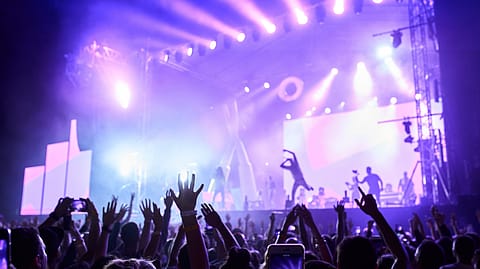
Concerts and live events are emerging as primary travel motivators, particularly among younger audiences who are prioritising experiences over itineraries. | Credits: Shutterstock
India’s travel landscape is undergoing a meaningful shift, one that is increasingly being shaped not just by destinations, but by experiences. Among the most powerful of these experiences today are live concerts. What was once largely confined to metro cities is now decentralising rapidly, with Tier II markets emerging as vibrant, high-demand travel hubs. Cities such as Chandigarh, Lucknow, Ahmedabad, Gandhinagar, Vadodara, Shillong, and Jamshedpur are steadily finding their place on the national concert circuit, signalling a structural shift in how Indians are choosing to travel.
Concerts as a primary travel driver
For years, travel decisions in India were driven by predictable patterns, holiday seasons, school calendars, and traditional tourism circuits. Today, that narrative is evolving. Concerts and live events are emerging as primary travel motivators, particularly among younger audiences who are prioritising experiences over itineraries. Travel is no longer just about visiting a destination; it is about being part of a moment. This has led to the rise of experience-led, short-haul trips where the event itself becomes the focal point of travel.
Emergence of a music-tourism economy
This shift is not just observational; it is reflected in the growing movement across cities. According to the Ministry of Information & Broadcasting’s whitepaper, ‘India’s Live Events Economy – A Strategic Growth Imperative (June 2025)’, nearly half a million fans travelled between cities specifically to attend live music events in 2024–25. This points to the emergence of a strong music-tourism economy, where travel is increasingly being planned around events rather than destinations.
Tier II cities at the centre of growth
The impact of this trend is particularly visible in Tier II cities. Multi-city tours and regional festivals are expanding beyond metros, unlocking new audiences and creating demand in markets that were previously underpenetrated. Event-led travel is also contributing meaningfully to local economies, with concert weekends generating anywhere between ₹5–15 crore through increased spending across hospitality, food and beverage, and allied services.
The orange economy and policy push
From a macroeconomic perspective, this evolution is also part of what the Economic Survey 2025–26 defines as the “Orange Economy”, where creative and cultural industries, including live entertainment, are playing a pivotal role in driving tourism, urban services and employment. Complementing this are initiatives such as Swadesh Darshan 2.0, which are developing tourism circuits across Tier II destinations, creating the infrastructure backbone needed to support event-led travel.
A strong demand catalyst for hospitality
For the hospitality sector, this shift is translating into a powerful demand catalyst. Concerts create concentrated, high-intensity travel demand, often turning Tier II cities into short-burst hotspots. Major events can drive 60–80% spikes in hotel occupancy, alongside a noticeable increase in ancillary spending on accommodation, dining and transport. Unlike traditional leisure travel, which tends to be seasonal, concert-driven demand is dynamic, high-yield and often less price-sensitive, allowing hotels to maintain rate integrity while optimising occupancy.
Rethinking hotel strategy
Beyond room revenue, the multiplier effect of concerts is significant. Every rupee spent on concert tickets generates additional spending across hospitality and travel, creating a ripple effect that benefits hotels, local businesses and the broader tourism ecosystem. Travelers attending events are not just booking stays; they are engaging more deeply with the destination, dining out, exploring local attractions and often extending their visits.
However, this evolving landscape also calls for a rethinking of hotel strategy. Location planning is becoming increasingly nuanced, with proximity to event venues, convention centres and large open spaces gaining importance. At the same time, operational agility is critical. Hotels must be equipped to respond to sudden demand spikes through dynamic pricing strategies, flexible inventory management and tailored offerings that cater to event-driven travellers.
Elevating the guest experience
Equally important is the need to elevate the guest experience. Today’s traveller is seeking more than just a place to stay; they are looking for a seamless and memorable journey. This could translate into curated experiences such as concert-themed packages, extended dining hours, flexible check-ins and check-outs aligned with event schedules, and partnerships that enhance overall convenience. As hospitality continues to evolve, the differentiator is no longer service alone, but how seamlessly hotels can curate and connect experiences around the traveller.
Collaboration will be key to unlocking the full potential of this trend. As the government looks to develop purpose-built event infrastructure across 20-25 Tier II cities and streamline processes through single-window clearances and public-private partnerships, hotels have an opportunity to align closely with event organisers, tourism boards and local authorities. Such partnerships can help create a more cohesive ecosystem, driving sustained demand and enhancing destination appeal.
Domestic tourism momentum
This trend is also unfolding alongside India’s strong domestic tourism momentum. According to the Ministry of Tourism’s Annual Report 2025-26, over 4,132 million domestic tourist visits were recorded, with growth increasingly being driven by Tier II markets where experiential and event-led travel is gaining traction. Government initiatives, from financial support for festivals to platforms like the Utsav portal, are further amplifying visibility for these destinations, positioning them as mainstream travel hubs.
{{#most-powerful-women-snapshot-individual.slug}} {{/most-powerful-women-snapshot-individual.slug}} {{^most-powerful-women-snapshot-individual.slug}} {{/most-powerful-women-snapshot-individual.slug}} {{#showRanking}} {{current-rank}} {{/showRanking}} {{#photo.0.url}}
{{name}}
The road ahead
In many ways, concerts are doing more than driving short-term travel; they are reshaping the perception of Tier II cities. By bringing large-scale events to these markets, they are placing them firmly on the travel map, encouraging infrastructure development and supporting more balanced regional growth. What were once considered alternative destinations are now becoming primary stops on both national and global event circuits.
Looking ahead, the intersection of live entertainment and travel is set to deepen further. As India positions itself as a global hub for live events, Tier II cities will play an increasingly central role in this growth story. For the hospitality sector, this represents a significant opportunity, not just to capture demand, but to help shape the future of travel.
(The author is Managing Director & Chief Operating Officer, Radisson Hotel Group, South Asia. Views are personal.)
Follow Fortune India
Frequently Asked Questions
NEXT STORY