The FAQs are AI-generated, and Fortune India is not responsible for its content or any associated copyright issues.
The new leadership imperative: Geopolitical uncertainty moves into India’s boardroom
/ 4 min read
Geopolitical risk must be actively quantified and, where appropriate, transferred.
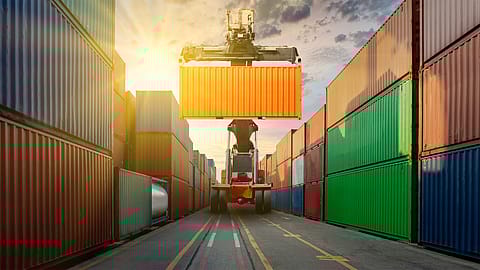
Any disruption to the supply chains, whether through diplomatic tensions, sanctions or sudden export controls, can freeze projects worth billions of rupees. | Credits: Shutterstock
The terrain of global commerce is shifting in ways that are both rapid and unpredictable. The rules of trade, finance, and political engagement, painstakingly built and refined over decades, are now in constant motion. What until recently was background chatter in distant capitals has moved into India’s boardrooms, shaping revenue forecasts and capital allocation decisions.
In India, this shift has been particularly stark. Conversations once confined to procurement offices, export compliance units or operational risk teams are now taking place in the boardroom itself. Geopolitical uncertainty is no longer regarded as a backdrop to doing business; it has become an active, shaping force in revenue forecasts, capital allocation decisions, and the safeguarding of long-term enterprise value.
In 2025, more than four out of five large, listed firms reported that uncertainty was having a measurable impact on their financial performance, according to Marsh’s Political Risk Report 2026. Yet notably, only a small minority of senior leaders indicated they viewed this space as one ripe with opportunity. For India’s corporate leadership, the message is clear: what was once an operational concern has evolved into a matter of balance sheet survival.
From quarterly volatility to generational resilience
The nature of risk has changed. Directors and audit committees are no longer satisfied with explanations that address short-term volatility alone. They now question concentration risks, sovereign exposures, and vulnerabilities along critical trade corridors.
One telling metric of this new mindset is the surge in demand for political risk insurance within India, which rose by more than 30% over the past year. This growth was not driven solely by the usual suspects in export-heavy sectors or infrastructure builds. Instead, it included large corporates that had historically dismissed such protection as optional, now actively exploring structured, multi-year arrangements designed to shield them from the fallout of sovereign disputes, sanctions regimes or abrupt policy shifts. This is not tactical firefighting. It represents an institutionalisation of geopolitical foresight and a conscious integration of long-term political risk assessment into the DNA of corporate strategy.
It is uncertainty, not tariffs, that hurts most
A tariff, however high, can be quantified; a volatile policy environment cannot. Businesses can model a 10 or even 20% duty into their pricing and contracts. What they cannot reliably model is the impact of sudden policy reversals that alter tariff rates overnight or rewrite trade agreements in their entirety.
In the past few years, India’s exporters and importers have navigated a perfect storm of shifting regulations. Covid-19 disruptions were followed by energy shocks from the Russia–Ukraine conflict, and then the historic surge in U.S. tariffs in 2025, which reached their highest levels since the 1930s. At the same time, penalties for failing to qualify for tariff-free provisions under existing trade agreements grew sharply.
In response, many companies worked to raise the proportion of goods qualifying for tariff exemptions by more than 80%, a significant operational effort involving detailed compliance checks, supply chain mapping, and costly adjustments. The global trade uncertainty index remains far above its baseline of the last decade, underscoring that business leaders must now operate in an environment where unpredictability is not the exception but the norm.
The end of ‘safe markets’
There was a time when geographical diversification was considered its own form of risk mitigation. Investing in stable markets was assumed to offer immunity from political disruption. That assumption no longer holds.
Sanctions, regime changes, and policy recalibrations can reach into any market, regardless of its previous track record for stability. The events that unfolded along the Thailand–Cambodia border in 2025 demonstrate this vividly. Initially overlooked on the international stage, the flare-up created severe operational headaches for companies with assets and employees on both sides. Alternative logistics routes pushed costs up by 40%, nearly 800,000 migrant workers were displaced, and some facilities were closed altogether.
For firms whose attention was fixed on high-profile conflict zones elsewhere, this disruption arrived without warning, delivering financial and supply chain impacts that could have been mitigated with broader, forward-looking risk assessment.
{{#most-powerful-women-snapshot-individual.slug}} {{/most-powerful-women-snapshot-individual.slug}} {{^most-powerful-women-snapshot-individual.slug}} {{/most-powerful-women-snapshot-individual.slug}} {{#showRanking}} {{current-rank}} {{/showRanking}} {{#photo.0.url}}
{{name}}
Imports as strategic exposure
India’s growth narrative often focusses on exports, but equally important is the country’s dependence on imports that feed its industrial sectors. Electronics manufacturing, renewable energy initiatives, fine chemical production, and digital infrastructure development all hinge on the steady supply of machinery, energy inputs, and highly specialised components sourced from a small number of countries.
Any disruption to these supply chains, whether through diplomatic tensions, sanctions or sudden export controls, can freeze projects worth billions of rupees. In today’s environment, protecting import flows is no longer merely a procurement concern. It is viewed as strategically vital by boards seeking to maintain both growth momentum and operational continuity.
The leadership imperative
Uncertainty is not a temporary storm to be weathered. It is the climate in which Indian businesses must operate for the foreseeable future. Leadership in such a climate demands integration of geopolitical intelligence into planning cycles, rigorous stress testing of investments against credible policy and trade scenarios, and contingency planning for conflict or regulatory shocks.
However, resilience today is not just about anticipating risk but transferring it. As geopolitical volatility begins to affect cash flows and asset values, balance-sheet protection cannot rely on mitigation alone.
Political risk insurance is therefore becoming a strategic tool. It enables organisations to transfer risks such as expropriation, currency inconvertibility, political violence, and contract frustration to the insurance market, helping stabilise earnings and protect capital.
For CXOs, the implication is clear. Geopolitical risk must be actively quantified and, where appropriate, transferred. Integrating PRI into capital and financing decisions not only protects downside risk but also enables growth by unlocking confidence in uncertain markets.
The companies that succeed will not simply endure unsettled conditions. They will navigate them with agility and confidence, capitalising on opportunities when others retreat.
(The author is head of trade credit, trade finance, political risks, structured finance, and Sureties, Marsh, India. Views are personal.)
Follow Fortune India
Frequently Asked Questions
NEXT STORY