The FAQs are AI-generated, and Fortune India is not responsible for its content or any associated copyright issues.
The next food revolution won't be in a lab, it will be in a muslin cloth
/ 4 min read
India is moving from a market once driven by availability to one increasingly driven by intention.
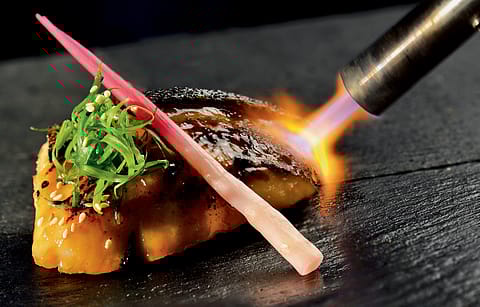
A new generation of Indian food makers is deeply invested in quietly pushing for better quality, taste and ingredients, making the pivot to more authentically produced and tasting products.
There was a time when what we ate carried a sense of place. Bakery butter biscuits. Papad or achaar made by neighbourhood cooperatives. Batter freshly ground at home as per family recipes. These weren't just products, they were made with recognisable ingredients, and sold with a kind of unspoken honesty. You knew what you were getting, and more importantly, you knew it was real.
Then came a shift: the era of scale. Standardised products, longer shelf lives, and mass distribution became synonymous with good taste for the consumer and success for the industry. Ingredient lists quietly grew longer. Flavour enhancers replaced flavour. Freshness gave way to preservation. Provenance dissolved into supply chains stretching thousands of kilometres. The food stayed familiar in name, but something in the taste quietly disappeared, and for a long time, we didn't notice, because convenience has its own kind of comfort. But a few years ago, among a certain kind of consumer, another shift began: the era of intention.
The conscious consumer
For long, the Indian consumer has been bucketed as just value-conscious. Today, they are conscious, full stop. More aware of what goes into their food, more curious about where it comes from, and particular about how it should taste. Labels are still read, but they're no longer taken at face value. There's a deeper, more instinctive filter at play: Does this feel real? Does it taste the way it should?
Increasingly, people also care about who is behind what they're consuming. There's comfort in knowing that what you're eating hasn't just been manufactured, it's been made. In a world of endless choice, curation itself has become a form of trust. Globally, there's a clear move away from over-engineered food towards ingredients, processes, and flavours that feel honest and recognisable. On one of my recent travels to London, I picked up a product that displayed "made with 2 ingredients" loud and clear on its packaging. That is not just marketing. It is signalling very clearly to the conscious consumer.
The quiet revolution of food makers
A new generation of Indian food makers is deeply invested in quietly pushing for better quality, taste and ingredients, making the pivot to more authentically produced and tasting products. Many of the most nutritious and culturally important foods we've known were never engineered in labs. They were refined over time, in home kitchens, through repetition, instinct, and observation. Straining paneer through muslin to achieve the right texture. Stone grinding idli batters to develop depth and digestibility. Making sweets or snacks in small batches where variation isn't a flaw, but a marker of authenticity. These are not quaint rituals. They are precise processes, and increasingly, they are being recognised as such.
Everyday consumption is being redefined. A morning coffee, a post-dinner dessert, a mid-day snack: these are no longer just habits but small moments people want to genuinely savour. There's a growing willingness to pay more for the quiet confidence that what they're eating was actually made with care.
Rethinking what food innovation means
There's a persistent assumption that food innovation must always mean moving forward: newer, faster, more engineered. But it's worth asking: forward towards what?
If the goal is longer shelf life and better margins, industrialisation will always lead. But if the goal is food that is more flavourful, more traceable, and more aligned with how we've historically eaten, the answers may lie in rediscovery rather than reinvention. The real opportunity is to take what has always worked, ingredient integrity, time-tested processes, and regional knowledge, and bring it into modern consumption without diluting it. That's where technology plays a genuinely useful role: not to replace craft, but to bring it to more people, more reliably.
Building with conviction
What this looks like in practice is worth examining. At Noice, the starting point was simple: everyday food should be genuinely delightful. Not through clever branding or engineered convenience, but through the quiet confidence of a product that tastes exactly as it should. That means obsessing over ingredients that don't need explaining, freshness you can taste, and batches small enough to allow for nuance.
It also means being honest about what quality actually requires. Real yogurt needs time to set. Good mithai needs ghee, not a substitute. Hand-made chips will not all be the same thickness. A well-made chutney cannot last three months. These aren't constraints to engineer around. They're signals worth preserving.
It also means accepting that this is not the fastest path to scale. When you prioritise flavour and authenticity, you sign up for an iterative process. You listen closely, because the consumer you're building for is paying attention.
{{#most-powerful-women-snapshot-individual.slug}} {{/most-powerful-women-snapshot-individual.slug}} {{^most-powerful-women-snapshot-individual.slug}} {{/most-powerful-women-snapshot-individual.slug}} {{#showRanking}} {{current-rank}} {{/showRanking}} {{#photo.0.url}}
{{name}}
The return to real
India is moving from a market once driven by availability to one increasingly driven by intention. From mass-produced sameness to products that carry a point of view. From "good enough" to "worth coming back for."
This doesn't mean large-scale production disappears. It simply means the food makers that will matter in the next decade won't necessarily be the biggest. They'll be the ones who are trusted.
For a long time, we collectively optimised food for everything except how it actually tasted. Consumers wanted convenience, industry delivered it, and somewhere in that transaction, flavour became an afterthought. The good news is that the correction has already begun: not in a laboratory, not in a boardroom, but in small kitchens, local harvests, muslin cloths, and the quiet insistence of people who still believe that what you eat should actually be worth eating.
(The author is vice president, Noice. Views are personal.)
Follow Fortune India
Frequently Asked Questions
NEXT STORY