The FAQs are AI-generated, and Fortune India is not responsible for its content or any associated copyright issues.
Why the future of drug development begins before manufacturing begin
/ 2 min read
Manufacturing remains crucial, but it is no longer the deciding factor.
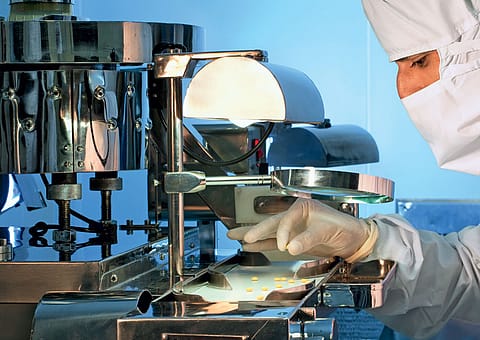
Molecule selection, target market sequencing, patent strategy, and supply structure are now more about data than chemistry. (Representational image)
For most of pharma’s history, scale has been measured in installed capacity. Reactor volumes, fill lines, and packaging capacity have defined a company’s worth. That measurement is becoming outdated. The decisions that determine a drug's clinical, regulatory, and commercial success are now made several years before the first commercial batch.
Molecule selection, target market sequencing, patent strategy, and supply structure are now more about data than chemistry.
Predictive analytics has changed how serious developers look at the early stages. A decade ago, a generics company might evaluate a hundred molecules a year based on gut feeling, market reports, and a few spreadsheets. Today, the same evaluation relies on models that simulate solubility, bioequivalence likelihood, polymorph stability, raw material concentration risk, and patent expiry timing in hours, not months. The resulting shortlist is smaller, sharper, and much more realistic about what can actually succeed. Risk forecasting has also moved upstream.
Questions about regulatory pathway uncertainties used to be answered after filing; now they are modelled before development begins. By using agency precedents, deficiency letter patterns, and inspection histories of potential manufacturing sites, companies can gain insights early on. This approach applies to raw material exposure as well.
A molecule that relies on a single Chinese intermediate looks different in 2026 compared to 2018, and scenario tools measure that exposure well before committing to the supply chain. Predicting commercial success is the third area and arguably the most underused. Payer dynamics, generic erosion, prescriber habits, and formulation differentiation can now be modelled with a level of accuracy that seemed impossible five years ago. As a result, a molecule that appears profitable on a static spreadsheet may often fail when tested dynamically, and the opposite can also be true.
Companies that utilise the dynamic view will make different choices than those still dependent on static evaluations. For over a decade now, these choices have led to completely different portfolios. For India, this matters more than many markets realise. It is important to note that compliant manufacturing base drives the global generics industry; a sizable portion of U.S. prescriptions trace back to Indian sites. However, the value created during molecule selection and regulatory-IP is fundamentally higher than that generated during the manufacturing phase.
As predictive tools become standard, the key question for Indian pharma is not whether we can manufacture at lower costs. It is whether we can make better decisions. Companies that will shape the next decade won’t necessarily have the largest facilities. They will be the ones making the sharpest pre-manufacturing decisions, those that select the right molecule, in the right order, for the right market, with the right partners.
Manufacturing remains crucial, but it is no longer the deciding factor. The future of drug development is being shaped long before manufacturing starts. The industry that recognises this first will lead the next cycle.
(The author is founder, MD, & CEO, HRV Pharma. Views are personal.)
Follow Fortune India
Frequently Asked Questions
NEXT STORY