Explained: Sebi reopens stock exchange buybacks from August 1; what changes, why it matters, and the new rules
/ 3 min read
The changes are expected to make buybacks a more efficient capital allocation tool for companies while addressing the concerns that had led Sebi to discontinue the mechanism last year.
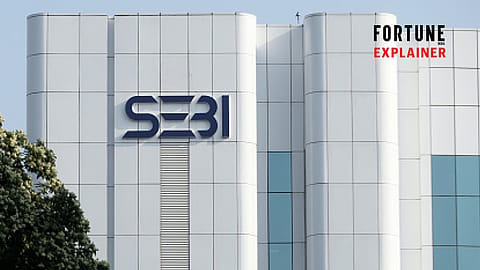
The Securities and Exchange Board of India (Sebi) has reintroduced the open-market share buyback route through stock exchanges, allowing listed companies to repurchase their own shares from August 1, 2026. The move reverses the regulator's 2025 decision to phase out the mechanism and brings in a new regulatory framework aimed at making buybacks faster, more transparent and equitable for all shareholders.
The changes are expected to make buybacks a more efficient capital allocation tool for companies while addressing the concerns that had led Sebi to discontinue the mechanism last year.
What is a share buyback?
A share buyback is a corporate action in which a company repurchases its own shares from existing shareholders. Companies typically resort to buybacks when they have surplus cash and want to return capital to investors instead of paying dividends. Buybacks also reduce the number of outstanding shares, which can improve earnings per share (EPS) and, in many cases, provide support to the company's stock price during periods of market volatility.
What has Sebi changed?
Under the revised framework, companies can once again conduct buybacks through regular stock exchange trading mechanisms without requiring a dedicated buyback window. Sebi has, however, introduced stricter conditions to ensure greater transparency and faster execution.
The regulator has capped open-market buybacks at 15% of a company's paid-up capital and free reserves, calculated on both standalone and consolidated financial statements. Companies will have to open the buyback offer within four working days of making the public announcement, and the entire process must be completed within 66 working days from the date of opening of the offer. Earlier, companies could take as long as six months to complete an open-market buyback. The new rules were approved by Sebi's board in June and formally notified on July 1.
Why did Sebi discontinue open-market buybacks?
Sebi had phased out the stock exchange buyback route in 2025 after expressing concerns that the mechanism did not treat all shareholders equally. Since companies bought shares directly from the market, only investors who managed to sell during the buyback period benefited, while others were left out.
The regulator had also flagged tax-related distortions under the earlier framework, where participating shareholders enjoyed a different tax treatment compared with those who sold their shares through normal market transactions.
What has changed on taxation?
The revised tax framework is one of the key reasons behind Sebi's decision to restore open-market buybacks. Under the current capital gains taxation regime, shareholders participating in a buyback will be taxed on their actual capital gains, similar to a regular sale on the stock exchange.
The tax liability has also shifted from the company undertaking the buyback to the participating shareholders. As a result, the earlier tax advantage associated with selling shares through a buyback has been eliminated, making buyback transactions broadly equivalent to normal market sales.
What are the new safeguards?
Sebi has introduced several safeguards alongside the reintroduction of stock exchange buybacks. Appointing a merchant banker has been made optional, reducing compliance costs for companies. If a company chooses not to appoint one, the associated responsibilities will be handled by the company itself, along with its compliance officer, statutory auditor, secretarial auditor and the stock exchanges.
To improve communication with investors, companies will now have to disseminate buyback-related information electronically in addition to publishing newspaper advertisements. Sebi has also directed that shares held by promoters and their associates will remain frozen at the ISIN level throughout the buyback period, preventing transactions during the offer.
RANK
COMPANY NAME
REVENUE
(INR CR)
(INR CR)
{{#current-rank}} {{current-rank}} {{/current-rank}} {{^current-rank}} {{rank}} {{/current-rank}} {{name}} {{#revenue}} {{revenue}} {{/revenue}} {{^revenue}} {{noi}} {{/revenue}}
Further, companies will not be permitted to announce buybacks that could result in a breach of minimum public shareholding (MPS) norms. The regulator has also aligned the minimum interval between two buyback offers with the provisions of the Companies Act, 2013, replacing the separate timeline that previously existed under Sebi regulations.
Why is the move important?
The reintroduction of stock exchange buybacks restores a widely used capital management tool that allows companies to return excess cash to shareholders more efficiently. With shorter execution timelines, lower compliance costs and a revised tax regime, the mechanism is expected to become more attractive for listed companies while ensuring greater fairness for investors. The framework also brings India's buyback regulations closer to international practices, where open-market buybacks through stock exchanges remain a commonly used method of capital distribution.
NEXT STORY