The FAQs are AI-generated, and Fortune India is not responsible for its content or any associated copyright issues.
Jewellery consumption falls below 60% of India’s gold demand in CY25; investment share spikes to 42%: CareEdge
/ 3 min read
The shift has been driven by a surge in investment demand, both globally and in India, led by strong inflows into gold exchange-traded funds (ETFs) and increased bar-and-coin buying.
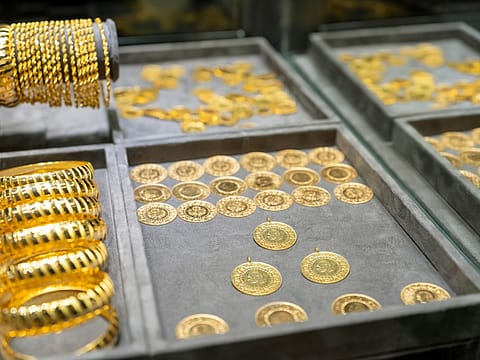
Indians spent around ₹4.8 lakh crore on jewellery in CY25 | Credits: Bermek
India’s gold consumption pattern witnessed a structural shift in calendar year 2025, with jewellery demand slipping below 60% of total purchases even as investment appetite strengthened sharply, according to CareEdge Ratings. The share of investment in overall gold consumption rose to 42% in CY25 from 29% in CY24, reflecting a decisive tilt toward gold as a financial asset amid global uncertainty.
The shift has been driven by a surge in investment demand, both globally and in India, led by strong inflows into gold exchange-traded funds (ETFs) and increased bar-and-coin buying.
“Investment demand surged to record levels globally and in India, led by gold ETFs and bar-and-coin buying, reflecting safe-haven demand, diversification motives, and geopolitical uncertainty,” the agency said in its report.
Safe-haven demand, portfolio diversification needs, and persistent geopolitical tensions have significantly boosted investor interest in the yellow metal. Given these trends, overall gold consumption is projected to grow 35–40% in FY27.
Global demand hits record highs
Globally, gold investment demand touched a record 2,175 metric tonnes (MT) in CY25, surpassing the previous high of 1,805 MT in CY20, with ETF investments alone contributing over 800 MT.
The trend was mirrored in India, where ETF inflows remained robust over the past two years. Investors added 37.5 tonnes in CY25, exceeding the cumulative investment of the previous decade.
Overall global gold demand rose about 8% year-on-year to nearly 5,000 MT in CY25, marking an all-time high despite elevated prices and macroeconomic headwinds. Central banks continued aggressive gold accumulation for the fourth consecutive year, reinforcing gold’s role as a strategic reserve asset amid ongoing geopolitical risks.
“Geopolitical uncertainty, momentum in gold prices, and portfolio diversification preferences are expected to continue fuelling investment demand. Its share in overall gold consumption is projected at 35–40% in FY27,” said Akhil Goyal, Director, CareEdge Ratings.
Jewellery demand weakens
As investment demand surged, the composition of gold consumption saw a notable shift. Globally, jewellery’s share declined sharply to 33% in CY25, well below the 15-year average of around 50%, as high prices curbed discretionary purchases.
A similar trend is visible in India, where jewellery consumption dropped below its long-term average of approximately 70%.
Despite this, jewellery demand in value terms remained resilient. Indians spent around ₹4.8 lakh crore on jewellery in CY25, up about 10% year-on-year, indicating a higher wallet share allocation even as prices hit record highs. Over CY21–CY25, jewellery spending grew at a compound annual growth rate (CAGR) of 11%.
RANK
COMPANY NAME
REVENUE
(INR CR)
(INR CR)
{{#current-rank}} {{current-rank}} {{/current-rank}} {{^current-rank}} {{rank}} {{/current-rank}} {{name}} {{#revenue}} {{revenue}} {{/revenue}} {{^revenue}} {{noi}} {{/revenue}}
However, volumes declined by around 15% during the year, reflecting price sensitivity among consumers and a shift toward lighter and lower-carat jewellery.
Organised jewellers to see sustained growth
The resilience in spending is expected to support strong growth for organised jewellers. CareEdge’s sample of six large listed players is projected to post revenue growth of around 35% year-on-year in FY26, followed by 20–25% growth in FY27.
This expansion will be driven by continued store additions, market share gains amid sector formalisation, and steady consumer demand.
Profitability is also set to improve in the near term, with gross margins expected to expand by 170–200 basis points in FY26 due to inventory gains on unhedged gold. Margins are likely to normalise in FY27, with gross margins seen at 14–14.5% and operating margins in the range of 6.5–7%, as gold prices stabilise and operating costs from expansion weigh on profitability.
Retail expansion to be key driver
Retail expansion continues to be a key growth lever, with jewellers estimated to have added around 310 stores in FY26, the second consecutive year of over 300 additions. However, the pace of expansion has moderated relative to the existing base, indicating a more measured approach.
Franchise-led expansion continues to dominate, with its share in overall store networks expected to rise to 62% in FY26.
“Domestic organised jewellery retailers are expected to report revenue growth of over 35% year-on-year in FY26, driven by steady consumer demand, market share gains from sector formalisation, and planned store additions,” said Raunak Modi, Assistant Director, CareEdge Ratings. He added that while margins will benefit in FY26, they are likely to normalise in FY27 due to range-bound gold prices and front-loaded expansion costs.
Frequently Asked Questions
NEXT STORY